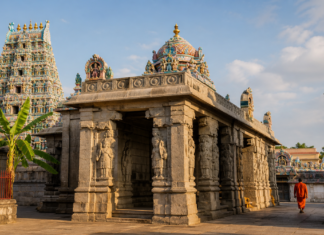


The Alangudi Guru Bhagavan Temple: Why Families Flock to This Jupiter Abode in 2026
For countless families across South India, a visit to Alangudi is more than just a regular weekend getaway; it is a vital spiritual journey to secure prosperity, academic success, and marital harmony. As the most prominent guru bhagavan temple in the Navagraha circuit, this sacred space draws thousands of devotees seeking the blessings of Lord Jupiter.
If you are planning a temple run from Hyderabad, Chennai, or Bengaluru this year, understanding how to navigate the crowds and rituals at Alangudi is absolutely essential. Whether it is your first time managing an intricate pooja schedule or you are simply accompanying your elderly parents on their religious tour, having the right information can completely transform your experience.
With 2026 bringing significant planetary transits, the temple is gearing up for an unprecedented influx of visitors. This guide cuts through the confusion, offering you a practical, middle-class family perspective on how to plan your darshan, what to pack, and how to avoid the common logistical hurdles of rural Tamil Nadu temple travel.
“A journey to Alangudi is not just about seeking Jupiter’s blessings; it is about finding peace amidst the beautiful, chaotic devotion of Tamil Nadu’s temple heartland.”
Why Visit Alangudi? (The Significance)
In Vedic astrology, Guru (Jupiter) is the planet of wisdom, wealth, and favorable life events such as marriage and childbirth. Families from Hyderabad and the wider South Indian region prioritize this location because Alangudi is considered a powerful Parihara Sthalam—a place to perform remedies for planetary afflictions. When Jupiter is in a challenging position in one’s horoscope, offering prayers here is widely believed to bring relief and positive shifts.
Unlike many other temples where the planetary deity is housed in a small sub-shrine, the energy at Alangudi is deeply focused on Lord Dakshinamurthy, the form of Shiva as the supreme cosmic teacher. Devotees offer yellow clothes and chickpea (kondakadalai) garlands, which are specifically associated with Guru Bhagavan. The atmosphere on Thursdays, the day dedicated to Jupiter, is electric with chants and deep devotion.
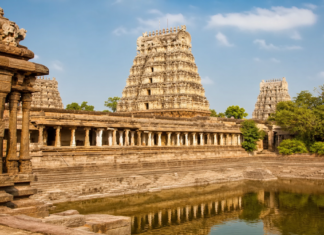
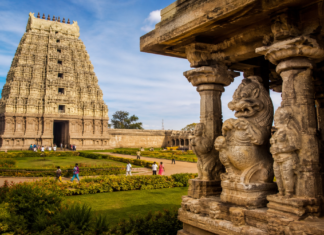
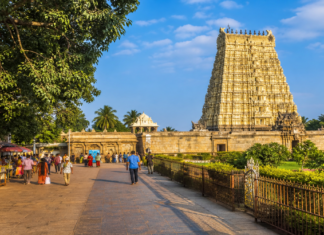
Historically, the temple boasts ancient Chola architecture and rich mythology that ties back to the churning of the cosmic ocean. However, stories and specific historical timelines often blend with local folklore. We highly recommend you verify local legends from official temple authorities or registered guides who can walk you through the intricate stone carvings and the fascinating history of the holy temple tank.
For families, visiting this specific navagraha temple is usually part of a larger spiritual itinerary. Many travelers combine it with visits to other planetary shrines to complete their astrological remedies in one comprehensive trip.
Latest Updates & What’s New (2026 Edition)
The year 2026 is crucial for those following astrological calendars due to the much-anticipated Guru Peyarchi (the transit of Jupiter from one zodiac sign to another). Because this is a major event, the temple administration typically introduces new queue systems, temporary shade structures, and special darshan ticket counters to handle the massive crowds safely.
You can expect enhanced security measures and reorganized parking areas slightly further away from the main temple complex to prevent bottlenecks. If you are traveling with seniors or young children during the transit period, these infrastructure updates are a welcome relief, ensuring smoother movement despite the heavy footfall.
Since facilities and specific crowd-control rules update frequently leading up to major transit dates, it is always a smart move to verify the latest details at the official website before visiting. The local authorities often coordinate with state tourism departments to ensure devotees have a safe and organized experience.
Upcoming Festivals & Events (Next 6 Months)
The temple calendar at Alangudi is always buzzing with activity, deeply tied to the Tamil solar months and lunar phases. While Guru Peyarchi is the crown jewel of events, regular weekly and monthly rituals also draw significant crowds. Thursdays remain the busiest day of the week, featuring special abhishekams (holy baths) and elaborate decorations for Lord Dakshinamurthy.
During the Tamil month of Masi (usually February-March), the Maha Shivaratri festival is celebrated with great fervor, involving all-night vigils and continuous chanting. Following this, the Panguni Uthiram festival (March-April) is another major highlight where the temple deities are taken out in grand processions, offering a spectacular cultural experience for visiting families.
It is important to note that festival dates follow the lunar calendar and can shift year by year. Because exact timings and specific ritual schedules are subject to change, always verify current timings at the temple gate or official website before locking in your travel dates. Checking the official Tamil Nadu Hindu Religious and Charitable Endowments (HRCE) department announcements will save you from arriving on a day when public darshan might be restricted due to special poojas.
Planning Your Trip: Visiting Guide
Planning a trip from cities like Hyderabad requires breaking your journey into manageable segments. Most families use Kumbakonam as their base camp, as Alangudi is a short drive away. To map out your exact travel path, having a reliable kumbakonam navagraha temples route map can save you hours of getting lost on rural roads.
Getting There: Since direct flights to Alangudi do not exist, travelers usually fly or take a train to Tiruchirappalli (Trichy) or Chennai, and then proceed by road or rail to Kumbakonam. From Kumbakonam town, local autos and taxis are readily available for the short trip to Alangudi. Fares vary based on the season and time of day, so confirm before you ride.
Temple Timings: South Indian temples typically close during the afternoon hours for the deities to rest. Generally, the temple opens early in the morning, closes by noon, and reopens in the late afternoon until night. However, verify current timings at the temple gate or website before departure, as special pooja days can drastically alter the regular schedule.
Darshan & Rituals: For a middle-class family perspective, the process is straightforward but requires patience. Purchase your archana basket (usually containing yellow flowers, a coconut, and bananas) outside the temple. Once inside, you will join the queue for Lord Dakshinamurthy. Special darshan queues are often available for a nominal fee, which is highly recommended if you are traveling with elderly parents who cannot stand for long hours. Ensure you check official sources for current special darshan ticket prices.
Where to Stay & Eat
Travel Tip: Local accommodation options in Alangudi itself are limited; suggest staying in Kumbakonam and verify with local listings. Kumbakonam is the widely recognized temple city of tamilnadu, offering everything from budget-friendly lodges to comfortable mid-range hotels suitable for families.
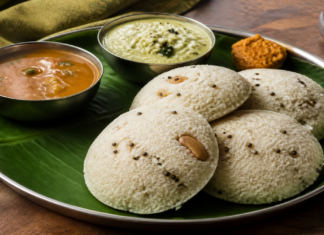
Staying in Kumbakonam also means you have access to excellent South Indian vegetarian food. After your morning darshan, you can return to the town for a hearty meal of idlis, dosas, and traditional Tamil meals served on a banana leaf. Trying to find elaborate dining options right outside the Alangudi temple gates might leave you with only basic tea stalls and snack vendors, so plan your meals accordingly.
Essential Travel Tips for Families
Traveling to major pilgrimage sites in Tamil Nadu requires a mix of devotion and practical planning. The weather can be unforgiving, and the crowds overwhelming, but following a few basic dos and don’ts will keep your family comfortable.
Do: Dress modestly. Traditional attire is mandatory in most South Indian temples; men should wear dhotis or formal trousers, and women should wear sarees or churidars with a dupatta. Drink plenty of bottled water, as the heat inside the stone corridors can quickly dehydrate you. Always carry small denomination currency notes for parking, footwear stands, and minor temple offerings.
Don’t: Avoid visiting on Thursdays if you cannot handle massive crowds, unless you are performing a very specific, time-sensitive astrological remedy. Do not fall for touts offering “instant VIP darshan” outside the temple; always use the official temple counters. Knowing the exact kumbakonam temple timings for all nearby shrines will prevent you from showing up when the doors are locked.
Pro Tip: What to Pack
Keep your temple run smooth by packing slip-on traditional footwear, a sturdy umbrella for the sun, and a reusable footwear bag so you don’t have to wait in line at the shoe deposit counter. Amazon India Travel Essentials
Watch Out
Be cautious of unofficial guides and vendors pressing you to buy oversized, expensive garlands. Stick to the modest, standard archana baskets which are perfectly acceptable for worship.
At a Glance: Top 5 Things to Know
-
The Color Yellow
Jupiter is associated with yellow, so devotees predominantly offer yellow clothes and flowers.
-
Kondakadalai Offering
Garlands made of chickpeas (chana) are the most unique and traditional offering made to the deity here.
-
Thursday Crowds
Thursday (Guruvar) is the most auspicious, and therefore the most crowded, day of the week.
-
Dakshinamurthy Focus
Unlike other navagraha temples, the primary focus for Jupiter worship here is Lord Shiva as the cosmic teacher.
-
Astrological Relief
This is a Parihara sthalam, visited specifically to remedy doshas (flaws) related to Jupiter in one’s birth chart.
Reality Check
Let’s be completely honest: Alangudi is a site of intense religious pilgrimage, not a leisurely tourist attraction. If you are expecting a relaxed, quiet environment where you can admire the architecture at your own pace, you will likely be overwhelmed by the noise, the pushing in queues, and the sheer volume of devotees. The summer months are brutally hot, and the stone floors can scorch your bare feet.
Families traveling with toddlers or very elderly members who have mobility issues should think twice about visiting during peak festival days or Thursdays. The facilities, while improving, are still geared towards moving large masses of people quickly rather than offering comfort. If your sole purpose is sightseeing rather than spiritual remedies, you might want to view this from the outside or visit only during the absolute quietest hours of early morning.
- Day 1 — Morning: Depart Kumbakonam early to reach Alangudi right when the temple doors open, beat the heat, and complete your archana smoothly.
- Day 1 — Afternoon: Return to your hotel in Kumbakonam for a traditional South Indian lunch and rest during the temple closure hours.
- Day 1 — Evening: Step out to explore the ancient shrines within Kumbakonam town, enjoying the cooler evening weather.
Costs vary by season and choice of stay — check live rates before booking.
Safety Tips for Travelers
- Leave expensive jewelry in your hotel safe; crowded temples are unfortunately prime spots for pickpockets.
- Keep yourself and your family hydrated by carrying your own water bottles.
- Hold the hands of small children tightly, especially when exiting the main sanctum where the crowd surges.
- Use a thick pair of socks to protect your feet from the hot stone floors in the outer courtyards.
- Register any major pooja bookings only through the official HRCE counters, never through third-party individuals loitering near the gates.
Nearby Places to Explore
Since you are already in the heart of the Chola empire’s spiritual territory, expanding your trip is incredibly rewarding.
- Suryanar Koil — A short drive away, this is the designated Sun temple in the Navagraha circuit, perfect for those following a complete planetary remedy route. (Check the surya narayana temple timings before you go).
- Adi Kumbeswarar Temple — Located right in Kumbakonam, this massive, ancient Shiva temple is an architectural marvel.
- Sarangapani Temple — Also in Kumbakonam, this stunning Vishnu temple is famous for its intricate chariot-shaped shrine.
Get Free Travel Tips in Your Inbox
Join fellow Indian travelers who get our best destination guides, budget tips, and hidden spots delivered every week. No spam. Just good travel content.
Frequently Asked Questions
What is the best day to visit the Alangudi Guru Bhagavan temple?
Thursday is considered the most auspicious day to visit, but it is also the most crowded. If you want a peaceful darshan without the massive rush, try visiting on a Tuesday or Friday morning.
Can we book special darshan tickets online?
Online booking facilities for special darshan are sometimes made available during major transit events (Guru Peyarchi). For regular days, you usually have to purchase the special darshan tickets directly at the official counters upon arrival. Always check the official government HRCE portal for the most current procedures.
Is there a dress code for entering the temple?
Yes, traditional Indian attire is strictly enforced. Men should wear dhotis or full-length trousers with a shirt. Women should wear sarees, half-sarees, or churidars with a dupatta. Shorts, lungis, and sleeveless tops are not permitted inside the premises.
How far is Alangudi from Kumbakonam?
Alangudi is located very close to Kumbakonam, making it a quick and easy road trip. The journey by local auto-rickshaw or taxi usually takes less than an hour, depending on village traffic.
Are there good vegetarian restaurants near the temple?
While there are small tea stalls and basic snack vendors near the temple entrance, full-service hygienic family restaurants are rare in the immediate vicinity. We highly recommend having your main meals in Kumbakonam before or after your visit.
This post contains affiliate links. If you book through our links, we may earn a small commission at no extra cost to you. This helps us keep travellerkaka.com free for everyone. For official tourism guidelines regarding temple visits in Tamil Nadu, you can also refer to the Ministry of Tourism website.
Plan Your Trip with Us
Have questions about this destination? We would love to help you plan the perfect trip.
Chat with us on WhatsApp or email us at info@travellerkaka.com