

When you think of Kanchipuram, your mind probably jumps straight to stunning silk sarees and massive, towering Shiva or Vishnu temples. But tucked right in the sacred center of this ancient city lies the Kumarakottam Murugan Temple, an absolute must-visit for anyone seeking complete spiritual fulfillment in Kanchi. For middle-class families and solo travelers exploring South India, this temple offers a profound sense of peace away from the more chaotic tourist traps.
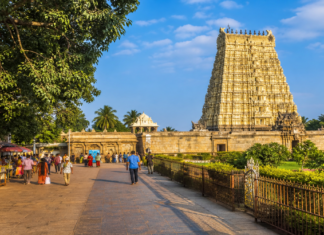
What makes the kumarakottam murugan temple kanchipuram so incredibly unique is its exact geographical placement. In Hindu theology, the Somaskanda posture features Lord Shiva and Goddess Parvati with their child, Lord Murugan, seated playfully between them. Miraculously, the Kanchipuram temple town layout mirrors this exactly: Kumarakottam sits perfectly positioned between the magnificent Ekambareswarar Temple (Shiva) and the powerful Kamakshi Amman Temple (Parvati). You are literally walking through a divine family portrait.
If you are planning a pilgrimage from Hyderabad, Chennai, or anywhere in South India, skipping this shrine means missing the crucial connecting link of Kanchipuram’s spiritual energy. Whether you are coming for the legendary Skanda Sashti celebrations or just looking for a quiet morning darshan, this guide will walk you through everything you need to know before you pack your bags and hit the road.
“Experience the divine Somaskanda alignment where Lord Murugan sits perfectly between Lord Shiva and Goddess Parvati in the heart of Kanchipuram.”
The Sacred History and Somaskanda Legend
Understanding the layout of Kanchipuram is essential to appreciating the Kumarakottam Murugan Temple. Unlike other temple towns where shrines are scattered randomly, Kanchi was designed with immense cosmic intentionality. The Somaskanda alignment is a rare architectural and spiritual phenomenon. Devotees believe that worshipping at Ekambareswarar, then Kumarakottam, and finally Kamakshi Amman completes a sacred circuit that blesses families with harmony, health, and unity.
The presiding deity here is Lord Murugan, specifically worshipped in his Brahmachari (celibate ascetic) form. He holds a rudraksha mala and a kamandalam (water pot), differing from the warrior depictions you might see in the arupadai veedu shrines across Tamil Nadu. This peaceful, meditative posture is said to grant wisdom and clarity to students and seekers who visit the sanctum.
For history buffs, the temple holds deep literary significance. This very soil is where the revered Tamil saint and poet, Kachiyappar, composed the epic Kandha Puranam. Legend has it that Kachiyappar would write his verses during the day and leave the manuscript at the feet of the main deity overnight. By morning, Lord Murugan himself would miraculously correct the grammatical errors and refine the poetry, leaving the final masterpiece for the world to chant.
The Birthplace of the Kandha Puranam
The writing of the Kandha Puranam is not just a myth for the locals; it is a living tradition. Even today, you can feel the poetic vibrations in the mandapams where scholars and priests gather to recite these ancient verses. The temple features a dedicated hall, the Kandha Puranam Arangetram Mandapam, where the epic was first sung and officially presented to the public centuries ago. Standing in that hall, you can almost hear the echoes of history.
When you walk through the inner corridors, look out for the intricate murals and stone carvings that depict various scenes from the Kandha Puranam. From Murugan’s birth from the fiery sparks of Lord Shiva’s third eye to his epic battle against the demon Surapadman, the walls serve as a beautiful, visual storybook for younger children traveling with your family.
Architectural Marvels of Kumarakottam
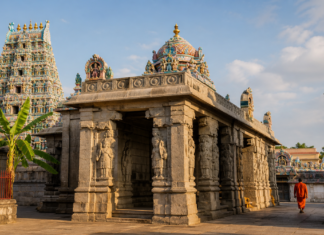
While it might not have the massive, sprawling courtyards of the nearby Ekambareswarar, Kumarakottam’s architecture is incredibly focused and spiritually charged. Built according to strict Agamic principles, the temple features a towering central Vimanam over the main sanctum. The intricate stucco work on the Vimanam highlights various avatars of Murugan, alongside celestial beings showering flowers.
As you enter through the main gopuram, you are immediately greeted by the tall, imposing flagstaff (dvajasthambam) and the traditional vahana mandapam holding the peacock mount facing the Lord. Families often light ghee lamps in this open space, creating a warm, golden glow during the evening darshan hours. The stone pillars throughout the temple are carved with classic Chola and Pallava style motifs, showcasing yalis (mythical lion-elephant beasts) and intricate floral patterns.
One unique architectural feature is the secondary shrine dedicated to Lord Ganesha, known here as Urugum Ulla Vinayagar. Devotees always offer their prayers to this Ganesha before proceeding to Murugan. The temple also houses a sacred temple tank (teertham) which is deeply respected by locals. Though bathing is restricted, sprinkling a few drops of this holy water on your head is considered highly auspicious before entering the main hall.
At a Glance: Top 5 Things to Know
-
The Somaskanda Alignment
Positioned perfectly between the Shiva and Parvati temples of Kanchipuram.
-
Literary Heritage
The exact site where the great Tamil epic, Kandha Puranam, was written and debuted.
-
Unique Deity Posture
Lord Murugan is worshipped here as a meditating ascetic holding a water pot and prayer beads.
-
Festival Hub
Ground zero for massive Skanda Sashti and Vaikasi Visakam celebrations in Kanchi.
-
Highly Walkable
Easily accessible on foot if you are already visiting the major nearby Kanchipuram temples.
How to Plan Your Temple Visit
Planning a trip to Kanchipuram requires a bit of strategy, especially if you are traveling with elderly parents or young kids from cities like Hyderabad or Bangalore. Kanchipuram can get swelteringly hot, so timing your temple visits is crucial. The best time to step into Kumarakottam is either early in the morning when the air is crisp, or late in the evening when the temple is beautifully illuminated with oil lamps.
If you are booking tamilnadu temple tour packages, make sure your operator includes Kumarakottam on the Kanchipuram leg of the journey. Many commercial tours skip it to save time, rushing only to the two largest temples. Insist on a stop here; it completes the spiritual circuit and usually takes less than an hour to experience fully.
For those taking the train, you can check routes and book tickets directly through the IRCTC official website. Getting around Kanchipuram is fairly easy using local auto-rickshaws, but be prepared to negotiate. Because Kumarakottam is centrally located, you can easily walk from Ekambareswarar Temple to Kumarakottam in a few minutes, avoiding the need to haggle for short auto rides.
Pro Tip: What to Pack
Kanchipuram’s stone temple floors can get scorching hot by mid-day. Pack thick cotton socks to protect your feet while walking around the prakarams. Also, bring a reusable water bottle, wet wipes, and a modest shawl. Amazon India Travel Essentials
Reality Check
Let’s be brutally honest for a moment: visiting Kanchipuram during peak festival seasons or long weekends is not for the faint of heart. The streets leading up to Kumarakottam are incredibly narrow. If you are driving your own car or a rented SUV from Hyderabad, finding parking anywhere near the temple entrance is practically impossible. You will likely have to park quite a distance away and rely on walking or crowded autos.
Another thing to watch out for is the touts. Because Kanchipuram is world-famous for its silk sarees, you will be approached constantly outside the temple by “guides” offering to take you to authentic weaver societies. Many of these are commission-based traps selling inferior power-loom silk. Stick to reputed government-approved stores or well-known family showrooms if you plan to shop after your temple darshan.
Finally, there are no massive, air-conditioned waiting halls here like you might find in Tirupati or Madurai. During major Murugan festivals like Skanda Sashti, the crowds inside Kumarakottam can get intensely claustrophobic. If you dislike heavy crowds, avoid festival days and visit on a quiet weekday morning instead.
- Day 1 — Morning: Start your day at 6:30 AM at the Ekambareswarar Temple to witness the majestic Shiva lingam and the ancient mango tree in the cool morning air.
- Day 1 — Afternoon: Take a short walk over to Kumarakottam Murugan Temple before the midday closure. Experience the peaceful Somaskanda energy and view the Kandha Puranam mandapam.
- Day 1 — Evening: Complete the sacred circuit by visiting the Kamakshi Amman Temple at dusk, followed by a traditional South Indian dinner and some Kanjeevaram silk shopping.
Costs vary by season and choice of stay — check live rates before booking.
Safety Tips for Travelers
- Mind Your Belongings: Like any crowded temple town, pickpockets operate in heavy crowds, especially around the gopuram entrances. Keep your phones and wallets in front pockets.
- Beware of Monkeys: Kanchipuram temples have a healthy population of monkeys. Do not carry open food packets, fruits, or bright plastic bags in your hands.
- Dress Modestly: Traditional attire is strongly recommended. Men should wear dhotis or formal pants, and women should opt for sarees or decent salwar kameez.
- Stay Hydrated: The coastal humidity combined with stone structures makes dehydration a real risk. Drink plenty of tender coconut water available right outside the temple.
- Ignore Unsolicited Guides: You do not need a paid guide to understand Kumarakottam. Walk in, observe the architecture, and pray at your own pace.
Nearby Places to Explore
Once you finish your darshan at Kumarakottam, Kanchipuram has an overwhelming wealth of heritage waiting just around the corner.
- Ekambareswarar Temple — Just a short walk away — The Earth element (Prithvi Lingam) of the Pancha Bhoota Stalam, featuring a massive, jaw-dropping temple complex.
- Kamakshi Amman Temple — Very close by — The supreme goddess of Kanchipuram and the final point of the Somaskanda circuit. Essential for all visitors.
- Kailasanathar Temple — A short auto ride away — The oldest structure in Kanchipuram built by the Pallavas, offering unparalleled sandstone carvings.
Get Free Travel Tips in Your Inbox
Join fellow Indian travelers who get our best destination guides, budget tips, and hidden spots delivered every week. No spam. Just good travel content.
Frequently Asked Questions
What are the timings for Kumarakottam Murugan Temple?
Temple timings generally follow the standard Kanchipuram schedule, opening early in the morning, closing for the afternoon heat, and reopening in the evening. However, timings vary for special pujas and festivals — always check the official HRCE source or local temple boards before visiting.
Is there an entry fee for general darshan?
General entry to the temple is free for all devotees. Special darshan tickets or specific archana receipts may be available on busy days. Ticket costs vary — check current rates at the official counter inside the temple premises.
How far is Kanchipuram from Chennai?
Kanchipuram is easily accessible from Chennai by road or local train. It serves as an excellent day-trip or a weekend getaway. You can find official tourism details for the region on the Incredible India website.
Can elderly people easily access the main sanctum?
Yes, compared to the sprawling layout of other larger temples, Kumarakottam is relatively compact. The walk from the main entrance to the sanctum is manageable for elderly devotees, though wheelchair accessibility might be limited over traditional stone thresholds.
What is the best way to include this in a larger itinerary?
If you are traveling from Andhra Pradesh or Telangana, you can easily tie Kanchipuram into a broader circuit. After finishing Kanchi, you can read our madurai itinerary to plan your journey further south into the heartland of Tamil Nadu.
This post contains affiliate links. If you book through our links, we may earn a small commission at no extra cost to you. This helps us keep travellerkaka.com free for everyone.
Plan Your Trip with Us
Have questions about this destination? We would love to help you plan the perfect trip.
Chat with us on WhatsApp or email us at info@travellerkaka.com