

Most travelers map out a trip to Kanchipuram strictly for the world-famous silk sarees, completely missing the profound spiritual heritage that anchors this ancient city. If you are a devotee, a history buff, or simply someone seeking peace, understanding the layout of a kanchipuram shiva temple pilgrimage can transform your entire experience. This city is traditionally divided into two distinct spiritual zones: Shiva Kanchi and Vishnu Kanchi, each pulsating with centuries of devotion, architectural brilliance, and untold legends.
Planning a temple run here can feel overwhelming, especially when navigating the narrow, bustling streets under the intense South Indian sun. Between figuring out which shrines close by noon and negotiating with local auto drivers, it is easy to miss the architectural marvels that actually make Kanchipuram so special. This guide cuts through the noise, giving you a practical, structured approach to experiencing the most powerful Shiva temples in the city without the usual tourist fatigue.
Whether you are driving down from Chennai or making a longer road trip from Hyderabad, knowing exactly where to start and what to look for will save you time and energy. We have curated everything you need to know, focusing purely on what matters to you as a pilgrim and traveler.
“Kanchipuram is not just a city of silk; it is a profound journey in stone where every pillar whispers legends of the divine and every gopuram reaches for the heavens.”
Latest Updates
- Temple administration continuously updates facilities for senior citizens, including battery cars at larger complexes. Verify availability at the official HRCE counters before your visit.
- Digital donation kiosks and streamlined queue systems are being implemented during major festival days to manage crowds more effectively.
The Crown Jewel: Ekambareswarar Temple
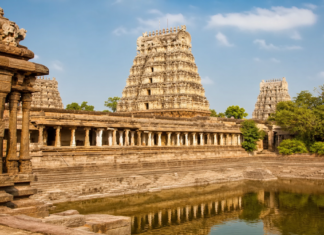
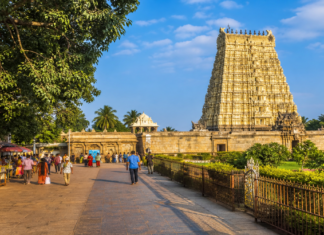
When you speak of any Kanchipuram Shiva temple, the conversation must begin at the awe-inspiring Ekambareswarar Temple. Representing the Earth element (Prithvi) in the sacred Pancha Bhoota Stalam network, this massive complex dominates the northern part of the city. Much like the soaring architecture you would witness at the meenakshi amman temple, the towering Raja Gopuram here leaves visitors completely spellbound.
According to local legend, Goddess Parvati worshipped a Shiva Lingam made of sand under a sacred mango tree. When the neighboring Vegavathi river flooded, she embraced the Lingam to protect it, an act of devotion that deeply moved Lord Shiva. Today, you can still see the ancient mango tree in the temple courtyard, which is believed to yield four different types of mangoes representing the four Vedas.
The corridors here are vast and lined with hundreds of intricately carved pillars. Devotees often spend hours simply sitting in the outer prakarams (precincts), soaking in the meditative silence. The sheer scale of the temple means you should allocate at least two hours to properly explore the shrines, the thousand-pillar hall, and the sacred temple tank.
Pro Tip: What to Pack
Carry thick socks. The stone floors of these massive temple courtyards get blisteringly hot after 10:00 AM. Thick cotton socks will protect your feet while adhering to barefoot rules. Amazon India Travel Essentials
The Architectural Marvel: Kailasanathar Temple
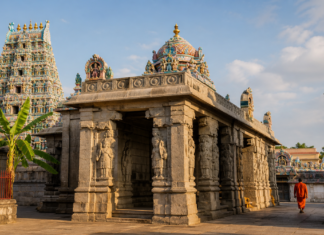
If Ekambareswarar is about sheer scale and spiritual magnitude, the Kailasanathar Temple is a masterclass in ancient Pallava architecture. Built entirely of sandstone in the early 8th century by King Rajasimha, this is the oldest structural temple in Kanchipuram. It sits slightly away from the main chaotic market areas, offering a serene, almost time-travel-like atmosphere.
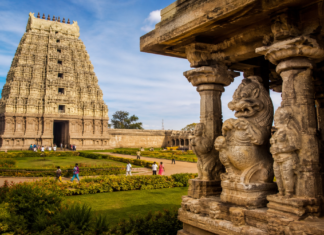
Unlike the bustling commercial temples, Kailasanathar is maintained by the Archaeological Survey of India (ASI). You will notice the rearing lions carved into the pillars and the exquisite Somaskanda panels that depict Shiva, Parvati, and the infant Murugan. The artistry here is so delicate that you can see the evolution of Dravidian architecture right before your eyes. Photographers and history enthusiasts find this temple to be the absolute highlight of their trip.
One of the most unique aspects of this Kanchipuram Shiva temple is the narrow circumambulatory passage around the main sanctum. Pilgrims crawl through this tight, dimly lit tunnel, which symbolizes the cycle of birth and death. Emerging from the narrow exit is said to grant liberation from rebirth, making it a deeply moving ritual for devotees.
Kachapeshwarar Temple: A Unique Convergence
Not far from the main city center lies the Kachapeshwarar Temple, a site that beautifully blends the narratives of Saivism and Vaishnavism. The primary legend here states that Lord Vishnu, in his Kurma (tortoise) avatar, worshipped Lord Shiva at this very spot. The main sculpture depicting this unique mythological event is a rare sight and a major draw for pilgrims who follow both deities.
The temple is relatively quieter than Ekambareswarar, allowing for a more intimate darshan. The inner courtyard is shaded by ancient trees, and the temple tank adds a cooling effect to the premises. It is highly recommended to visit this temple during the early evening hours when the local priests perform the deeply resonant Pradosham poojas.
Because it is located right in the heart of traditional residential streets, the approach can be slightly congested. However, the spiritual payoff is immense. If you are comparing travel distances, much like calculating the chennai to madurai distance to plan your road trip, mapping out the short auto rides between Ekambareswarar and Kachapeshwarar will save you from exhaustion.
Hidden Gems: Iravatanesvara and Muktheeswarar
Beyond the major landmarks, Kanchipuram is dotted with smaller, historically potent Shiva temples that often get skipped by standard tour buses. The Iravatanesvara Temple and the Muktheeswarar Temple are two such brilliant examples of late Pallava architecture. Both are compact, incredibly peaceful, and carry the unmistakable architectural signature of the 8th century.
Muktheeswarar Temple features a slightly elevated sanctum and stunning inscriptions that give historians a glimpse into the economic and social life of ancient Kanchipuram. These temples do not have massive crowds or long queues. They offer you a chance to sit quietly, light a ghee lamp, and meditate without being rushed by security guards.
Many devotees combine this local city trip with a broader navagraha temple circuit in the neighboring districts. However, if you only have one day in Kanchipuram, dedicating your afternoon to these smaller shrines will give you a much more personal connection to the city’s heritage.
Watch Out
Temple touts and unregistered guides often approach visitors near the entrances of major temples. Politely decline their services and either hire an official guide authorized by the HRCE/ASI, or simply explore the temples at your own pace.
Practical Logistics for Your Temple Run
Navigating Kanchipuram requires a bit of strategic planning. The city wakes up early, and so should you. The most important rule of thumb is that almost all major temples close their doors between 12:00 PM and 4:00 PM. Plan to cover the largest temple, Ekambareswarar, right at dawn when the weather is cool and the crowds are thin.
For local transport, auto-rickshaws are your best bet. Similar to booking a madurai sightseeing package, you can negotiate a half-day rate with a local auto driver to take you to 4 or 5 major Shiva temples. Ensure you agree on the price and the exact list of temples before getting in. The narrow lanes make driving your own car between temples highly stressful.
Regarding dress code, South Indian temples strictly enforce traditional attire. Men should wear dhotis or formal pants (no shorts), and women should wear sarees, salwar kameez, or long skirts with a dupatta. Modesty is deeply respected here, and dressing appropriately ensures you will not be denied entry at the main sanctum.
Reality Check
Let’s be completely honest: visiting Kanchipuram is physically demanding. The heat for most of the year is intense, the traffic in the core city can be chaotic, and walking barefoot on hot stone floors will test your endurance. If you are looking for a relaxing, leisurely holiday, a temple-hopping trip in Kanchipuram is not it. It requires stamina and a genuine interest in spirituality or architecture.
Furthermore, the aggressive push by local silk saree touts can get annoying. You will likely be followed by people promising “factory direct prices.” If you have no intention of buying silk, be firm and clear from the start. Stick purely to your temple itinerary to avoid getting dragged into unwanted shopping detours.
| Expense | Budget (INR) | Mid-Range (INR) | Premium (INR) |
|---|---|---|---|
| Costs vary by season and choice of stay — check live rates before booking. | Check current rates | Check current rates | Check current rates |
*Note: Since accommodation and travel costs fluctuate widely based on festival seasons, always verify live pricing online. Special darshan tickets usually range from minimal fees to moderate amounts, subject to temple administration changes.
Safety Tips for Travelers
- Hydration is Key: The combination of extreme heat and walking barefoot can lead to quick dehydration. Carry a reusable water bottle and drink plenty of tender coconut water available outside the temples.
- Secure Your Footwear: Leave your expensive shoes in your hotel room. Wear simple slip-ons or sandals that you won’t mind leaving at the crowded footwear stands outside the temples.
- Beware of Monkeys: Some temple complexes have aggressive monkey populations. Do not carry food items openly in your hands, and avoid making direct eye contact with them.
- Protect Your Valuables: Pickpocketing can happen in tight queues during major festival days. Keep your wallet and phone in a secure, front-facing pouch.
- Respect Photography Rules: While outer courtyards allow photography, strictly put your cameras and phones away near the inner sanctums. Violating this rule deeply offends local sentiments.
Nearby Places to Explore
If you have an extra day, Kanchipuram serves as an excellent base to explore the rich Coromandel Coast and surrounding historical sites.
- Mahabalipuram — Approx. 65 km, 1.5 hours travel time — World-famous for its UNESCO World Heritage shore temples and monolithic rock carvings.
- Vellore Golden Temple (Sripuram) — Approx. 70 km, 2 hours travel time — A stunning spiritual center completely coated in gold foil, offering a modern contrast to Kanchipuram’s ancient stones.
- Vedanthangal Bird Sanctuary — Approx. 48 km, 1 hour travel time — One of the oldest water bird sanctuaries in India, perfect for a peaceful evening visit between November and March.
Get Free Travel Tips in Your Inbox
Join fellow Indian travelers who get our best destination guides, budget tips, and hidden spots delivered every week. No spam. Just good travel content.
Frequently Asked Questions
What is the best time of year to visit Kanchipuram?
The ideal time to visit is during the winter months, from November to February. The weather is relatively cooler, making barefoot temple walks much more comfortable. Avoid the peak summer months of April and May unless you are attending a specific temple festival.
Are non-Hindus allowed inside the Kanchipuram Shiva temples?
Non-Hindus are generally welcome to enter the temple complexes and admire the architecture in the outer courtyards. However, entry into the innermost sanctum (Garbhagriha) is strictly reserved for practicing Hindus.
How many days do I need to cover the main Shiva temples?
If you plan well and hire a local auto-rickshaw, you can cover the major Shiva temples (Ekambareswarar, Kailasanathar, and Kachapeshwarar) in a single, well-paced day. For a deeper exploration of smaller shrines, two full days are recommended.
Is it safe to travel to Kanchipuram as a solo female traveler?
Yes, Kanchipuram is generally very safe for solo female travelers. The town is deeply conservative and religious. As long as you dress modestly and avoid desolate areas late at night, you will face no major issues. Local autos are a safe way to get around.
Where can I find authentic information about temple timings?
Temple timings can shift due to lunar calendar events and local festivals. It is always best to check the official HRCE website or confirm with your hotel front desk the night before your visit.
This post contains affiliate links. If you book through our links, we may earn a small commission at no extra cost to you. This helps us keep travellerkaka.com free for everyone.
Plan Your Trip with Us
Have questions about this destination? We would love to help you plan the perfect trip.
Chat with us on WhatsApp or email us at info@travellerkaka.com