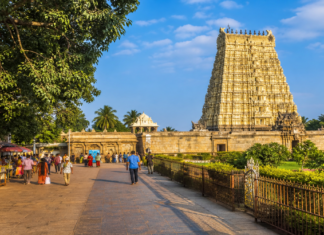


Welcome to Kanchipuram, a historic city where spirituality echoes through ancient stone corridors and the scent of jasmine and camphor fills the air. At the heart of this sacred geography stands the magnificent kanchipuram kamakshi temple, a divine destination that draws thousands of devotees and history enthusiasts from across the country every single year. If you are charting out a trip across Tamil Nadu, this powerful epicenter of faith is an absolute must-visit for your family itinerary.
Dedicated to Goddess Kamakshi, a deeply revered manifestation of Goddess Parvati, this shrine is not just a place of daily worship but an enduring masterpiece of classical Dravidian architecture. Unlike many other temple towns where multiple Shiva shrines dominate the landscape, Kanchipuram is entirely unique. Here, all traditional Shiva temples in the city face this central Amman temple, symbolizing the supreme power of the divine feminine energy.
Whether you are visiting with your elderly parents, traveling solo to find inner peace, or embarking on a spiritual journey with your partner, understanding the local guidelines can make your darshan much smoother. From navigating the bustling temple streets to knowing exactly what to expect inside, let us dive into everything you need to know before you step into this deeply historic sanctuary.
“Experience the serene power of Goddess Kamakshi in the heart of Kanchipuram, where centuries of ancient architecture meet the unwavering faith of millions.”
History of Kamakshi Amman Temple
The origins of the Kamakshi Amman Temple are deeply intertwined with the ancient Pallava dynasty, serving as a testament to their exceptional architectural vision. Over the centuries, successive empires, including the Cholas and the Vijayanagara kings, made their own grand additions, expanding the complex into the sprawling spiritual center it is today. The walls here hold stories of ancient kings who sought the Goddess’s blessings before embarking on massive campaigns.
One of the most significant historical figures associated with this temple is Adi Shankaracharya, the great 8th-century philosopher and theologian. Legend states that he established the powerful Sri Chakra here to pacify the intense, fierce form of the Goddess, transforming her into the peaceful and deeply benevolent Kamakshi we worship today. For travelers exploring broader tamilnadu temple tour packages, the rich historical tapestry found in this city perfectly complements the deep spiritual journeys offered across the rest of the state.
The Legends and Mythology
The mythology surrounding Goddess Kamakshi is as fascinating as the temple’s physical architecture. The name “Kamakshi” translates beautifully: ‘Ka’ refers to Goddess Saraswati, ‘Ma’ refers to Goddess Lakshmi, and ‘Akshi’ means eyes. It is believed that the Goddess encompasses the powers of both wisdom and wealth in her very gaze. Devotees believe that praying here with a pure heart brings harmony to family life and success in new endeavors.
According to local lore, Goddess Kamakshi prayed under a mango tree with an idol made of sand to seek the hand of Lord Shiva in marriage. Impressed by her unwavering devotion, Lord Shiva appeared and married her. This divine union is celebrated with great fervor in Kanchipuram. The stories passed down by the temple priests add a layer of mystical charm that makes simply walking through the corridors feel like stepping back in time.
Architecture and Spiritual Significance
The temple spans a massive area and stands as a brilliant example of classical South Indian construction. As you enter, the first thing that captures your attention is the main sanctum, crowned with a stunning gold-plated Vimanam that shines brilliantly under the bright sun. Inside the primary shrine, Goddess Kamakshi is seated in a majestic Padmasana (lotus) posture. She holds a sugarcane bow along with a lotus and a parrot in her hands, radiating immense peace and prosperity.
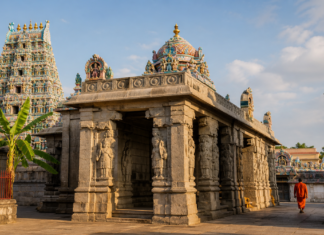
One truly fascinating architectural detail is the Gayathri Mandapam and the intricately sculpted pillared halls that surround the main shrine. If you have ever marveled at the sheer scale and intricacies of the meenakshi amman temple in Madurai, you will deeply appreciate the distinct, serene elegance of the Kanchipuram structure. The stone carvings here depict various deities, floral motifs, and scenes from ancient puranas, showcasing the unmatched skill of historical artisans.
The temple complex also houses a large sacred tank known as the Pancha Ganga. Devotees often sit by the steps of the tank to meditate or quietly chant before joining the darshan queue. It is a space of quiet reflection amidst the constant hum of chanting and temple bells that define the atmosphere of Kanchipuram.
Kamakshi Amman Temple Timings & Darshan Details
Planning your visit around the correct daily schedule is crucial to avoid unnecessarily long waits and ensure a peaceful darshan. The temple typically opens early in the morning for the first rituals of the day, closes during the early afternoon for the deity’s rest, and reopens in the late afternoon for evening worship. Because exact opening hours can occasionally shift during major festivals or eclipses, it is always wise to confirm the day’s schedule with local sources upon your arrival.
Early mornings are generally the best time for a serene and unhurried experience. The morning chants, coupled with the cool breeze, make the spiritual ambiance even more profound. If your family itinerary involves extensive travel across the state, such as managing the long chennai to madurai distance later in the week, fitting this Kanchipuram stop early in your morning keeps your overall schedule perfectly on track.
While a free darshan queue is always available, the temple administration often provides special paid darshan queues. These can significantly reduce your waiting time, which is a blessing if you are traveling with elderly parents or young children. Be sure to purchase these tickets only from the official counters inside the temple premises.
Dress Code and Visitor Etiquette
Like most traditional shrines in South India, the Kamakshi Amman Temple enforces a strict and respectful dress code. Men are expected to wear dhotis or formal trousers with shirts. Women should wear sarees, half-sarees, or modest churidars paired with a dupatta. Western wear such as shorts, skirts, sleeveless tops, and ripped jeans are absolutely not permitted inside the main temple complex.
Photography is strictly prohibited inside the inner sanctum to maintain the deep sanctity of the deity. While you can take pictures of the outer architecture and the temple tank, always look out for signboards indicating restricted zones. This is a place of active, daily worship, so maintaining silence, keeping your phone on silent mode, and following the queues gracefully will ensure a pleasant experience for everyone.
If you are planning an extended spiritual trip, perhaps looking into an arupadai veedu tour next, carrying a few sets of traditional temple wear in your luggage will save you a lot of last-minute hassle across all major shrines in Tamil Nadu.
Best Time to Visit & Festival Highlights
The winter months from November to February offer the most pleasant weather for exploring Kanchipuram. The South Indian summer can be intensely hot, making it difficult to walk barefoot on the stone floors of the temple courtyard. If you must visit during the summer, plan your temple entry for the very early morning or late evening.
The temple comes alive with unmatched grandeur during major festivals. Navaratri is celebrated with immense devotion, featuring special alankarams (decorations) for the Goddess every single day. The annual Brahmotsavam is another spectacular time to visit, where the deity is taken out in grand processions on beautifully crafted wooden chariots. While festival days are heavily crowded, the sheer energy and devotion in the air are an experience of a lifetime.
Reality Check
While the spiritual energy of the Kamakshi Amman Temple is undeniable, visitors should be mentally prepared for heavy crowds. Weekends, public holidays, and auspicious days can see the temple packed to the brim. The queue for the free darshan can stretch for hours, and on particularly busy festival days, even the special darshan tickets do not guarantee immediate entry.
The streets immediately surrounding the temple are quite narrow, bustling with silk weavers, flower vendors, and local traffic. Finding parking close to the temple entrance can test your patience. It is often much better to park a little farther away in a designated spot and walk or take a quick auto-rickshaw to the gate. If you prefer a quiet, solitary spiritual experience without any pushing or long waits, you might find the peak hours overwhelming. Plan for an early morning weekday visit to avoid the massive rush.
Safety Tips for Travelers
- Keep a close watch on your belongings, especially wallets and mobile phones, in crowded darshan queues.
- Stay hydrated during summer visits, as the stone floors of the temple can get extremely hot; consider wearing thick socks to protect your feet.
- Beware of touts offering “shortcut” darshans or overly expensive puja items outside the temple gates; always stick to the official temple counters.
- Ensure your vehicle is parked only in designated or paid parking zones to avoid getting towed by local traffic police.
- If traveling with elderly family members, inquire with the temple office about wheelchair access and special entry provisions beforehand.
Nearby Places to Explore
Kanchipuram is a treasure trove of ancient architecture and world-famous silk weaving heritage that deserves extra time on your itinerary.
- Ekambareswarar Temple — A magnificent Shiva temple featuring a massive gopuram and an ancient mango tree intertwined with local legends.
- Kailasanathar Temple — Kanchipuram’s oldest structure, known for its stunning Pallava sandstone carvings and a deeply peaceful atmosphere away from the city chaos.
- Varadharaja Perumal Temple — A sprawling Vaishnavite temple famous for its beautifully carved 100-pillared hall and the sacred gold and silver lizard carvings.
- Kanchipuram Silk Weavers Village — Explore the traditional handlooms and purchase authentic Kanjivaram silk sarees directly from generational weaving families.
For broader guidelines on exploring heritage sites safely across the state, you can always refer to the official Ministry of Tourism resources.
Get Free Travel Tips in Your Inbox
Join fellow Indian travelers who get our best destination guides, budget tips, and hidden spots delivered every week. No spam. Just good travel content.
Frequently Asked Questions
Is there a dress code for Kamakshi Amman Temple?
Yes, traditional Indian attire is mandatory. Men should wear dhotis or formal pants with shirts, and women should wear sarees, half-sarees, or modest churidars. Shorts and sleeveless clothes are strictly not allowed.
How far is Kanchipuram from Chennai?
Kanchipuram is located a short drive from Chennai, making it an easy and popular day trip by car, state bus, or local train.
Are there special darshan tickets available?
Yes, the temple administration usually offers paid special darshan tickets to help bypass the longer free darshan queues, though wait times can still be significant on major festival days.
Can we buy Kanchipuram silk sarees near the temple?
Absolutely. The streets surrounding the temple complex are packed with both large retail showrooms and traditional weaver cooperatives selling authentic, high-quality Kanjivaram silk.
What is the best time of year to visit?
The winter months from November to February offer the most pleasant and comfortable weather for exploring the temple courtyards and the surrounding heritage city without battling the intense heat.
This post contains affiliate links. If you book through our links, we may earn a small commission at no extra cost to you. This helps us keep travellerkaka.com free for everyone.
Plan Your Trip with Us
Have questions about this destination? We would love to help you plan the perfect trip.
Chat with us on WhatsApp or email us at info@travellerkaka.com