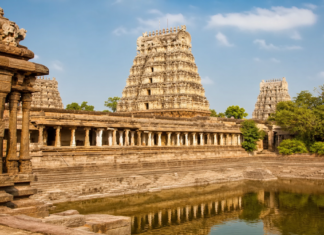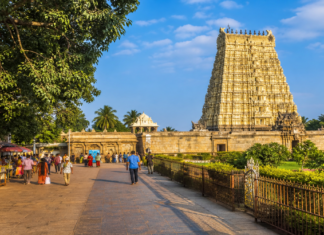


When you think of Kanchipuram, your mind probably jumps straight to the rustle of heavy silk sarees or the towering gopurams of massive, bustling shrines. But hidden just a little away from the main city’s chaos is a quiet, stunning secret. Made almost entirely of sandstone, this structure predates the mighty Cholas and stands as the oldest surviving architectural marvel in the city.
This is the Kailasanathar Temple, Kanchipuram. Unlike the highly active commercial shrines nearby, this temple offers something rare: absolute peace, incredible sculptural beauty, and a direct window into the 8th century. If you are a history buff, a solo traveler looking for quiet photography spots, or a family wanting to show your kids real Indian heritage, the kailasanathar temple kanchipuram needs to be on your list.
Let us walk through what makes this Pallava-era masterpiece so special, how to plan your visit, and what you should expect when you finally stand before its famous roaring sandstone lions.
| Detail | Info |
|---|---|
| Primary Deity | Lord Shiva |
| Architectural Style | Dravidian (Built by the Pallava Dynasty) |
| Managed By | Archaeological Survey of India (ASI) |
| Ideal For | History lovers, families, architecture enthusiasts |
“Standing before the sandstone lions of Kailasanathar is like stepping directly into the golden era of the Pallava kings, long before the Cholas ruled the south.”
The Unique Appeal of Kanchipuram’s Oldest Temple
There is a specific reason why this shrine feels so different from the rest of Kanchipuram. Most temples in South India have been expanded layer by layer over centuries by different rulers. You will often see a Pallava base, a Chola main tower, and a Vijayanagara outer wall. But Kailasanathar is a pure, unadulterated time capsule.
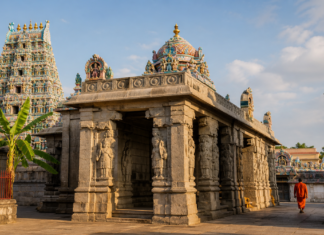
Because it was largely left untouched by subsequent empires, what you see today is exactly what was envisioned in the 8th century. The temple complex is not overwhelming in size, but it is overwhelmingly rich in detail. It does not have the dizzying, brightly painted gopurams that you see elsewhere. Instead, it boasts a low-slung, earthy sandstone charm that glows beautifully during sunrise and sunset.
For travelers exploring the region, taking time off from saree shopping to spend an hour here is highly recommended. It provides a quiet contrast to the busy streets and allows you to truly appreciate the foundational roots of South Indian architecture.
A Journey into Pallava History
To understand the stone before you, you have to look back at the Pallava dynasty. The construction was initiated by the famous King Rajasimha (also known as Narasimhavarman II) in the early 8th century. Up until this point, the Pallavas were famous for carving temples out of solid rock, much like the famous monuments in Mahabalipuram.
This temple marked a massive shift. It was their very first structural temple—meaning it was built by putting stone blocks together rather than carving into a single mountain. The King’s son, Mahendravarman III, also contributed to the front facade of the temple complex. According to historical records, the sheer beauty of this structure heavily inspired the later Chola kings. In fact, it is said that Raja Raja Chola visited this site and took inspiration back with him to build the monumental Brihadeeswarar Temple in Thanjavur.
If you want to read more about the recognized heritage monuments across the country, you can always check the official resources at incredibleindia.gov.in.
Architectural Marvels You Cannot Miss
The moment you walk through the main gates, the architecture commands your attention. The entire complex is surrounded by an outer wall consisting of 58 small shrines, each housing stunning forms of Lord Shiva. The main Vimana (the tower over the sanctum) is perfectly proportioned and features intricate stucco work.
The Intricate Sandstone Carvings
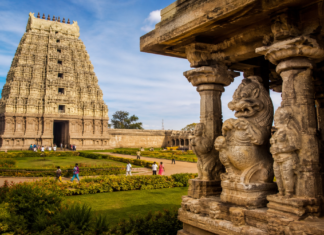
The walls are a visual encyclopedia of Hindu mythology. You will find endless rows of Yalis—mythological creatures that are part lion, part elephant, and part horse—standing proudly on their hind legs, acting as pillars. These rearing lions are a classic signature of Pallava architecture.
Another highlight is the Somaskanda panel found inside the sub-shrines. These panels depict Lord Shiva and Goddess Parvati sitting together with the child Lord Murugan (Skanda) between them. Because the temple is made of sandstone, which is relatively soft, the sculptors were able to carve incredibly expressive faces and dynamic postures.
The Secret Circumambulatory Path
Perhaps the most fascinating physical experience here is the narrow circumambulatory passage (pradakshina patha) that runs around the inner sanctum. This is not your standard wide walking path. To complete the circuit, devotees have to literally crawl through a very narrow, dark tunnel, enter a small space, and then exit through another tight squeeze.
This architectural feature is highly symbolic. The difficult entry represents the pain of birth, the dark passage represents the journey of life, and the tight exit symbolizes death and ultimate liberation (Moksha). It is a thrilling, albeit slightly claustrophobic, experience that you will remember long after your trip.
Timings and Darshan Information
Because this site is primarily maintained as an archaeological monument by the ASI rather than a commercial religious center, it does not follow the frantic schedule of a typical mega-temple. However, it still functions as a living shrine where daily prayers are offered to the Shiva Lingam.
Since timings and specific entry fees can fluctuate based on ASI policies and maintenance schedules, the exact darshan windows are subject to change. Varies — check current rates and official ASI sources before planning your visit. Generally, early mornings offer the best lighting for photography and a much cooler climate for walking barefoot on the stone courtyard.
Pro Tip: What to Pack
Since you will be walking barefoot on open stone, carry a pair of thick, dark-colored socks to protect your feet from the intense midday heat. Amazon India Travel Essentials
Planning Your Route from South India
Getting to Kanchipuram is relatively straightforward, especially if you are traveling from major hubs like Chennai, Bangalore, or Hyderabad. Kanchipuram is situated just off the Chennai-Bangalore highway, making it a very popular weekend drive.
For those taking a longer road trip across the state, Kanchipuram acts as an excellent starting point before heading south. If you are ever curious about the chennai to madurai distance, you will find that starting from Chennai, hitting Kanchipuram, and then driving down towards Madurai makes for a classic heritage itinerary. To visualize your broader trip, you can check out a madurai in india map to see how perfectly Kanchipuram fits into a north-to-south cultural corridor.
At a Glance: Top 5 Things to Know
-
Oldest Structure
It is the oldest surviving temple in Kanchipuram, completely untouched by later dynasties.
-
Pallava Lions
The rampant lion pillars are the signature architectural style of King Rajasimha.
-
Symbolic Crawl
The inner circumambulation path requires you to crawl, symbolizing the cycle of birth and death.
-
Photographer’s Delight
Due to the lack of heavy crowds, the sandstone walls offer fantastic photography opportunities.
-
ASI Protected
It is primarily a heritage monument, meaning the vibe is historical rather than highly religious.
Reality Check
While the temple is undeniably beautiful, it is important to manage your expectations. Because the entire structure is made of sandstone, it is highly susceptible to weathering. You will notice that many of the once-sharp carvings have softened, blurred, or eroded entirely over the last 1,300 years. The ASI has done restoration work, but the signs of age are very visible.
Furthermore, if you are visiting with elderly family members, the famous circumambulatory passage is not recommended for them. It requires getting down on your hands and knees in a very tight, unventilated space. Lastly, if you are seeking the grand, festive, bustling atmosphere of South Indian temples with elephants, massive flower markets, and continuous chanting, this is not that place. This site offers quiet reflection and architectural appreciation.
- Day 1 — Morning: Arrive early at the temple to beat the heat, photograph the sandstone lions, and explore the 58 sub-shrines in peace.
- Day 1 — Afternoon: Head into the main town for a traditional South Indian thali, followed by a visit to the local silk weaving units to see Kanjeevaram sarees being made.
- Day 1 — Evening: Visit the massive Ekambareswarar Temple to witness the contrast between Pallava subtlety and later grand Dravidian expansions, then head back to your stay.
Costs vary by season and choice of stay — check live rates before booking. Check latest prices on Agoda
Get Free Travel Tips in Your Inbox
Join fellow Indian travelers who get our best destination guides, budget tips, and hidden spots delivered every week. No spam. Just good travel content.
Safety Tips for Travelers
- Wear comfortable, slip-on footwear as you will need to remove them before entering the main courtyard.
- Carry your own water bottle; commercial shops are not allowed right next to this protected monument.
- Do not lean on or touch the ancient sandstone sculptures, as the oils from human skin accelerate their degradation.
- If you suffer from claustrophobia or back issues, avoid the inner narrow parikrama (crawling passage).
- Hire only official, ASI-certified guides if you want the actual history, rather than local myths.
Nearby Places to Explore
Once you finish your historical tour, Kanchipuram has plenty more to offer just a short distance away.
- Ekambareswarar Temple — Check mapping app for distance — Famous for its towering gateway and the ancient, sacred mango tree.
- Kamakshi Amman Temple — Check mapping app for distance — The spiritual heart of the city and a vibrant center of Goddess worship.
- Varadharaja Perumal Temple — Check mapping app for distance — Renowned for its stunning 100-pillared hall and intricate stone chains.
Frequently Asked Questions
Who built the Kailasanathar Temple?
The temple was primarily built by the Pallava King Rajasimha (Narasimhavarman II) in the early 8th century, with some front additions made by his son, Mahendravarman III.
Is there an entry fee?
Entry policies and fees are managed by the ASI. Varies — check current rates at the official ASI ticket counter when you arrive.
Can we take photographs inside?
Photography is generally permitted in the outer courtyards and around the Vimana. However, capturing images inside the main sanctum is strictly prohibited.
How much time is required to visit?
You should set aside at least 1 to 2 hours. This gives you enough time to walk around the 58 sub-shrines, observe the carvings, and experience the quiet atmosphere.
Is it an active temple for worship?
Yes, daily prayers are offered to the Shiva Lingam, but it is primarily maintained as an archaeological monument, so it lacks the heavy commercial religious activities seen in other city temples.
This post contains affiliate links. If you book through our links, we may earn a small commission at no extra cost to you. This helps us keep travellerkaka.com free for everyone.
Plan Your Trip with Us
Have questions about this destination? We would love to help you plan the perfect trip.
Chat with us on WhatsApp or email us at info@travellerkaka.com