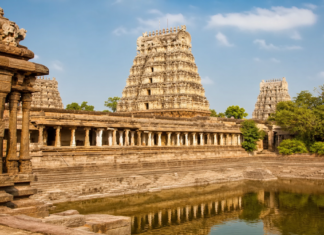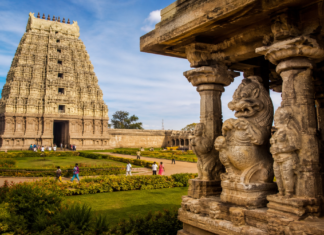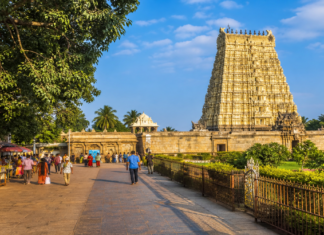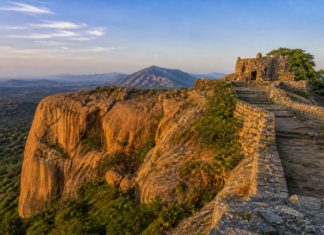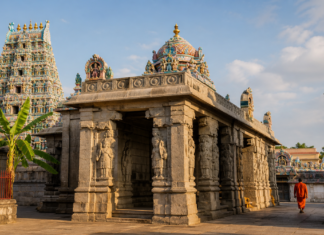


The morning sun strikes the ancient monolithic rock of the Grishneshwar & Ellora Caves, casting long, dramatic shadows over a site that has stood as a gateway between the human and the divine for over 1,500 years. If you are feeling trapped in the endless loop of city traffic and monotonous work weeks, a soul-stirring retreat to one of India’s most significant cultural anchors is long overdue. Our Grishneshwar Ellora Guide helps you bypass the tourist confusion and step straight into the quiet power of history and devotion.
We understand the pressure of limited time; that is why we have crafted this precise one-day itinerary. Whether you are a solo backpacker or traveling with your family, this guide covers everything from the quiet lanes of the Jyotirlinga to the architectural marvel of the Kailasa Temple.
| Detail | Info |
|---|---|
| Best Time to Visit | October to March (Weather is pleasant) |
| Distance from Hyderabad | Approx. 650 km |
| Budget Estimate (per person) | ₹4,500 – ₹7,000 |
| Ideal For | Families, History Buffs, Pilgrims |
| Must-See Spots | Kailasa Temple, Grishneshwar Jyotirlinga |
| Getting There | Flight/Train to Aurangabad, then Taxi |
“Standing before the monolith of Kailasa, you realize that some stories are not told in books, but carved into the very bones of the earth.”
Understanding the Grishneshwar Ellora Guide Logistics
Planning a trip to the Grishneshwar Ellora region requires a solid grasp of local transit. Most travelers fly or take a train to Aurangabad (Chhatrapati Sambhajinagar). From the city center, you can easily hire a pre-paid auto-rickshaw or a private cab to reach the caves, which are located about 30 kilometers away.
The cave complex is massive, spanning 34 structures across three religious traditions: Buddhism, Hinduism, and Jainism. We suggest starting your day early, around 8:00 AM, to beat the afternoon heat and the heavy school-trip crowds that arrive by noon.
The Spiritual Significance and Architecture
The Grishneshwar Jyotirlinga holds a unique place in Hindu cosmology as the final of the twelve holy shrines dedicated to Lord Shiva. The temple architecture, characterized by its red stone and traditional Shikara, offers a stark, peaceful contrast to the sprawling cave network nearby.
Focus your attention on the intricate carvings that tell stories from the Puranas. The temple premises are usually clean, and the management ensures a smooth flow of devotees, though it can get crowded during Monday rituals.
Aurangabad Residency Hotel
Price: ₹3,500/night | Location: Near Railway Station | Best For: Comfort and Connectivity
This hotel offers a reliable base for travelers looking to explore both the city and the surrounding heritage sites. Check latest prices on Agoda
Mastering the Cave Trails
The main attraction is undoubtedly Cave 16, the Kailasa Temple. It is not built by stacking stones but by carving a single mountain from top to bottom. Seeing this in person is a humbling experience that photos simply cannot replicate.
Wear comfortable walking shoes because you will cover a fair amount of distance across uneven rock surfaces. Carry a light backpack to hold water and snacks, as shops inside the complex are infrequent and can be overpriced.
Pro Tip: What to Pack
Always carry a portable power bank, a wide-brimmed hat, and a light jacket if visiting in winter. Get your travel gear here: Amazon India Travel Essentials
Food and Local Cuisine
Aurangabad is famous for its spicy and tangy cuisine, heavily influenced by the Mughal legacy. Look for local ‘Naan Qalia,’ a signature meat-and-bread dish that you will not find anywhere else in the region. For vegetarians, the local ‘Thali’ served in the city’s heart is hearty and affordable.
Travel Modes to Aurangabad
| Factor | Train | Flight |
|---|---|---|
| Cost | Budget-friendly | Premium |
| Comfort | Moderate | High |
| Travel Time | 12-18 hours | 1-2 hours |
| Booking Ease | IRCTC Portal | Airlines/Aggregators |
At a Glance: Top 5 Things to Know
- Visit Mid-Week
Avoid Saturdays and Sundays to escape massive crowds.
- Footwear
Wear grippy walking shoes for rocky stairs.
- Hydration
Carry at least two liters of water per person.
- Photography
Allowed in most areas; tripods are generally restricted.
- Closed Days
Note that the caves remain closed on Tuesdays.
Location Map
Reality Check
Is this trip for everyone? The Ellora Caves involve steep climbs and rocky paths that may be challenging for elderly visitors or those with knee issues. While the main Kailasa temple is accessible, the surrounding caves require navigating uneven, narrow corridors.
Also, keep in mind that the site is immense. If you have only one day, you will be exhausted by the time you reach the Jain caves. If you prefer a leisurely pace, we highly recommend extending your stay by one extra day to fully absorb the scale of these ancient wonders.
- Day 1 — Morning: Start early at Grishneshwar Jyotirlinga followed by the Kailasa temple (Cave 16).
- Day 1 — Afternoon: Explore the Buddhist caves (Caves 1-12) and grab a quick local lunch outside the complex.
- Day 1 — Evening: Visit the Jain caves (Caves 30-34) before heading back to the city for dinner.
Budget Breakdown
| Expense | Budget (INR) | Mid-Range (INR) | Premium (INR) |
|---|---|---|---|
| Transport (Cab) | 1,500 | 2,500 | 4,000 |
| Entry Fees | 500 | 500 | 500 |
| Food & Drink | 800 | 1,500 | 2,500 |
| Accommodation | 1,700 | 2,500 | 5,000 |
| Total | 4,500 | 7,000 | 12,000 |
Get Free Travel Tips in Your Inbox
Join fellow Indian travelers who get our best destination guides, budget tips, and hidden spots delivered every week. No spam. Just good travel content.
Safety Tips for Travelers
- Do not trust unauthorized guides near the parking lot; only use official ASI-approved guides.
- Maintain a distance from wild monkeys in the vicinity; they are known to snatch bags.
- Check the official Ministry of Tourism website for updated local entry rules.
- Keep an emergency contact saved in your phone; cell reception is generally strong, but it can be spotty inside the deeper caves.
- Avoid traveling during the peak of the monsoon if you are sensitive to slippery mud and heavy humidity.
Nearby Places to Explore
While you are here, these nearby spots are well worth the detour.
- Ajanta Caves — 100 km, approx 3 hours — Renowned for ancient Buddhist frescoes and paintings.
- Bibi Ka Maqbara — 30 km, approx 1 hour — Often called the ‘Mini Taj’ of the Deccan.
- Daulatabad Fort — 15 km, approx 45 mins — A formidable medieval fortress with an ingenious design.
- Panchakki — 30 km, approx 1 hour — An ancient water mill that showcases historical engineering.
Frequently Asked Questions
Is the Kailasa temple open to tourists?
Yes, the Kailasa Temple is the most popular part of the Ellora complex and is fully open to the public daily, except on Tuesdays.
Do I need a separate ticket for Grishneshwar and Ellora?
The Grishneshwar Jyotirlinga is a functioning temple and does not require an entry fee, while the Ellora Caves require an Archaeological Survey of India (ASI) ticket.
Are there good transport options from Aurangabad?
Yes, local taxis, state-run buses, and pre-paid auto-rickshaws are easily available for the 30-minute ride to the caves.
Can I visit Ajanta and Ellora in one day?
It is physically exhausting to cover both in a single day as they are in opposite directions; we suggest at least two days for a complete trip.
Is there any dress code?
There is no strict dress code for the caves, but for the Grishneshwar temple, modest clothing covering shoulders and knees is mandatory.
This post contains affiliate links. If you book through our links, we may earn a small commission at no extra cost to you. This helps us keep travellerkaka.com free for everyone.
Plan Your Trip with Us
Have questions about this destination? We would love to help you plan the perfect trip.
Chat with us on WhatsApp or email us at info@travellerkaka.com
null