

Kanchipuram Temples: Complete Guide to the City of Thousand Temples
Stepping into Kanchipuram feels like walking through a living museum of spirituality and heritage. As one of the seven Moksha-puris (sacred cities that grant salvation) in India, this ancient Pallava capital is synonymous with divine architecture, vibrant silk weaving, and deep-rooted cultural traditions. If you are planning a spiritual getaway from Hyderabad or Chennai, a well-planned kanchipuram temple visit offers an experience unlike any other.
Many travelers make the mistake of assuming Kanchipuram is just a quick stopover for buying sarees. In reality, the intricate stone carvings, sprawling temple complexes, and the sheer spiritual energy of the city require a dedicated, unhurried visit. Whether you are a solo traveler seeking peace or a family introducing the next generation to South Indian heritage, this city has something profound to offer.
Because temple timings, crowd levels, and local transport can be overwhelming for first-time visitors, having a clear plan is essential. From navigating the massive corridors of Ekambareswarar to finding authentic Kanjeevaram silk straight from the weavers, this comprehensive guide will help you architect the perfect Kanchipuram itinerary.
Since travel times and local conditions vary, we recommend checking routing online and confirming live rates before your trip. The best time to visit is generally between October and March when the weather is pleasant.
“Step into Kanchipuram, where every carved stone tells a thousand-year-old story and the air carries the rustle of pure silk.”
The Spiritual Significance of Kanchipuram
Kanchipuram is uniquely blessed with majestic shrines dedicated to both Lord Shiva and Lord Vishnu, making it a revered destination for both Shaivites and Vaishnavites. The city is broadly divided into two zones: Shiva Kanchi in the north and Vishnu Kanchi in the east. Understanding this layout will save you immense time and auto-rickshaw fares while hopping between shrines.
The sheer density of heritage sites here often draws comparisons to Kumbakonam. While exploring, you might want to read our guide on the shiva temples in kumbakonam to understand how Chola architecture contrasts with the Pallava and Vijayanagara styles prevalent in Kanchi.
Most temples here follow a strict routine, typically closing their main sanctums between noon and late afternoon. Planning your day around these closures is the single most important secret to a successful Kanchipuram trip.
Must-Visit Shiva Temples
Ekambareswarar Temple (The Earth Element)
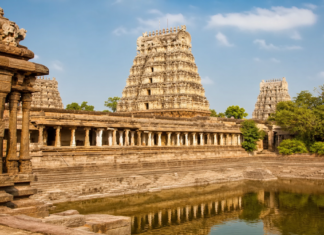
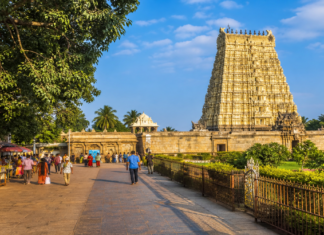
As one of the Pancha Bhoota Stalas, this temple represents the element of Earth (Prithvi). The sheer scale of the Ekambareswarar temple complex is awe-inspiring, featuring massive gopurams (gateway towers) that dominate the city’s skyline. The main attraction for devotees is the ancient mango tree in the courtyard, believed to yield four different types of mangoes representing the four Vedas.
The corridors here are lined with countless pillars, offering a cool, shaded retreat even on hot afternoons. Photography outside the main sanctum is a delight, capturing the magnificent Vijayanagara-style architecture. Make sure to walk around the entire inner prakaram (corridor) to truly appreciate the temple’s vastness.
Kailasanathar Temple (A Pallava Masterpiece)
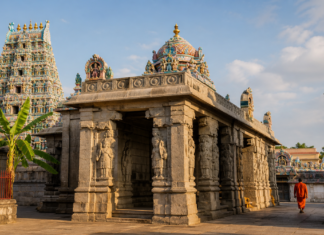
Unlike the bustling, heavily modernized temples in the city center, the Kailasanathar Temple offers a serene, almost meditative atmosphere. Built entirely of sandstone by the Pallava dynasty, it is the oldest structure in Kanchipuram. The intricate carvings of mythical creatures, dancing Shivas, and rearing lions are remarkably preserved.
This temple is maintained by the Archaeological Survey of India (ASI) rather than the local religious board, meaning there are no long darshan queues or commercial activities inside. It is the perfect spot for history buffs and architecture enthusiasts to spend a quiet morning.
Must-Visit Vishnu & Devi Temples
Varadharaja Perumal Temple
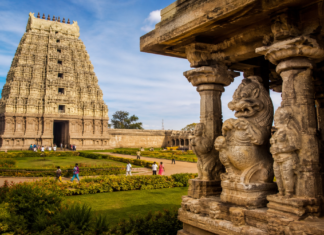
Located in Vishnu Kanchi, this sprawling temple is one of the 108 Divya Desams revered by the Alwars. The temple is famous for its massive 100-pillared hall, which features incredibly detailed sculptures, including riders on rearing horses. Another unique highlight is the golden and silver lizards carved on the ceiling; touching them is believed to wash away past sins.
During the annual Brahmotsavam festival, the temple witnesses massive crowds, especially for the Garuda Seva. The temple tank here also houses the wooden idol of Lord Athi Varadar, which is brought out for public viewing only once every 40 years—a truly historic event.
Kamakshi Amman Temple
The Kamakshi Amman Temple is the spiritual epicenter of Kanchipuram and a highly revered Shakti Peeth. Unlike other cities where Amman (the Goddess) has a shrine within the Shiva temple, in Kanchipuram, Kamakshi is the supreme deity, and all Shiva temples face her shrine. The Goddess here is depicted in a majestic Padmasana (lotus) posture, exuding peace and grace.
The temple’s golden chariot procession is a breathtaking sight. It is highly recommended to visit this temple early in the morning to avoid the heavy rush and experience the morning aarti in relative peace.
Watch Out
Beware of unofficial “guides” hovering around temple entrances offering special darshan tickets or immediate entry. Always purchase tickets only at the official temple counters inside the premises.
The Kanjeevaram Silk Experience
A trip to Kanchipuram is incomplete without understanding its legendary silk weaving industry. The Kanjeevaram saree, known for its heavy silk, pure gold and silver zari, and contrasting borders, is a staple in South Indian weddings. The city is home to thousands of weaver families who have been practicing this craft for generations.
For an authentic experience, skip the massive showrooms on the main roads and ask your auto driver to take you to the weavers’ cooperative societies. Here, you can actually see the wooden looms in action, hear the rhythmic clacking of the shuttles, and purchase sarees directly from the makers. This not only guarantees authenticity but also supports the artisans directly.
Comfort Stays in Kanchipuram
Price: Varies – check current rates | Location: Central Kanchipuram | Best For: Families and Pilgrims
While Kanchipuram has limited luxury options, there are several clean, comfortable, air-conditioned lodges near the main bus stand and Kamakshi Temple. Check latest prices on Agoda
How to Reach and Get Around
Kanchipuram is highly accessible, especially from Chennai, which is the nearest major airport. The drive from Chennai via the national highway is smooth and takes roughly two hours, making it an easy weekend road trip. If you are coming from further away, planning your broader Tamil Nadu route is crucial. For instance, many travelers combine this trip with points south; understanding the chennai to madurai distance can help you plan a multi-city driving itinerary.
Within the city, auto-rickshaws are the primary mode of transport. It is best to hire an auto for a half-day or full-day temple tour rather than haggling for single drops. Ensure you agree on a fixed rate and clearly list the temples you wish to cover before starting the journey.
For more official travel resources and state-run transport options, you can check the Incredible India website.
Pro Tip: What to Pack
The stone floors of the temples can get blisteringly hot by 11 AM. Carry a pair of thick, dark-colored socks to wear inside the temple premises after removing your shoes. Amazon India Travel Essentials
Reality Check
Let’s be completely honest: Kanchipuram is a bustling, dusty, and often chaotic pilgrimage town, not a manicured tourist resort. The traffic near the Kamakshi Amman temple and the main silk shopping districts can be painfully slow, and the summer heat (from April to July) is notoriously harsh.
If you are looking for a relaxing vacation with scenic viewpoints, this is not the place. The focus here is strictly on deep spirituality, incredible ancient architecture, and textile heritage. Furthermore, the main sanctums are strictly for Hindus, though visitors of all faiths are welcome to admire the architecture in the outer courtyards.
Sample 1-Day Family Itinerary
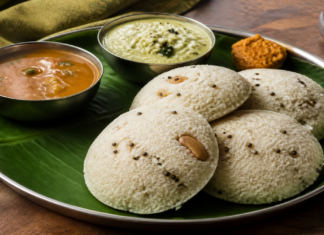
- Day 1 — Morning: Start by 6:30 AM at the Kamakshi Amman Temple to beat the crowds. Enjoy a traditional South Indian breakfast of idli and vada at a local mess nearby.
- Day 1 — Late Morning: Head to the Ekambareswarar Temple. Walk through the massive corridors and view the ancient mango tree before the temple closes for the afternoon break.
- Day 1 — Afternoon: As temples close between 12:30 PM and 4:00 PM, use this time to visit a silk weavers’ cooperative. Have a traditional thali lunch and rest at your hotel.
- Day 1 — Evening: Visit the Varadharaja Perumal Temple around 5:00 PM. End your day at the Kailasanathar Temple to watch the sunset against the ancient Pallava sandstone.
Costs vary by season and choice of stay — check live rates before booking.
Get Free Travel Tips in Your Inbox
Join fellow Indian travelers who get our best destination guides, budget tips, and hidden spots delivered every week. No spam. Just good travel content.
Safety Tips for Travelers
- Hydration is key: The combination of heat and massive temple complexes means you will walk a lot. Carry a reusable water bottle.
- Dress Modestly: Traditional attire is highly recommended. Men should ideally wear dhotis or formal trousers, and women should wear sarees, half-sarees, or kurtas with dupattas. Avoid shorts and sleeveless tops.
- Guard your belongings: Temple crowds can get very dense, especially during aarti times. Keep your wallet and phone in a secure, front-facing cross-body bag.
- Beware of Monkeys: Many temples have a large monkey population. Do not carry food in your hands or open bags in front of them.
- Footwear strategy: Wear easy slip-on sandals. You will be taking them off and putting them back on multiple times a day.
Nearby Places to Explore
If you have extra days, the region surrounding Kanchipuram offers fascinating extensions to your trip.
- Mahabalipuram — Explore the coastal rock-cut temples and shore monuments built by the same Pallava kings who built Kanchipuram’s earliest shrines.
- Vellore Golden Temple — A modern spiritual marvel coated in pure gold, offering a highly organized darshan experience.
- Kumbakonam — If you are on an extended temple run, you can map out a route further south. Checking a kumbakonam navagraha temples route map can help you transition from the Pallava heartland to the Chola dynasty’s architectural wonders.
Frequently Asked Questions
What is the dress code for Kanchipuram temples?
Traditional Indian wear is required. For men, dhotis or formal pants with shirts are acceptable (some inner sanctums may require men to remove their shirts). Women should wear sarees, salwar kameez with dupattas, or long skirts. Shorts, ripped jeans, and sleeveless tops are strictly not allowed.
Can non-Hindus visit the temples?
Yes, visitors of all faiths are welcome to enter the temple complexes, admire the architecture, and walk the outer corridors. However, entry into the innermost sanctum sanctorum (Garbhagriha) is generally restricted to Hindus only.
How many days do I need for Kanchipuram?
A well-planned one-day trip starting early in the morning is sufficient to cover the four major temples and do some silk shopping. However, to truly explore the smaller, lesser-known shrines at a relaxed pace, an overnight stay of two days is ideal.
Are the temples open all day?
No. Almost all major temples in Kanchipuram close their doors between 12:30 PM and 4:00 PM for the deities to rest. You must plan your sightseeing strictly around the morning and evening sessions.
Where is the best place to buy authentic Kanjeevaram silk?
While the main Gandhi Road is lined with mega-showrooms, the most authentic and fairly priced sarees are found at the government-approved weavers’ cooperative societies scattered around the city. Look for the “Silk Mark” certification to ensure the purity of the zari and silk.
This post contains affiliate links. If you book through our links, we may earn a small commission at no extra cost to you. This helps us keep travellerkaka.com free for everyone.
Plan Your Trip with Us
Have questions about this destination? We would love to help you plan the perfect trip.
Chat with us on WhatsApp or email us at info@travellerkaka.com