

Kanchipuram Silk Sarees: Weaving Centers & Shopping Guide
For generations, South Indian weddings have been synonymous with the rich, heavy drape of a Kanchipuram silk saree. Every middle-class family dreams of buying authentic bridal wear directly from the source. This comprehensive kanchipuram silk sarees shopping guide is designed to help you navigate the bustling lanes of Kanchipuram without getting scammed.
Walking into the town, you will be overwhelmed by hundreds of shops, auto drivers claiming to know “factory outlets,” and dazzling window displays. It is easy to end up paying premium prices for power-loom duplicates or half-fine zari if you do not know what to look for. Finding authentic weavers requires patience, a bit of insider knowledge, and the ability to say no to aggressive middlemen.
Whether you are a bride-to-be planning your wedding trousseau or a family traveler looking for heirloom pieces, this guide will walk you through the entire process. We will cover how to spot real silk, how to avoid common tourist traps, and how to shop directly from government-certified weaving societies.
“Stepping into a Kanchipuram weaver’s home isn’t just about buying a saree; it is about witnessing raw threads of silk turn into heirloom art.”
The Legacy of Kanchipuram Silk Weaving
To truly appreciate the value of what you are buying, you must understand the history of this ancient craft. Kanchipuram is often called the City of a Thousand Temples, but it is equally famous for its legendary weavers. According to local lore, the weavers are descendants of Sage Markanda, the master weaver for the gods.
Authentic Kanchipuram sarees are woven from pure mulberry silk thread. The heavy weight of the saree comes from the fact that three single threads of silk are twisted together to form the yarn. This makes the saree incredibly durable, allowing it to be passed down from mothers to daughters.
The most distinctive feature of these sarees is the Korvai weaving technique. The body of the saree and the border are woven separately and then interlocked with a strong tear-drop joint. If you look closely at the reverse side of an authentic Korvai border, you can feel the slight unevenness where the two parts meet.
At a Glance: Top 5 Things to Know
-
The Silk Mark
Always demand to see the official Silk Mark label to ensure 100% pure silk authenticity.
-
Check the Weight
Authentic handloom sarees are noticeably heavier due to the three-ply silk yarn.
-
Ignore the Brokers
Never trust auto drivers or street touts offering free rides to “hidden” weaving factories.
-
Understand the Zari
Pure zari contains real silver and gold, while half-fine zari uses copper wire electroplated with gold.
-
Shop at Co-operatives
Government-backed co-operative societies offer fixed, honest prices directly from the weavers.
Navigating Weaving Centers and Co-operative Societies
If you want to buy directly from the source, you should bypass the massive commercial showrooms on the main highways. The true heart of Kanchipuram’s weaving culture lies in the narrow residential streets where the weavers live and work. However, locating a genuine weaver who sells directly to retail customers is challenging.
This is why shopping at government-recognized Co-operative Societies is the safest bet for most travelers. These societies are established to protect the weavers from exploitation. When you buy from a registered co-operative, you are guaranteed authentic handloom products, and the profits go directly to the weaving community.
Look for society showrooms that prominently display their government registration numbers. The prices here are fixed, which eliminates the stress of aggressive bargaining. Remember that the shopping environment in a co-operative is very basic; do not expect fancy air-conditioned lounges or complimentary beverages.
Decoding Gandhi Road: The Main Shopping Hub
For those who prefer a more traditional retail experience, Gandhi Road is the epicenter of silk saree shopping in Kanchipuram. This long, chaotic street is lined bumper-to-bumper with silk showrooms. You will find everything from massive multi-story retail giants to tiny family-run boutiques.
The advantage of shopping on Gandhi Road is the sheer variety of designs available under one roof. The larger showrooms stock thousands of sarees, ranging from simple festive wear to heavy bridal brocades. They also adapt quicker to modern color palettes and contemporary design trends compared to the traditional co-operatives.
However, shopping here requires caution. Many shops on this stretch sell power-loom copies mixed in with genuine handloom pieces. Always ask the salesperson specifically for handloom sarees and verify the Silk Mark certification before making a purchase. Take your time, ask them to unfold the sarees fully, and check the drape in natural light.
Watch Out
The “Auto Driver Guide” scam is the most common trap in Kanchipuram. Auto drivers will offer to take you to “original weaver houses” for very cheap fares. In reality, they drive you to middleman shops that pay them a 20% to 30% commission, which is quietly added to your final bill. Always book a cab or navigate on foot to your chosen stores.
How to Identify Authentic Kanchipuram Silk
Knowing how to spot the real deal is crucial when spending your hard-earned money. The first and easiest check is the Silk Mark tag. This is a certification mark issued by the Silk Mark Organisation of India, guaranteeing the product is made of pure natural silk.
Next, examine the Zari. Authentic Kanchipuram zari is made by twisting a silk thread with silver wire, which is then dipped in pure gold. To test the zari, look closely at a loose thread at the end of the pallu. If you scrape the gold coloring off the zari thread and see red silk fiber underneath, it is authentic. If you see white or copper, it is likely a cheaper alternative.
Finally, perform the burn test if the shop owner permits it using a loose thread from the edge. Pure silk burns with the smell of burnt hair and leaves a brittle black ash that crumbles easily. Fake synthetic silk will melt like plastic, smell like burning chemicals, and form a hard bead.
Understanding Traditional Motifs and Designs
Every traditional motif on a Kanchi pattu saree tells a story rooted in South Indian temple architecture and mythology. The designs are not just decorative; they hold deep cultural significance. Recognizing these patterns adds immense value to your shopping experience.
The Annapakshi (a mythical bird) is one of the most beloved motifs, symbolizing purity and prosperity. You will often see it woven intricately into the pallu or as a repeating butta on the body. The Yali, a mythical creature that is part lion, part elephant, and part horse, is frequently found on the thick borders of bridal sarees to ward off evil.
Other popular designs include the Manga (mango or paisley), representing fertility, and the Rudraksha beads, symbolizing Lord Shiva. The Temple Border (gopuram motifs consisting of rows of large triangles) is the hallmark signature of Kanchipuram design. When selecting a wedding saree, South Indian families often look for these specific auspicious symbols.
Pro Tip: What to Pack
Shopping for sarees is an all-day affair. Wear comfortable slip-on footwear, as you will have to remove your shoes before stepping onto the mattresses in the showrooms. Carry a large, sturdy tote bag and a water bottle to stay hydrated. Amazon India Travel Essentials
How to Care for Your Kanchipuram Silk Saree
Once you have invested in a beautiful Kanchipuram silk saree, proper maintenance is essential to preserve its luster for decades. These sarees should never be hand-washed or machine-washed at home. They strictly require professional dry cleaning to maintain the integrity of the silk and the shine of the zari.
When storing the saree, do not hang it on metal hangers, as this can stretch the heavy fabric and cause the zari to tarnish. Instead, fold it neatly and wrap it in a pure cotton or muslin cloth. This allows the natural silk fibers to breathe while protecting the gold threads from oxidation.
It is important to unfold and air out your silk sarees every three to four months. Let them rest in a shaded, well-ventilated room for a few hours before refolding them along different crease lines. This simple practice prevents the heavy silk from tearing at the folds over time.
Reality Check
Let us be completely honest about shopping in Kanchipuram: it can be exhausting. The streets are incredibly crowded, the weather is usually hot and humid, and traffic jams are a daily reality. This is not a relaxed, air-conditioned mall experience; it is a chaotic, sensory-overload adventure.
If you lack patience or hate dealing with aggressive street touts, you might find the experience overwhelming. Shopkeepers in the main commercial areas will push hard to close a sale, and if you cannot distinguish between power-loom and handloom, you risk overpaying.
Who should skip this? If you only want to buy one or two basic silk sarees, the travel time and effort to reach Kanchipuram might not be worth it. You can find authentic certified pieces in major showrooms in Chennai, Hyderabad, or Bangalore. Kanchipuram is best suited for families buying in bulk for weddings, where the price difference justifies the journey.
Safety Tips for Travelers
- Ignore Street Touts: Never follow individuals on two-wheelers offering to guide you to weaver societies. They are commission agents.
- Carry Cash Safely: While most big showrooms accept credit cards and UPI, smaller weavers might prefer cash or UPI. Keep your wallet secure in crowded areas.
- Check for Hidden Damages: Before finalizing the bill, ask the staff to fully open the saree and inspect it against the light for any weaving defects or tears.
- Beware of Traffic: The narrow lanes near the temples and shopping districts are chaotic. Keep children close and watch out for speeding two-wheelers.
- Stay Hydrated: Saree shopping involves sitting in shops for hours. Drink plenty of bottled water to avoid exhaustion in the humid Tamil Nadu heat.
Combining Your Shopping Trip with Temple Visits
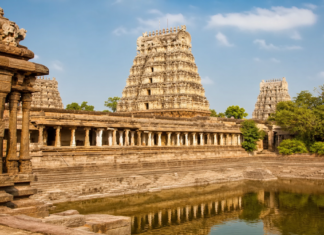
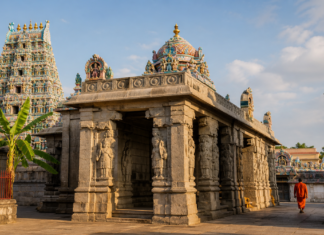
Kanchipuram is one of the seven holiest cities in India. It would be a missed opportunity to visit purely for shopping without experiencing its magnificent architecture. You can easily divide your day, dedicating the morning to temple darshans and the afternoon to saree shopping.
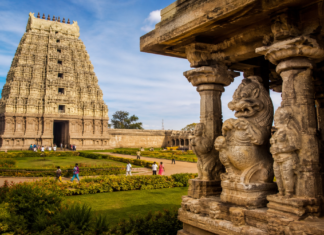
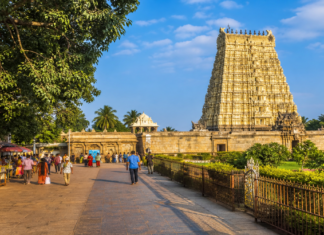
The majestic Kailasanathar Temple is a masterpiece of Pallava architecture and offers a peaceful escape from the busy town center. The Ekambareswarar Temple, representing the earth element of Lord Shiva, features a massive gopuram and an ancient mango tree that is highly revered.
For Vishnu devotees, the Varadharaja Perumal Temple is a must-visit. Its intricately carved pillared halls are spectacular. Ensure you check the temple timings, as most close around noon and reopen late in the afternoon. This break perfectly aligns with your midday shopping schedule.
If you are planning an extended spiritual journey across South India, understanding the chennai to madurai distance can help you map out a road trip covering multiple temple towns. Many families organize a comprehensive madurai itinerary that includes a stopover in Kanchipuram for wedding purchases before heading further south.
Nearby Places to Explore
If you have extra time after completing your silk shopping, consider extending your South India journey to these fascinating destinations.
- Mahabalipuram — Explore the ancient shore temples and rock-cut caves just a short drive toward the coast.
- Chennai — The bustling capital city offers rich cultural experiences, marina beaches, and excellent culinary trails.
- Vellore — Visit the imposing Vellore Fort and the spectacular Golden Temple of Sripuram.
For a detailed breakdown of regional travel routes and planning, check our guide on how to reach madurai, which serves as a great hub for exploring southern Tamil Nadu. You can also explore official tourism initiatives on the Incredible India website.
Get Free Travel Tips in Your Inbox
Join fellow Indian travelers who get our best destination guides, budget tips, and hidden spots delivered every week. No spam. Just good travel content.
Frequently Asked Questions
Is it really cheaper to buy silk sarees in Kanchipuram?
Yes, buying directly from co-operative societies or authentic weavers in Kanchipuram can save you between 15% to 30% compared to retail prices in major metropolitan cities. The savings are especially significant when purchasing heavy bridal sarees.
Are shops open on Sundays?
Most major showrooms on Gandhi Road and private boutiques remain open on Sundays to accommodate weekend travelers. However, some government co-operative societies might have restricted hours, so confirm locally before visiting.
How can I avoid fake silk sarees?
The most foolproof method is to demand the Silk Mark tag. Additionally, you can perform the zari test by scraping the gold thread to look for red silk underneath, and rely on the heavier weight of authentic handloom pieces.
Can I bargain in Kanchipuram?
In government co-operative societies, prices are strictly fixed. In private showrooms on Gandhi Road, there is usually a small margin for negotiation, especially if you are purchasing multiple sarees for a wedding trousseau.
What is a Korvai saree?
A Korvai saree is a traditional handloom weaving technique where the body of the saree and the contrast border are woven separately and then intricately interlocked together. This requires the skill of two weavers working simultaneously on the loom.
This post contains affiliate links. If you book through our links, we may earn a small commission at no extra cost to you. This helps us keep travellerkaka.com free for everyone.
Plan Your Trip with Us
Have questions about this destination? We would love to help you plan the perfect trip.
Chat with us on WhatsApp or email us at info@travellerkaka.com