
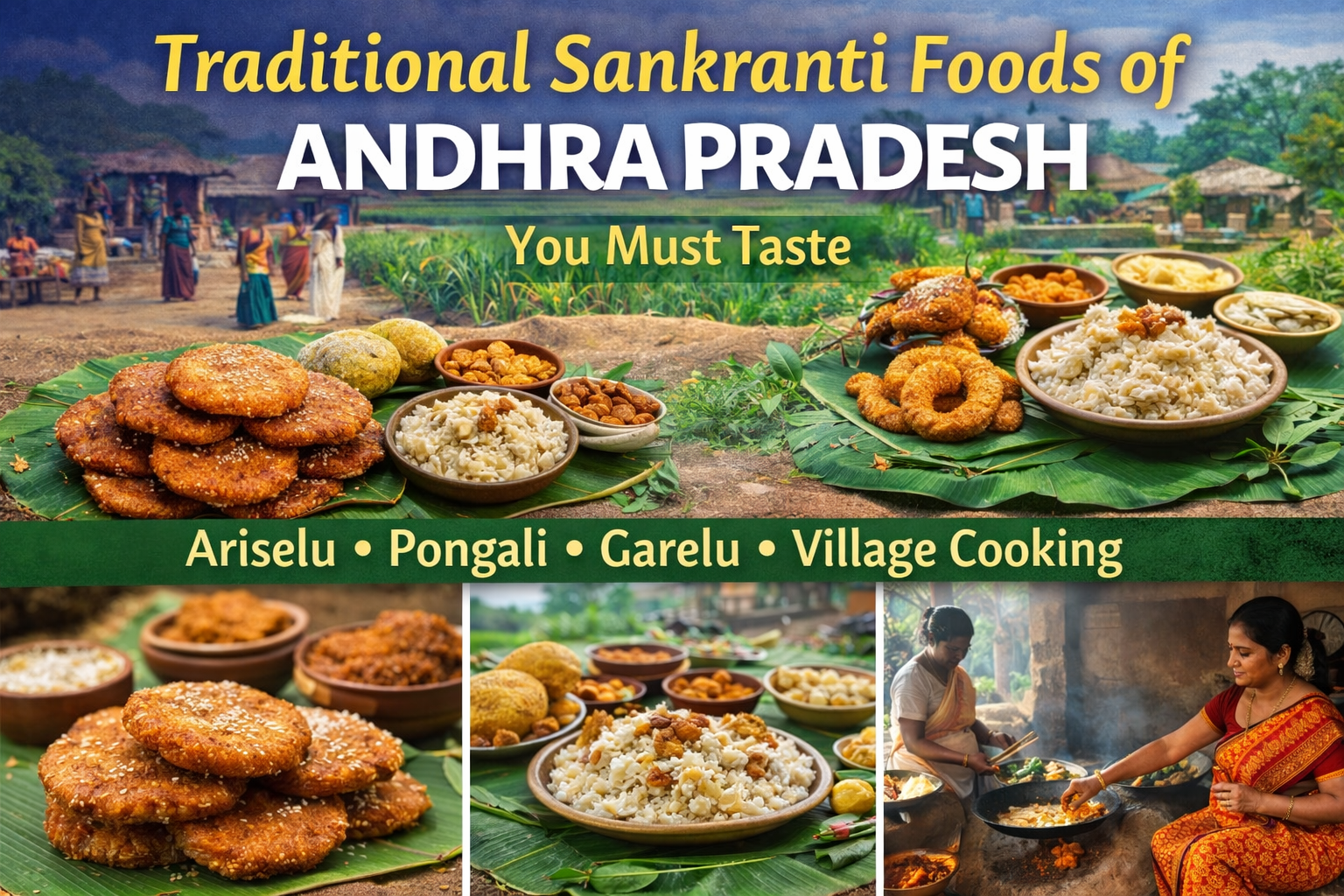
Sankranti in Andhra Pradesh is not announced by dates on a calendar.
It is announced by smells.
The aroma of jaggery melting, rice batter frying slowly, firewood smoke mixing with morning air—this is how Sankranti arrives. Food is not a side activity during Sankranti. It is the celebration.
In Telugu homes, Sankranti food carries memory, gratitude, and emotion. Recipes are not rushed. Measurements are not exact. Everything is done by instinct, experience, and tradition passed quietly from one generation to the next.
Why Food Is Central to Sankranti
Sankranti is a harvest festival.
And harvest begins in the kitchen.
Freshly harvested rice, new jaggery, lentils, and ghee come together during this time. Families believe food cooked during Sankranti tastes better because it is made from new produce, not stored grains.
Cooking also becomes a community activity.
Women gather early in the morning. Children watch, learn, and taste. Elders supervise without interfering.
Food during Sankranti is not about variety.
It is about purity and abundance.
This is why the Sankranti festival in Andhra Pradesh feels incomplete without traditional dishes.
Ariselu: The Soul of Sankranti
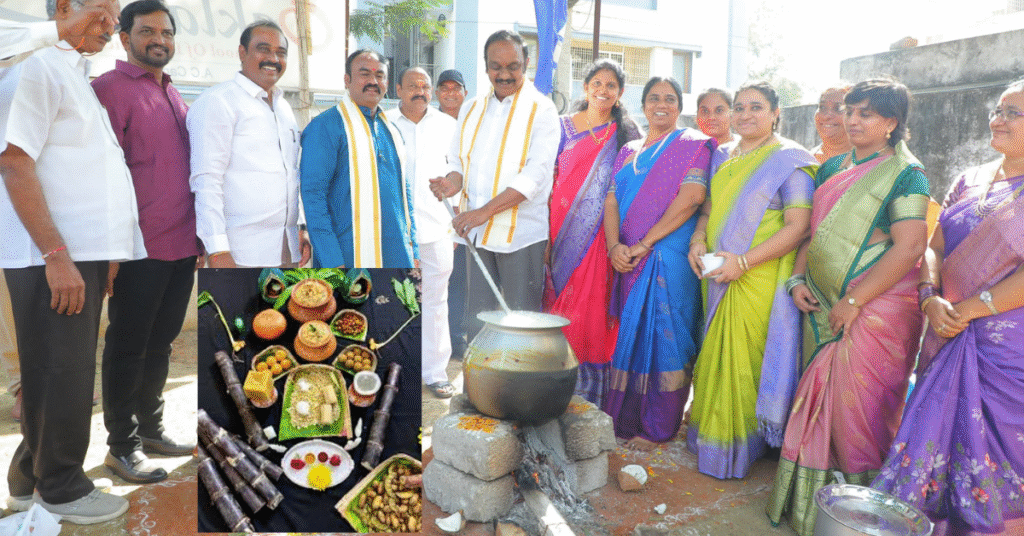
If Sankranti had a taste, it would be ariselu.
Made from rice flour, jaggery, and ghee, ariselu is not easy to prepare. The batter needs perfect consistency. The oil temperature must be exact. Timing matters.
That difficulty is what makes ariselu special.
In villages, ariselu preparation begins days before Sankranti. Families make them in batches, sharing with neighbours and relatives.
Each household’s ariselu tastes slightly different.
That difference is pride.
For many Telugu people, Sankranti memories begin with hot ariselu straight from the pan.
Pongali and Garelu: Simple, Sacred, Satisfying

While ariselu steals attention, pongali and garelu form the foundation of Sankranti meals.
Pongali is prepared both sweet and savoury. Cooked with freshly harvested rice and lentils, it is often offered during early morning rituals.
Garelu, crispy on the outside and soft inside, are prepared in large quantities. They are eaten hot, shared freely, and rarely measured.
These dishes reflect Sankranti’s spirit—simple food, made slowly, meant to be shared.
Kanuma and Village-Style Cooking
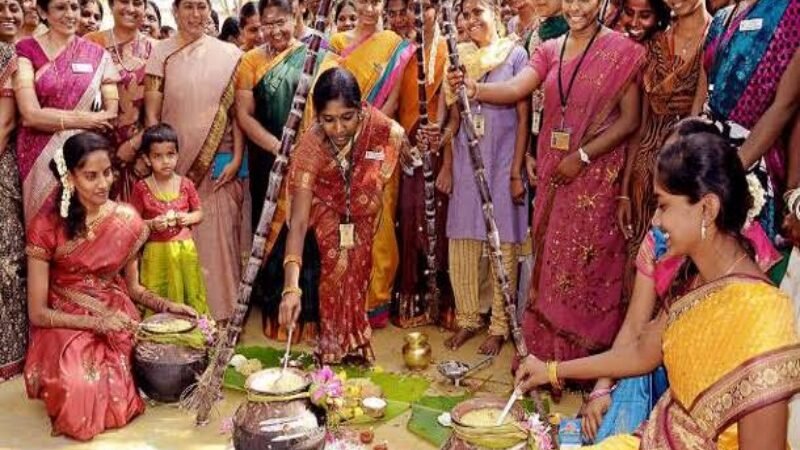
Food changes slightly after Sankranti day.
During Kanuma, village kitchens open wider. Firewood stoves are lit early. Cooking shifts outdoors. Meals become heavier and more relaxed.
In many regions, Kanuma marks the return of non-vegetarian dishes after festival rituals. Everything is prepared fresh, using local produce.
Kanuma cooking is unhurried.
No one asks when food will be ready.
It arrives when it’s meant to.
Understanding Bhogi, Sankranti, Kanuma & Mukkanuma helps explain why food also follows this rhythm.
Why Sankranti Food Tastes Different
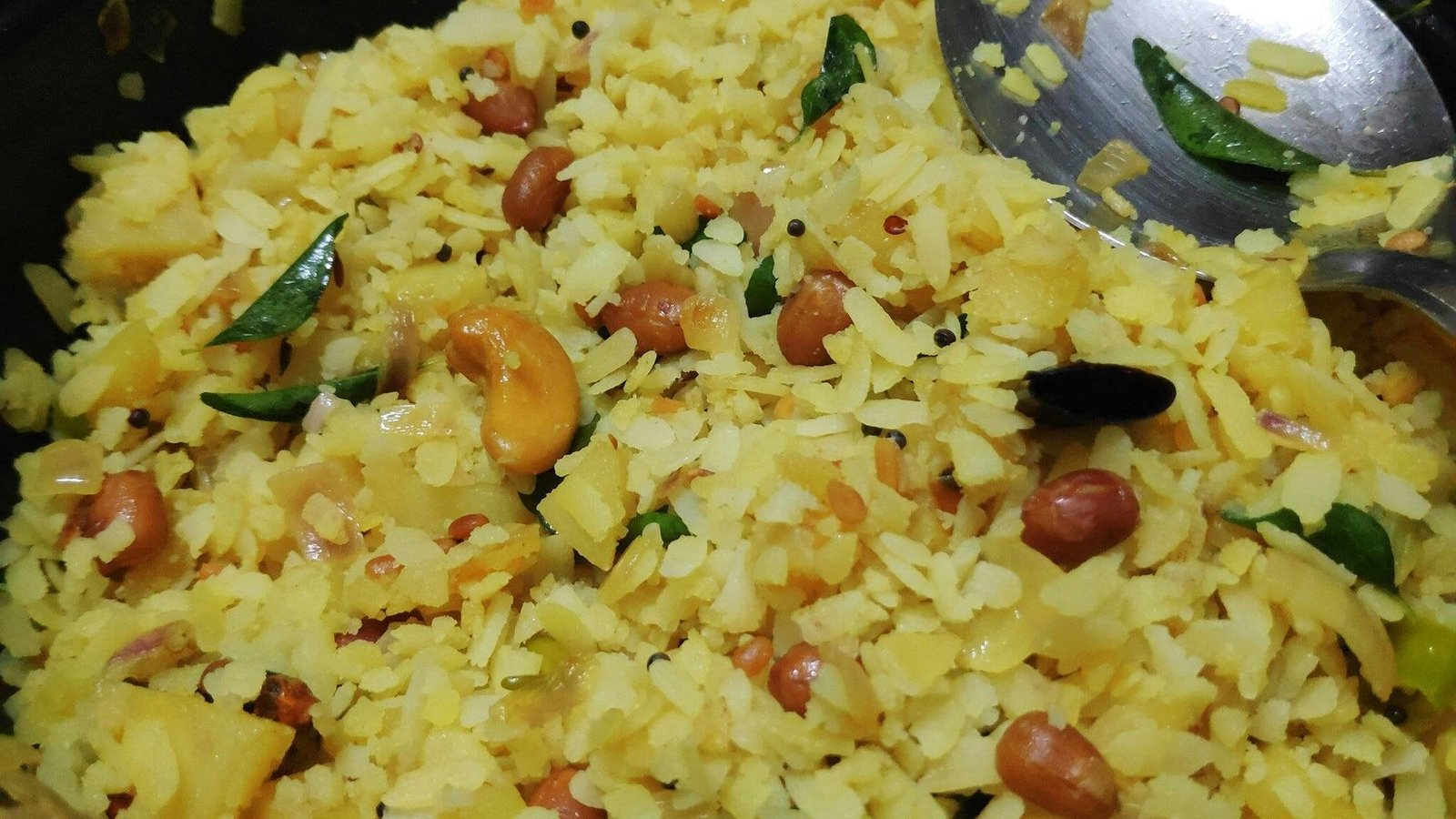
People often say Sankranti food tastes better.
They are right.
It tastes different because:
- Ingredients are fresh from harvest
- Cooking is done without pressure
- Food is shared, not served
- Kitchens are filled with conversation
There is also emotion involved. Many people cook these dishes only once a year. That rarity adds value.
Food prepared with patience always tastes richer.
Sankranti Food in Villages vs Cities

In cities, Sankranti food is prepared efficiently.
In villages, it is prepared emotionally.
Village kitchens use firewood. Quantities are large. Guests arrive unannounced. Plates are refilled without asking.
This is why many families travel to the best villages to experience Sankranti—to taste food that still follows old rhythms.
Can Travelers Experience Authentic Sankranti Food?
Yes—but not in restaurants.
The best Sankranti food is found in:
- Village homes
- Family gatherings
- Homestays during festival time
Travelers who stay back after Sankranti day often get invited to Kanuma meals. That is when real food appears—simple, heavy, unforgettable.
This is also why Sankranti family trips centered around villages feel more meaningful than tourist-focused holidays.
Sankranti Food Is More Than Recipes
No cookbook can capture Sankranti food fully.
Because it is not just about ingredients.
It is about:
- Timing
- Sharing
- Presence
- Gratitude
When food is prepared to celebrate harvest, it carries something deeper than taste.
It carries respect.
Final Thoughts: Taste Sankranti Where It Lives
You can buy sweets anywhere.
But Sankranti food must be experienced.
Sit on the floor.
Eat with your hands.
Listen to conversations.
Wait without asking.
In Andhra Pradesh, Sankranti food is not cooked to impress.
It is cooked to connect.
And once you taste it the traditional way, you understand why this festival still lives in kitchens—not on menus.
👉 Explore More on travellerkaka.com
Read our complete guide to the Sankranti festival in Andhra Pradesh, understand Kanuma food traditions, explore the best villages to experience Sankranti, and plan budget-friendly Sankranti family trips rooted in culture.