
If you truly want to feel Sankranti, not just celebrate it, you need to be in a village.
Cities decorate Sankranti.
Villages live Sankranti.
In Andhra Pradesh, Sankranti is still deeply connected to land, farming, cattle, and community life. Villages slow down, families come together, and traditions flow naturally—without planning, without schedules.This guide takes you through some of the best villages and village regions in Andhra Pradesh where Sankranti feels real, warm, and unforgettable.
Why Village Sankranti Feels Different
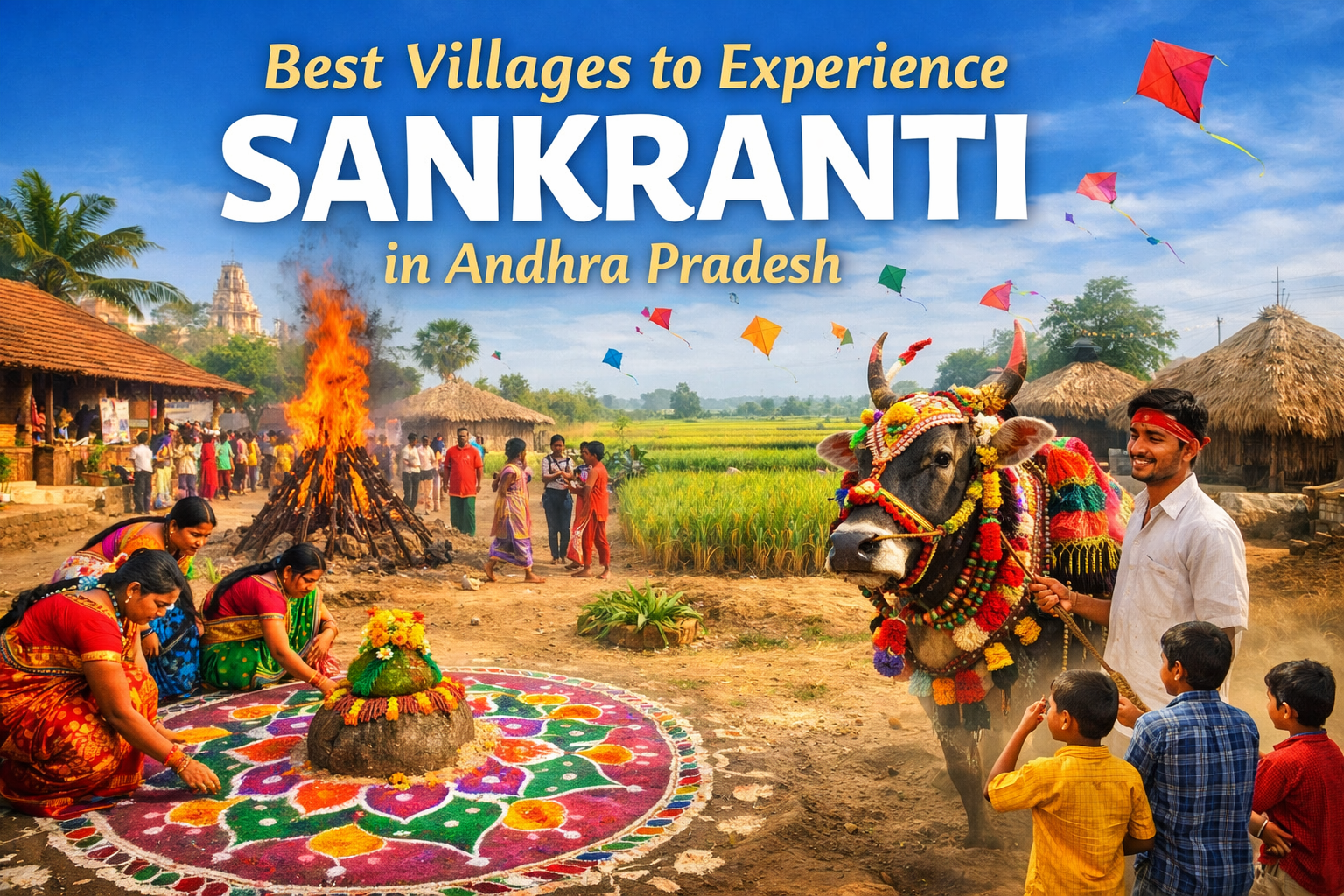
Village Sankranti begins before sunrise.
Bhogi Mantalu glow in the cold morning air.
Muggulu appear at every doorstep.
The smell of firewood and fresh food fills the lanes.
There is no rush.
No countdown.
No performance.
Everything happens because it has always happened that way.
For families, children, and travelers, this is where Sankranti reveals its soul.
Godavari Belt Villages – The Heart of Sankranti Traditions
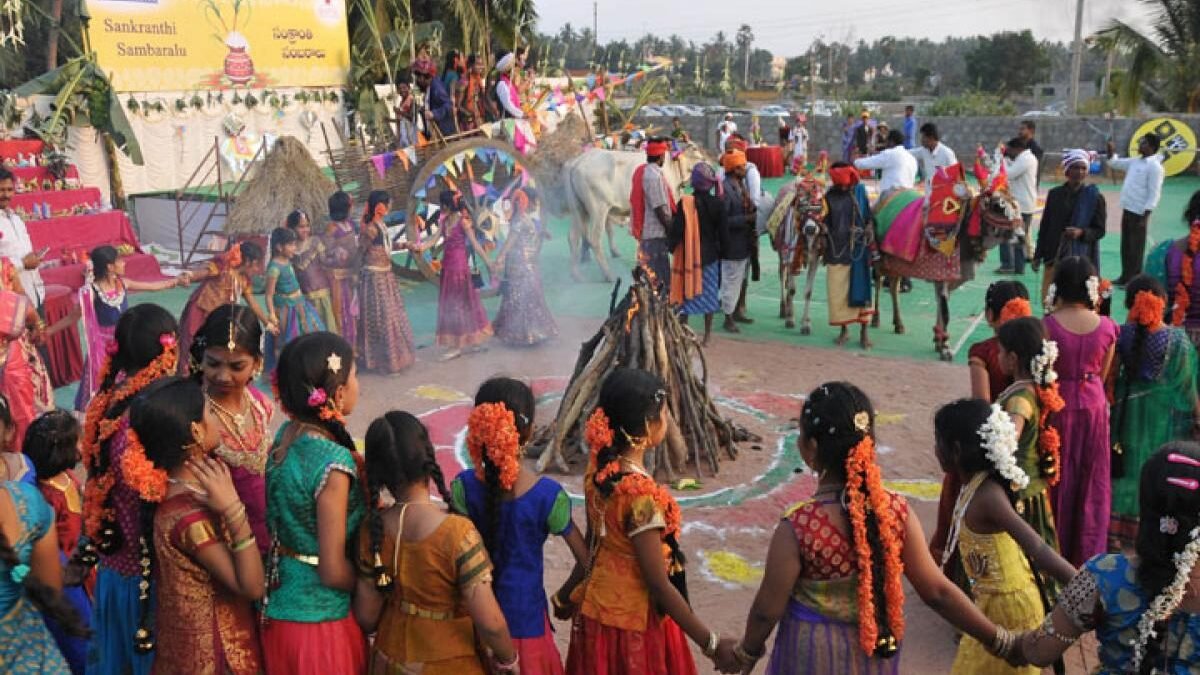
Villages in the East and West Godavari districts are considered the most vibrant places to experience Sankranti.
This region is rich in agriculture, especially paddy fields, making harvest celebrations naturally grand.
Several towns and large villages in Andhra Pradesh are especially known for their vibrant Sankranti atmosphere. Bhimavaram, often called the cultural heart of the Godavari region, comes alive during Sankranti with massive Bhogi Mantalu, elaborate muggulu, and community-wide celebrations. Ramachandrapuram and nearby villages reflect classic delta traditions, where farming families celebrate Kanuma with decorated cattle and shared feasts. Places like Palakollu, Narsapuram, and rural pockets around Amalapuram are famous for their hospitality, traditional food, and deeply rooted rituals. In Krishna district, villages near Gudivada and Nuzvid balance accessibility with authentic village customs, making them ideal for families visiting during the festival. These towns may be well-connected, but during Sankranti they still preserve the warmth and rhythm of true village life.
Krishna District Villages – Culture, Food & Family Gatherings

Villages around Krishna district offer a balanced Sankranti experience.
Here, tradition blends gently with modern influence. You will still see Bhogi fires, village rituals, and Kanuma celebrations, but with better accessibility and comfort.
These villages are ideal for:
- Families traveling with elders
- First-time village Sankranti visitors
- Short Sankranti holidays
Food plays a major role here. Ariselu, garelu, pongali, and traditional meals are cooked slowly and shared generously.
Krishna district villages make Sankranti feel welcoming rather than overwhelming.
Rayalaseema Villages – Simple, Emotional, and Deeply Rooted
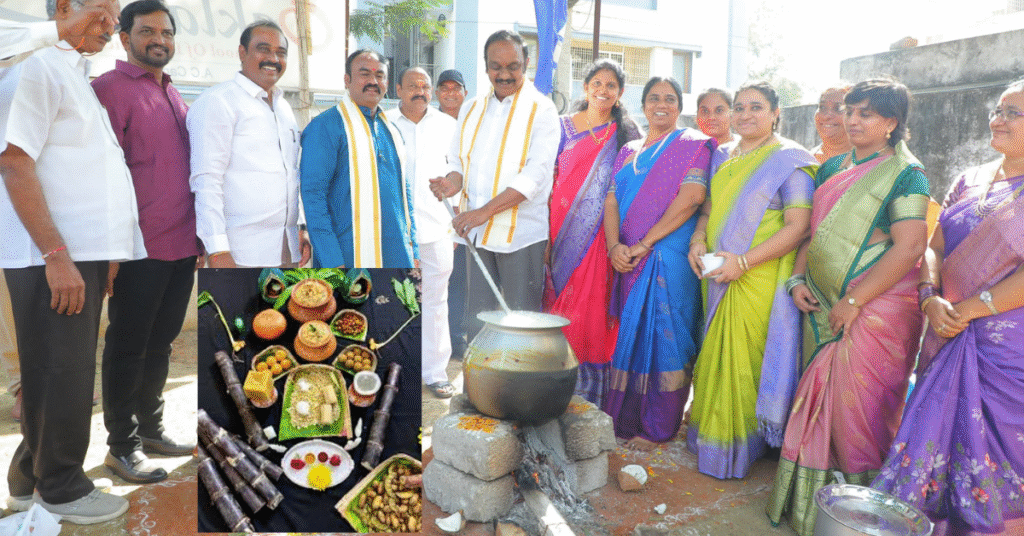
Sankranti in Rayalaseema villages feels quieter but emotionally powerful.
Here, celebrations are simple.
No excess.
No show.
Bhogi is observed with sincerity. Sankranti meals are humble but filling. Kanuma carries strong meaning because cattle are still central to rural livelihoods.
For travelers seeking:
- Less crowd
- Authentic rural life
- Slow, reflective celebrations
Rayalaseema villages offer a Sankranti that stays with you long after the festival ends.
Srikakulam & North Andhra Villages – Raw and Untouched
Villages in Srikakulam and North Andhra are among the least commercialized.
Sankranti here is deeply traditional, almost untouched by tourism. Rituals follow age-old customs, and community participation is strong.
You’ll notice:
- Early morning Bhogi rituals
- Minimal outside influence
- Strong family bonds
- Natural hospitality
If you want to witness Sankranti as it was celebrated decades ago, North Andhra villages are a hidden treasure.
Temple-Centric Villages – Where Sankranti Meets Spirituality
Villages around famous temples experience Sankranti with a spiritual rhythm.
Morning rituals begin at temples, followed by family celebrations at home. The atmosphere is calm, devotional, and culturally rich.
These villages suit:
- Spiritual travelers
- Elder-friendly family trips
- Slow-paced Sankranti holidays
Here, Sankranti feels peaceful rather than festive—and that itself is beautiful.
What You’ll Experience Only in Villages
Village Sankranti offers experiences cities cannot recreate.
Children wake up early without alarms.
Meals are cooked on firewood.
Relatives arrive without calling.
Time loses meaning.
Kanuma is celebrated fully.
Mukkanuma is understood naturally.
These moments don’t appear in photos—but they stay in memory.
Is It Safe and Comfortable for Travelers?
Yes, with awareness.
Village Sankranti is safe, especially for families. People are welcoming, and hospitality peaks during festivals.
A few simple tips help:
- Dress modestly
- Respect local customs
- Ask before photographing rituals
- Be open to participation
Villagers value respect more than anything else.
Best Time to Reach Villages for Sankranti
Arrive one day before Bhogi.
That’s when preparation begins and the village mood slowly changes. Leaving immediately after Sankranti day means missing Kanuma, which is the heart of rural celebrations.
A 3–4 day stay gives the most complete experience.
Why More Families Are Returning to Villages for Sankranti
Many city families now consciously choose villages for Sankranti.
They want children to:
- See real traditions
- Understand farming culture
- Experience community life
They want elders to:
- Feel connected
- Relive familiar rhythms
Village Sankranti offers something rare in modern life—belonging.
Final Thoughts: Villages Are Where Sankranti Truly Lives
Sankranti can be celebrated anywhere.
But it can only be felt fully in villages.
In Andhra Pradesh, villages don’t recreate Sankranti—they continue it, just as it has always been.
If you want one festival experience that stays with you forever, choose a village Sankranti at least once in your life.
👉 Explore More on travellerkaka.com
Read detailed guides on Sankranti festival in Andhra Pradesh, village vs city celebrations, Kanuma traditions, and family-friendly festival travel ideas