

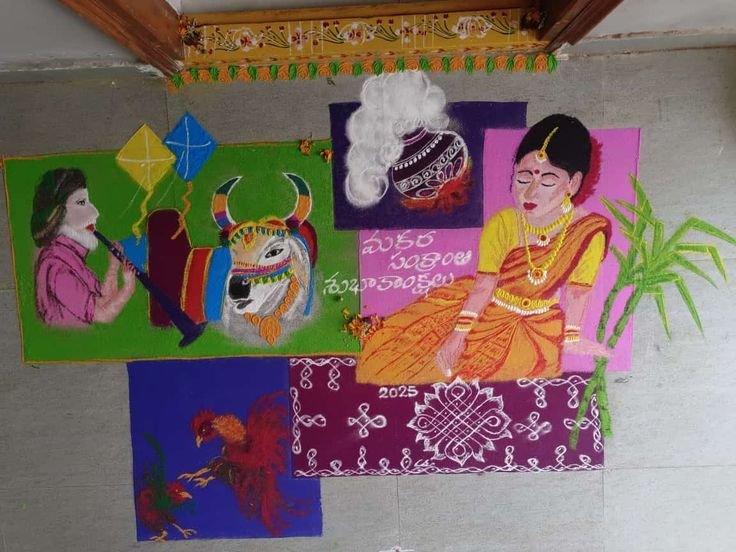
Sankranti in Telugu homes is never a one-day affair.
It unfolds slowly, across four meaningful days, each with its own rhythm, purpose, and emotion.
Bhogi, Sankranti, Kanuma, and Mukkanuma together form the complete Sankranti experience—especially in Andhra Pradesh and Telangana.
When you understand these four days, you understand why Sankranti is considered the most rooted and heartfelt Telugu festival.
This guide explains each day clearly, naturally, and culturally—just the way it is lived, not just written about.
Why Sankranti Is Celebrated Over Four Days
Sankranti is a harvest festival, and harvest is not rushed.
It represents cycles—of crops, seasons, effort, and gratitude.
That is why Telugu tradition spreads Sankranti across four days:
- Letting go of the old
- Welcoming abundance
- Honouring agriculture and cattle
- Relaxing and celebrating community
Each day flows into the next, like village life itself.
Bhogi: Letting Go to Begin Again
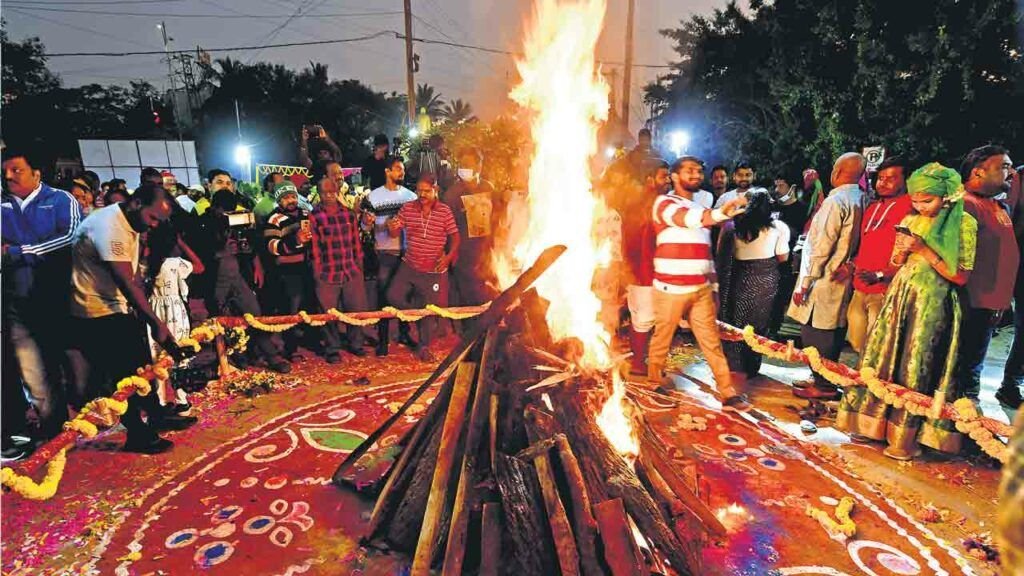
Bhogi is the quiet but powerful beginning of Sankranti.
It arrives early in the morning, before sunrise, when villages are still wrapped in mist and silence.
Old wooden items, unused household materials, and symbolic waste are gathered and burned in Bhogi Mantalu—the traditional bonfire.
This is not about destruction.
It is about release.
Bhogi represents:
- Clearing negativity
- Making space for renewal
- Starting the harvest season fresh
In villages, Bhogi feels deeply communal.
Children circle the fire, elders bless homes, and the day begins with warmth rather than noise.
A special ritual called Bhogi Pallu is performed for babies and young children.
Fruits, flowers, sugarcane pieces, and coins are showered over them, symbolising blessings, health, and prosperity.
Bhogi reminds us that before welcoming the new, we must gently let go of the old.
Sankranti: The Heart of the Festival
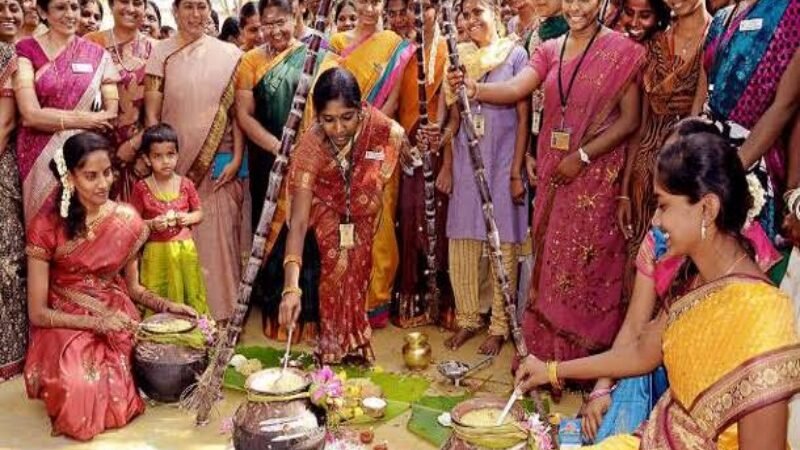
Sankranti day is the soul of the festival.
Homes wake up early.
Doorsteps bloom with muggulu drawn in rice flour, often decorated with gobbemma made from cow dung, turmeric, and flowers.
The Sun is worshipped as the giver of life and energy.
For farming families, this is a moment of gratitude for the successful harvest.
New clothes are worn.
Sweets are prepared.
Relatives visit each other without formal invitations.
Kite flying fills the sky, especially in towns and open village fields.
Children laugh, elders watch, and conversations stretch lazily through the afternoon.
Sankranti is not loud joy.
It is contentment.
Kanuma: Honouring Agriculture and Cattle

Kanuma is the most rural and agricultural day of Sankranti.
This day is dedicated to cattle—the silent partners of farming life.
Cows and bulls are bathed, decorated, and worshipped with genuine affection.
In villages, Kanuma feels deeply emotional.
Farmers acknowledge that without cattle, agriculture would not survive.
Special meals are cooked, often non-vegetarian in many regions, marking the end of strict festival rituals.
Community feasts, rural games, and relaxed gatherings define the day.
Kanuma is not widely celebrated in cities.
That absence itself shows how closely the festival is tied to land and farming.
If Bhogi is about renewal and Sankranti about abundance, Kanuma is about respect.
Mukkanuma: The Quiet, Forgotten Day
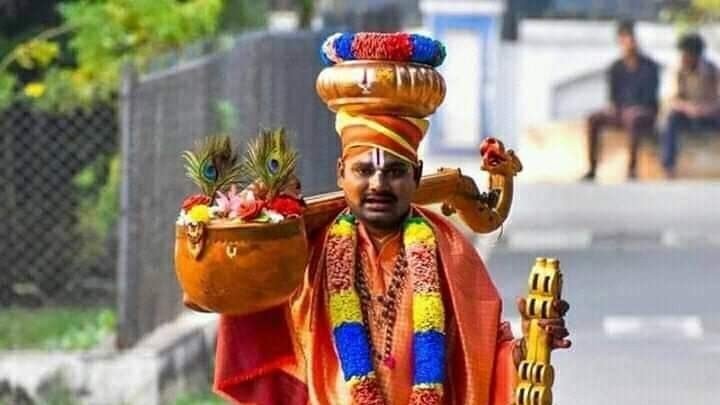
Mukkanuma is the least talked about—and the least understood—day of Sankranti.
Mostly observed in rural Andhra Pradesh, Mukkanuma is a relaxed continuation of Kanuma.
There are no grand rituals, no fixed rules.
Families visit relatives.
Leftover festival food is shared.
Some villages associate the day with hunting traditions or countryside gatherings, though these practices are now rare.
Mukkanuma represents rest.
After days of celebration, cooking, hosting, and rituals, this day allows people to slow down.
It quietly completes the Sankranti cycle.
In modern times, many families no longer observe Mukkanuma formally, but in villages, its spirit still survives.
How These Four Days Connect Emotionally
Each Sankranti day serves a purpose beyond tradition.
Bhogi teaches release.
Sankranti celebrates gratitude.
Kanuma honours labour and nature.
Mukkanuma offers rest.
Together, they mirror human life itself—effort, reward, appreciation, and pause.
That is why Sankranti feels complete only when all four days are understood, even if not fully celebrated.
Village vs City Observance of the Four Days
In villages, all four days are still visible.
Rituals blend naturally into daily life.
In cities, celebrations are compressed.
Sankranti day takes priority, while Bhogi and Kanuma become symbolic.
This does not reduce the value of city celebrations.
It simply reflects changing lifestyles.
Many families now return to their native villages during Sankranti so children can experience these four days as they were meant to be lived.
Why Younger Generations Should Know All Four Days
For many children today, Sankranti means:
- Holidays
- Kites
- Sweets
But the deeper meaning often gets lost.
Understanding Bhogi, Kanuma, and Mukkanuma helps children connect with:
- Agricultural roots
- Family traditions
- Community living
This knowledge is cultural inheritance.
Once lost, it is difficult to recover.
Sankranti Is Not One Festival—It Is a Journey
Sankranti is not a date on the calendar.
It is a journey across four days, four emotions, and four philosophies.
From fire to sunlight, from cattle to community, from celebration to rest—Sankranti teaches balance.
That is why it has survived centuries without losing relevance.
Final Thoughts: The Beauty of Sankranti Lies in Its Days
Bhogi, Sankranti, Kanuma, and Mukkanuma are not separate festivals.
They are chapters of the same story.
To truly experience Sankranti, one must slow down and let each day speak.
Only then does the festival reveal its depth.
For travelers, families, and culture lovers, understanding these four days turns Sankranti from a holiday into a meaningful experience.
👉 Explore More on travellerkaka.com
Read detailed guides on Sankranti festival in Andhra Pradesh, village celebrations, family travel ideas, and traditional Telugu festivals—all written for real travelers and real stories.


