
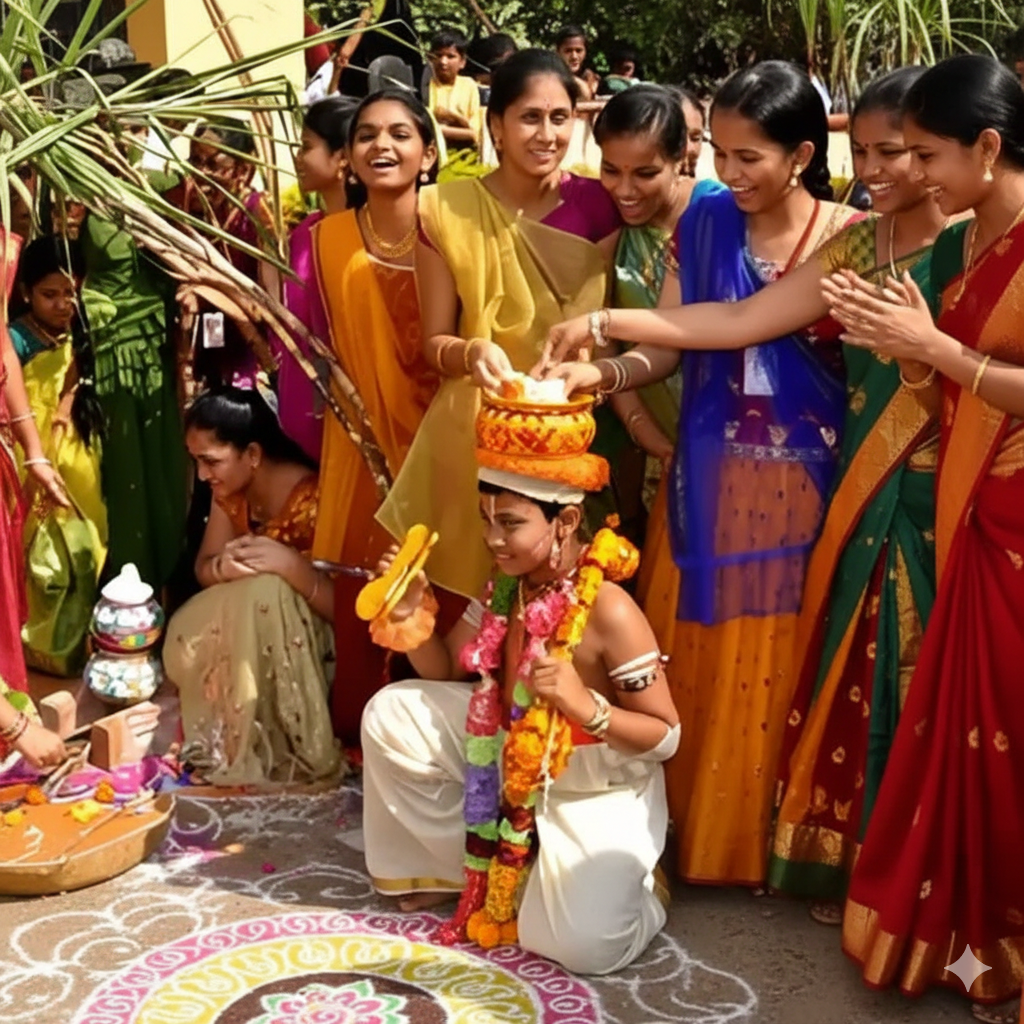
Sankranti feels different depending on where you celebrate it.
In villages, it’s slow, warm, and deeply rooted in tradition.
In cities, it’s modern, compact, and shaped by busy lifestyles.
Both are beautiful in their own ways—but the experience is not the same.
Rooted in agriculture, family traditions, and gratitude to nature, the Sankranti festival in Andhra Pradesh brings together centuries-old customs that still shape how the festival is celebrated today.
If you’ve ever wondered how Sankranti is celebrated in Andhra Pradesh villages versus cities, this guide takes you through the real differences—rituals, food, people, emotions, and why travelers are increasingly choosing village Sankranti for a truly Telugu experience.
Why Location Matters During Sankranti
Sankranti is a harvest festival at heart.
That connection to land, crops, cattle, and seasons is strongest in villages.
Cities celebrate Sankranti too—but often as a symbolic festival, adapted to apartments, schedules, and limited space.
Understanding this contrast helps families and travelers decide where to celebrate for the kind of experience they want.
Sankranti in Villages: Where the Festival Feels Alive
1. Bhogi Morning Starts Before Sunrise
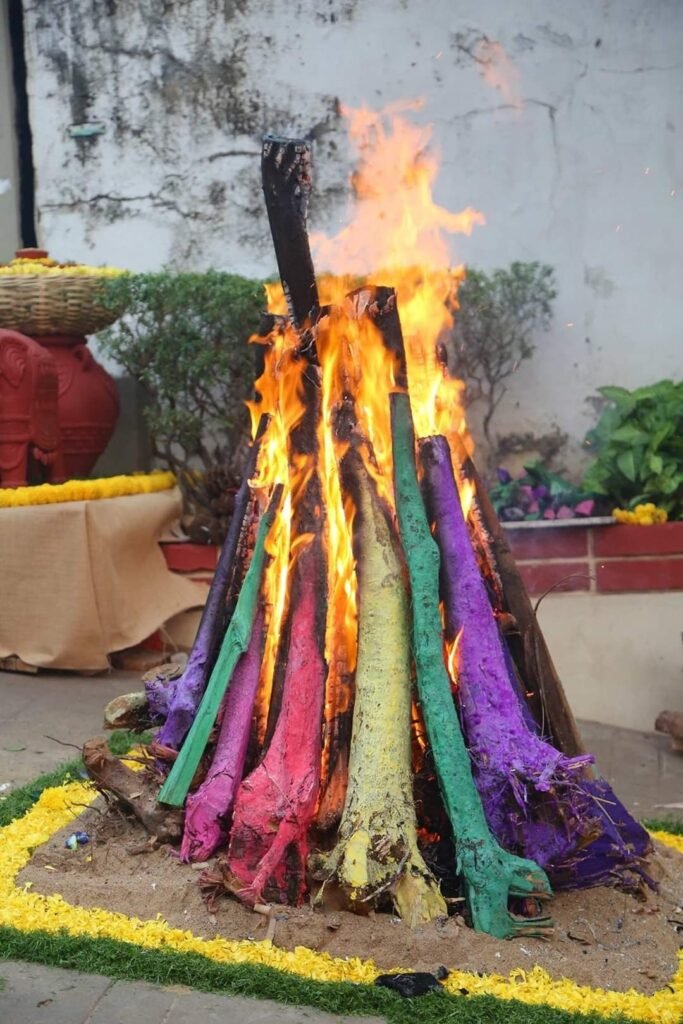
In villages, Sankranti begins with Bhogi—and it starts early.
Before dawn, you’ll see:
- Smoke rising from Bhogi Mantalu (bonfires)
- Children warming their hands
- Elders offering prayers
- A calm, misty atmosphere
The fire isn’t just symbolic—it’s emotional.
It feels like the village itself is waking up together.
2. Muggulu & Gobbemma: Art on Every Doorstep
Village streets transform overnight.
Every house has:
- Fresh muggulu (rangoli) drawn with rice flour
- Gobbemma made from cow dung, flowers, and turmeric
- Designs that reflect creativity passed down generations
Walking through a village on Sankranti morning feels like walking through an open-air art gallery.
3. Food Is Cooked Slowly, Together
Village Sankranti food isn’t rushed.
You’ll notice:
- Ariselu made patiently in batches
- Pongali cooked on firewood stoves
- Neighbors sharing ingredients
- Guests eating until they can’t anymore
Food is not just eaten—it’s shared.
For visitors, this hospitality becomes one of the most memorable parts of village Sankranti.
4. Kanuma: The Soul of Rural Sankranti
Kanuma is where villages truly shine.
Cattle are:
- Bathed and decorated
- Worshipped with gratitude
- Fed special food
In farming communities, cows and bulls are family.
Kanuma celebrates that bond—something cities simply cannot recreate.
5. Community Over Convenience
Village Sankranti means:
- Everyone knows everyone
- No strict schedules
- Long conversations
- Shared laughter
- Children playing traditional games
Time slows down—and that’s the magic.
Sankranti in Cities: Modern, Compact, and Festive

1. Bhogi Without the Bonfire
In cities, Bhogi Mantalu are often restricted.
Instead, people:
- Clean homes symbolically
- Perform small prayers
- Teach kids about traditions indoors
While safety rules limit bonfires, the spirit of renewal remains.
2. Sankranti in Apartments & Colonies
City celebrations usually happen in:
- Apartment terraces
- Community halls
- Gated communities
Activities include:
- Kite flying
- Cultural programs
- Kids’ competitions
- Group lunches
It’s festive—but structured.
3. Food Is Planned, Not Spontaneous
City Sankranti food often means:
- Pre-planned cooking
- Limited dishes due to time
- Ordering from outside for convenience
Traditional items like ariselu are still made—but usually in smaller quantities.
4. Kanuma Is Mostly Symbolic
In cities, Kanuma is:
- Rarely celebrated fully
- Limited to prayers or a special meal
- Often merged with Sankranti day celebrations
The agricultural connection becomes more educational than experiential.
5. Short Celebrations, Quick Returns
City life doesn’t pause completely.
Many people:
- Celebrate for a day or two
- Return to work quickly
- Balance festival and responsibilities
Sankranti feels joyful—but brief.
Village vs City Sankranti: Quick Comparison
| Aspect | Villages | Cities |
|---|---|---|
| Bhogi Mantalu | Large, community fires | Mostly symbolic |
| Muggulu | Every house | Limited spaces |
| Food | Traditional, shared | Planned, smaller |
| Kanuma | Fully celebrated | Minimal |
| Pace | Slow & relaxed | Fast & scheduled |
| Community | Whole village | Apartment-based |
| Tourist Experience | Authentic & immersive | Comfortable but limited |
Why Travelers Prefer Village Sankranti Now
In recent years, many families from cities are returning to villages or choosing rural stays during Sankranti.
Reasons include:
- Desire for cultural roots
- Kids learning traditions firsthand
- Less crowd, more warmth
- Budget-friendly stays
- Meaningful family bonding
Village Sankranti offers something money can’t buy—belonging.
Is Village Sankranti Suitable for Tourists?
Yes—with a few things in mind.
Tips for Visitors:
- Respect local customs
- Dress modestly
- Ask before photographing rituals
- Participate, don’t just observe
- Stay with local families if possible
Villagers are welcoming, especially during Sankranti.
Which One Is Right for You?
Choose village Sankranti if you want:
- Authentic traditions
- Cultural depth
- Slow, meaningful celebrations
- Family bonding
Choose city Sankranti if you want:
- Convenience
- Structured events
- Short celebrations
- Easy access to services
Both are valid—but the experiences are worlds apart.
Sankranti Through a Child’s Eyes
For children:
- Villages mean freedom, games, cousins, fires, food
- Cities mean kites, competitions, and fun programs
Many adults say their best Sankranti memories come from village childhoods—and that’s why they want their kids to experience it too.
Final Thoughts: Two Places, One Festival, Different Emotions
Sankranti is celebrated everywhere—but felt differently.
Cities keep the festival alive.
Villages keep its soul alive.
If you want to understand Telugu culture deeply, spend at least one Sankranti in a village. It will stay with you long after the festival ends.
👉 Explore More on travellerkaka.com
Read more about Sankranti traditions, village tourism, budget family trips, and festivals of Andhra Pradesh—all in one place.