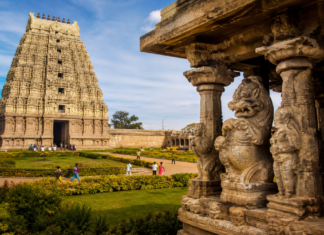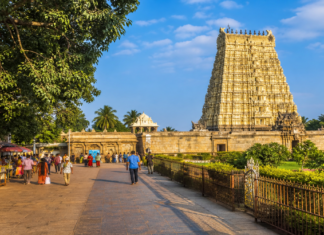


Standing on the edge of the Arabian Sea, the ancient temple complex of Somnath hums with the chants of millions of devotees, yet a singular point of intrigue draws the gaze of every history enthusiast toward the horizon. At the entrance to the jyotirlinga shrine, a solitary, sturdy stone pillar serves as a silent witness to a celestial mystery. This is the Somnath Arrow Pillar, known locally as the Baan Stambh, a structure that claims to point directly toward the South Pole with nothing but ocean in its path.
The Somnath Arrow Pillar is more than just a piece of architectural heritage; it is a legendary marker of ancient geographic knowledge. As you walk toward the shore, the vastness of the Indian Ocean reminds you that you are standing at the edge of a landmass that has been central to maritime navigation for millennia.
| Detail | Info |
|---|---|
| Best Time to Visit | October to March |
| Distance from Somnath Railway Station | 2 kilometers |
| Budget Estimate (per person) | INR 3,000 – 5,000 |
| Ideal For | History buffs, pilgrims, families |
| Must-See Spots | Somnath Temple, Triveni Sangam, Light & Sound Show |
| Getting There | Nearest airport Diu (85 km), well connected by rail |
“The Baan Stambh stands as a silent sentinel, marking the point where ancient wisdom meets the infinite horizon of the sea.”
The Legend and History of the Somnath Arrow Pillar
The Baan Stambh finds its roots in the Puranic texts, which suggest that there is no landmass between this specific point in Somnath and the South Pole. An arrow atop the pillar points toward the sea, indicating a straight line trajectory across the Indian Ocean toward Antarctica. This Somnath Arrow Pillar acts as a physical representation of the ancient Indian understanding of latitude and long-distance navigation.
Devotees and scholars alike marvel at the precision required to place such a marker centuries ago. While modern satellite imagery has allowed us to map the globe with ease, the existence of this pillar suggests that our ancestors possessed advanced astronomical and geographic insights. It is a testament to the fact that the temple was not merely a place of worship, but also a hub for scientific observation.
Navigating the Coastal Wonder of Somnath
Visiting this site requires a blend of reverence and curiosity, as the atmosphere is heavy with the sea breeze and spiritual energy. Most travelers spend their mornings visiting the main shrine before heading to the Somnath Arrow Pillar at low tide, when the beach is most accessible. The area around the pillar offers a panoramic view of the coastline, making it a perfect spot for photography.
Pro Tip
Visit the Baan Stambh during the evening hours when the sea breeze cools the sand, allowing you to walk freely toward the shoreline without the intense heat of the Gujarat afternoon.
Travel Essentials for the Somnath Circuit
When planning your trip to see the Somnath Arrow Pillar, keep in mind that the region is primarily a pilgrimage site. You should dress modestly when entering temple premises, even though the pillar itself is located in an open coastal area. Travelers often combine this trip with a visit to the nearby Dwaraka, ensuring a comprehensive tour of the sacred sites of the region.
Accommodation options range from state-run guesthouses to private hotels. Many visitors choose to stay near the main temple to catch the morning aarti, which is a mesmerizing experience that stays with you long after you leave. Be sure to book your transport from the airport or railway station in advance to avoid last-minute surges, especially during festival seasons.
Recommended Stay
Somnath Atithi Griha
Price: INR 1,500/night | Location: Near Main Temple | Best For: Pilgrims
This establishment offers clean, basic rooms with easy access to the temple complex. It is a highly practical choice for those focused on morning darshan and nearby sightseeing.
The Scientific Significance of the Baan Stambh
Whether you believe the legend is a coincidence or a product of ancient ingenuity, the Somnath Arrow Pillar continues to spark debate. Some researchers point toward the “Unobstructed Straight Line” theory, which holds true on a globe, proving that a line drawn from this coordinate would hit no significant landmass until the Antarctic continent. It invites visitors to think about how much we are still uncovering about the past.
Students of geography often find themselves fascinated by the placement of these markers along the Indian coastline. These ancient structures are part of a larger network of astronomical markers that were utilized by travelers to determine direction in an era without modern compasses. You can read more about travel gear and equipment to help you document these historical wonders at our Amazon India travel gear page.
Watch Out
The shoreline near the pillar can be dangerous during high tide. Always respect the warning signs posted by the authorities and avoid venturing too deep into the water, as the currents here are exceptionally strong.
Exploring Beyond the Pillar
After paying your respects at the Somnath Arrow Pillar, head toward the Triveni Sangam, the confluence of three holy rivers. This site is significant in Hindu mythology and provides a calm, reflective space away from the main temple crowds. If you have extra time, consider visiting the Somnath museum, which houses relics and remnants of the older temple structures that were reconstructed multiple times over the centuries.
Reality Check
The site of the Somnath Arrow Pillar is relatively small. If you are expecting a massive monument, you might find the pillar itself underwhelming. However, the emotional connection to the history and the vastness of the ocean is what provides the true value for visitors.
Travelers who are not interested in history, religious architecture, or maritime legends should skip this spot, as it offers little for those looking for active adventure or nightlife. The area is strictly managed as a heritage and religious site, so do not expect any recreational activities like beach water sports.
Infographic: Key Facts about Somnath
At a Glance: Top 5 Things to Know
- Location: The pillar is located on the coastal edge of the Somnath temple complex.
- Celestial Marker: It points directly toward the South Pole with no land in between.
- Ancient Heritage: It reflects the advanced astronomical knowledge of ancient Indian civilization.
- Triveni Sangam: A short distance from the pillar, this is where three holy rivers meet.
- Photography: Early morning and sunset offer the best lighting for photos of the pillar and sea.
Google Map Location
Location Map
Frequently Asked Questions
What is the meaning of Baan Stambh?
Baan Stambh translates to “Arrow Pillar” in Sanskrit. It refers to the marker that indicates the path toward the South Pole.
Is there any entry fee for the Somnath Arrow Pillar?
No, there is no entry fee to visit the pillar as it is located on the public coastal area of the Somnath temple complex.
Can I go near the ocean at the pillar?
You can walk on the beach near the pillar, but for safety reasons, visitors are advised not to enter the deep sea as it is prone to high-tide surges.
How far is the pillar from the main Somnath temple?
It is just a short walk of about 5 to 10 minutes from the main temple entrance.
What is the best way to travel to Somnath?
The best way to reach Somnath is by train to Veraval railway station, which is very close to the temple, or by flying into Diu and taking a cab.
This post contains affiliate links. If you book through our links, we may earn a small commission at no extra cost to you. This helps us keep travellerkaka.com free for everyone.
Plan Your Trip with Us
Have questions about this destination? We would love to help you plan the perfect trip.
Chat with us on WhatsApp or email us at info@travellerkaka.com
null