

India’s aviation industry continues to evolve swiftly, driven by rapid domestic travel growth, fleet expansions, and rising passenger demand. As of 2025–26, domestic air traffic climbed to 16.69 crore passengers, reflecting a roughly 3 % year-on-year growth despite some operational challenges across carriers.
Whether you’re flying for business, leisure, or pilgrimage, knowing which airline offers the best service, reliability, network coverage, and value for money can help you make smarter travel decisions.
In this updated 2026 guide, we look at the top 10 airlines in India, key market data, industry trends, and tips on choosing the right carrier for your journey.
Introduction to India’s Aviation Industry
India’s aviation sector is the third-largest domestic aviation market globally, serving over 140 million passengers annually. With a blend of full-service carriers, low-cost airlines, and regional operators, Indian airlines cater to diverse travel needs, from business trips to backpacking adventures. The industry is also witnessing a transformation, with mergers (like Vistara-Air India), new entrants (Akasa Air), and a focus on sustainability.
Market Share Snapshot (2025 Data)
- IndiGo – Continues to dominate with roughly ~64 % of domestic market share year-end 2025.
- Air India Group (Air India, Air India Express, Vistara) – Combined share approximates ~27 %.
- Akasa Air – Emerging third largest at around ~5 %.
- SpiceJet & others – Smaller shares of around 4 % collectively.
Domestic traffic growth reflects expanding connectivity, rising disposable incomes, and improved airport infrastructure across tier-2 and tier-3 cities.
Top 10 Airlines in India (2026)
1. IndiGo

- Why It’s #1
- IndiGo continues to lead India’s aviation landscape as the largest domestic airline, holding a dominant share above 60 % and operating a large network across hundreds of routes.
- Highlights:
- Strong regional and metro connectivity
- Recognized among the Top Low-Cost Airlines globally in the Skytrax awards 2025.
- Known for affordable fares, extensive frequency, and steady fleet growth.
- IndiGo remains a favorite for budget travelers and frequent flyers alike.
Founded: 2006- Fleet Size: 300+ aircraft (primarily Airbus A320/A321)
- Key Routes: Delhi, Mumbai, Bengaluru, Hyderabad, international hubs like Dubai and Singapore.
- Why Fly IndiGo?
- India’s largest airline by market share (60%+).
- Renowned for punctuality and affordable fares.
- Offers “IndiGo 6E Prime” for priority services.
2. Air India
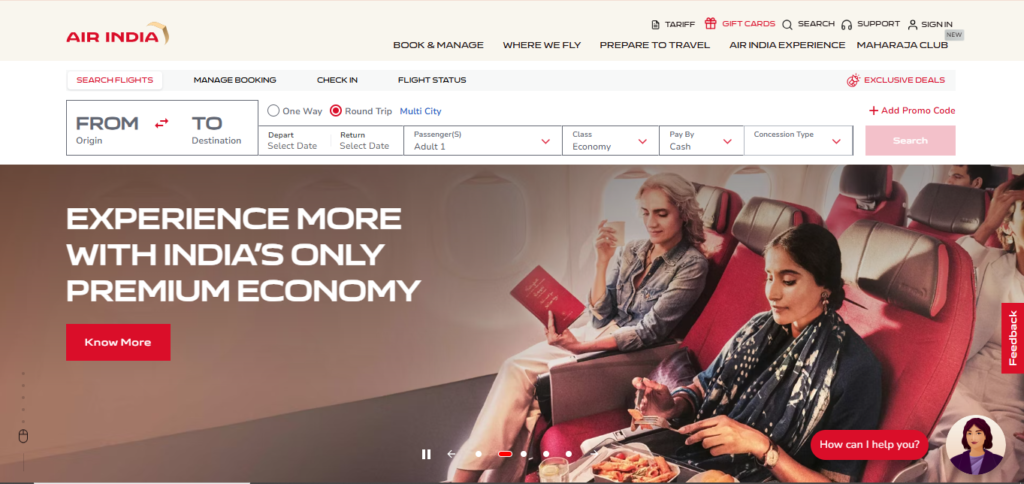
- A legacy airline transformed under the Tata Group, Air India blends modern service standards with vast route coverage.
- Standing Out:
- Awarded Best Domestic Airline at Travel+Leisure India & South Asia Awards 2025.
- Full-service experience with premium cabin options on key routes.
- Strong presence in major metros and tier-2 cities.
- Air India appeals to travelers seeking enhanced inflight comfort and broader connectivity.
Founded: 1932 (Revamped under Tata Group in 2022) - Fleet Size: 120+ aircraft (including Boeing 787 Dreamliners).
- Key Routes: Major Indian cities, plus long-haul destinations like New York, London, and Tokyo.
- Why Fly Air India?
- Extensive international network.
- Premium amenities: lie-flat seats, gourmet meals.
- Part of Star Alliance, offering global connectivity.
3. Akasa Air
A relatively newer entry in India’s skies, Akasa Air continues its expansion with a growing fleet (34 aircraft inducted in early 2026).
Why It Matters:
- Modern young fleet optimized for fuel efficiency
- Growing route network across domestic hubs
- Focus on service consistency and operational efficiency
Despite leadership shifts and industry competition, Akasa Air remains one of the fastest-growing domestic carriers.
Founded: 2022
Fleet Size: 20+ aircraft (Boeing 737 MAX).
Key Routes: Mumbai, Ahmedabad, Bengaluru, Chennai.
Why Fly Akasa Air?
India’s newest airline with a focus on sustainability.
Affordable fares and modern fleet.
Free snacks and beverages onboard.
4. SpiceJet
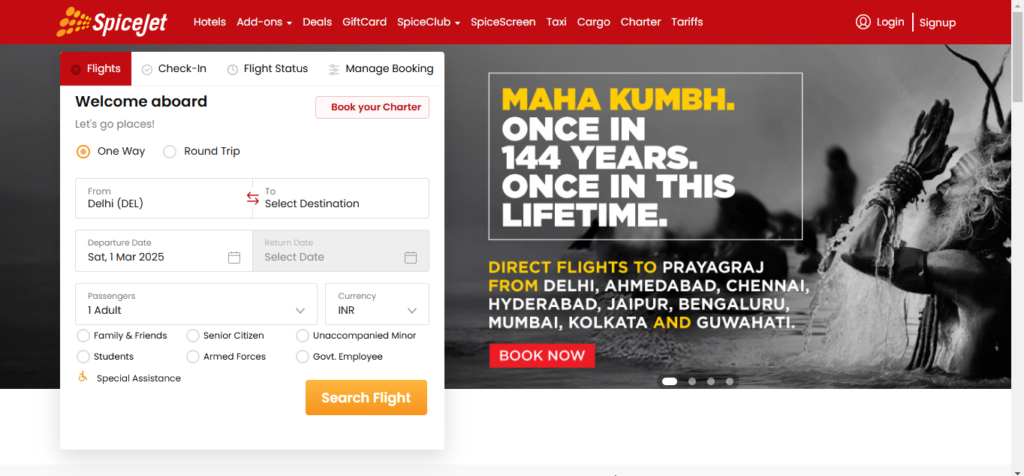
- Once a key budget player, SpiceJet has faced financial and operational headwinds, reporting a loss of ₹269 crore in late 2025.
- What to Know:
- Offers competitive low fares on selected routes
- Market share remains modest compared to leaders
- Travelers benefit from deals and flexible ticketing
- SpiceJet continues to operate widely but must navigate cost pressures and restructuring efforts.
Founded: 2005 - Fleet Size: 90+ aircraft (Boeing 737, Q400 turboprops).
- Key Routes: Tier-2 cities like Jaipur, Srinagar, and Guwahati.
- Why Fly SpiceJet?
- Budget-friendly fares with frequent discounts.
- Strong regional connectivity via SpiceXpress (cargo).
- “SpiceMax” for extra legroom and priority check-in.
5. Air india express
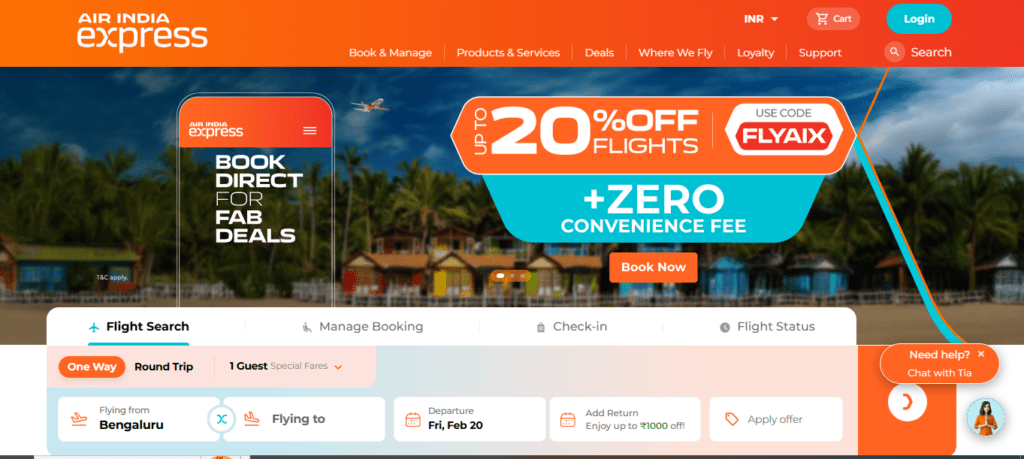
A low-cost subsidiary of Air India, this airline focuses on affordability without compromising basic service quality.
Strengths:
- Strong presence in south and coastal routes
- Often chosen for budget business and leisure travel
- Part of the broader Air India group’s strategic network
Air India Express appeals to cost-conscious flyers seeking value across major domestic sectors.
Also Read: Top 10 Airlines in the World 2026
6. Alliance Air
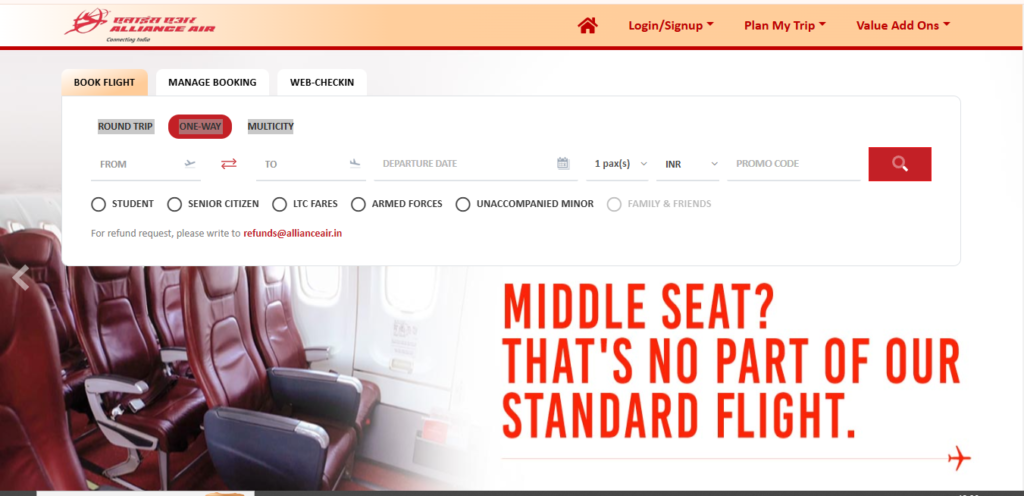
- A government-owned regional airline that connects smaller cities with metro hubs, Alliance Air helps bridge connectivity in underserved regions.
Founded: 1996 (Subsidiary of Air India)- Fleet Size: 20+ aircraft (ATR 72).
- Key Routes: Regional destinations like Shimla, Agra, and Jalgaon.
- Why Fly Alliance Air?
- Connects remote towns under the UDAN scheme.
- Budget-friendly for short-haul flights.
7. Star Air
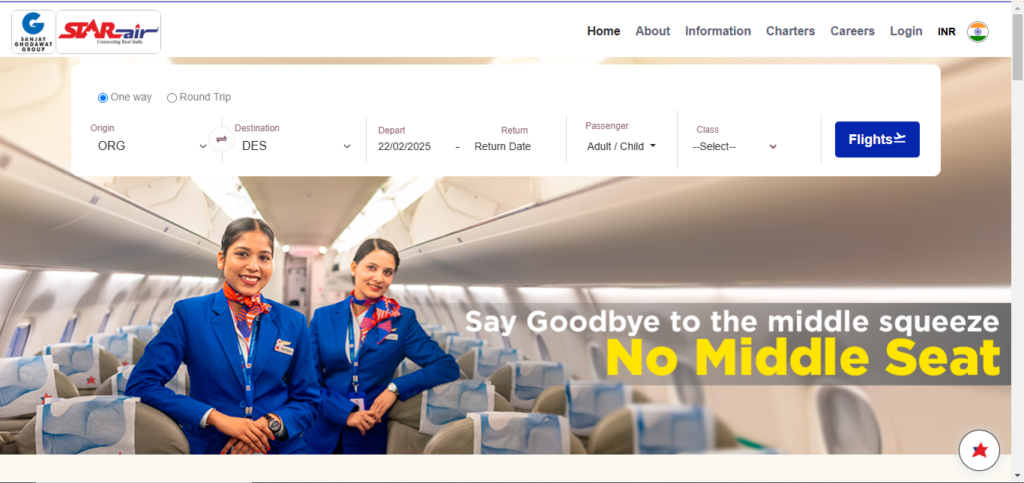
- Founded: 2019
- Fleet Size: 8 aircraft (Embraer E175).
- Key Routes: Hubli, Belagavi, Tirupati.
- Why Fly Star Air?
- Focuses on regional connectivity in Karnataka and Andhra Pradesh.
- Affordable tickets for short-distance travel.
TruJet
Once positioned as a strong regional airline under India’s UDAN scheme, TruJet has operated primarily in South India, focusing on connecting underserved cities. Over the years, the airline has faced operational pauses and restructuring phases but continues to remain relevant in regional aviation discussions.
What to Know:
Offers regional connectivity across select South Indian routes
Focused mainly on tier-2 and tier-3 city operations
Operates under the government’s regional connectivity initiatives
Founded: 2013
Fleet Size: Limited regional fleet (primarily ATR turboprop aircraft during operations).
Key Routes: Andhra Pradesh, Telangana, Maharashtra, and nearby regional sectors.
Why Fly TruJet?
Convenient access to smaller regional airports.
Short-haul connectivity where major airlines may not operate.
Affordable pricing on select regional sectors.
9. FlyBig
- Founded: 2020
- Fleet Size: 3 aircraft (ATR 72).
- Key Routes: Guwahati, Shillong, Kolkata.
- Why Fly FlyBig?
- Specializes in Northeast India connectivity.
- Budget-friendly for mountainous routes.
10. Go First (Currently Suspended)
Go First has had a turbulent history including operational disruptions, but it retains recognition among domestic travel options due to route flexibility and frequent flight offerings.
Founded: 2005
Status: Operations suspended since May 2023 due to financial issues.
Legacy: Known for ultra-cheap fares and punctuality.
How to Choose the Right Airline
- Budget Travelers: IndiGo, SpiceJet, or AirAsia India for low fares.
- Luxury Seekers: Vistara or Air India for premium services.
- Regional Travel: Alliance Air, Star Air, or FlyBig.
- International Trips: Air India (long-haul) or IndiGo (Middle East/Asia).
Domestic Airlines in India – 2026 Comparison Table
| Airline | Market Share (2025–26) | Service Type | Best For | Strengths | Cabin Classes |
|---|---|---|---|---|---|
| IndiGo | ~64% | Low-Cost | Budget + Frequent Flyers | Largest network, high frequency, strong punctuality | Economy |
| Air India | ~27% (Group Share) | Full-Service | Business & Premium Travel | Meals included, loyalty program, premium cabins | Economy, Premium Economy, Business |
| Akasa Air | ~5% | Low-Cost | Modern Fleet Travelers | New aircraft, expanding routes | Economy |
| SpiceJet | ~3–4% | Low-Cost | Deal Hunters | Promotional fares, wide route network | Economy |
| Air India Express | Included in AI Group | Low-Cost | Budget Travelers | Strong South India presence | Economy |
| Alliance Air | Regional | Regional | Tier-2 Connectivity | Connects smaller airports | Economy |
| Star Air | Regional | Regional | Niche Routes | Focus on underserved routes | Economy |
| FlyBig | Regional | Regional | Tier-3 Cities | Expanding regional connectivity | Economy |
| TruJet | Regional | Regional | South India Travelers | Focus on Andhra & regional sectors | Economy |
| Vistara | Now merged into Air India | Full-Service | Premium Travelers | Known for superior cabin service (historical presence) | Economy, Premium Economy, Business |
4. FAQs About Indian Airlines
Q1. Which is the safest airline in India?
IndiGo, Vistara, and Air India have strong safety records.
Q2. Do Indian airlines offer inflight entertainment?
Only Air India and Vistara provide seatback screens; others offer Wi-Fi or streaming via apps.
Q3. Are meals free on Indian flights?
Only full-service carriers (Air India, Vistara) include meals. Budget airlines charge extra.
Q4. Which airline has the best on-time performance?
IndiGo consistently ranks #1 in punctuality.
5. Conclusion
India’s airline industry offers something for everyone, from no-frills budget carriers to luxurious international operators. Whether you’re hopping between metros or exploring remote regions, this guide to the top 10 airlines in India will help you pick the perfect flight for your journey.
Ready to book your next trip? Explore exclusive travel deals and tips on TravellerKaka.com.












Question:
I fly New York (USA) to Bengaluru (India). stay 7 days
in Bengaluru to attend the wedding.
Then
Q – Can I fly from Bengaluru to Ahmedabad Gujarat by Vistara airline and check in those 4 bags that I checked in at New York 7 days ago ?