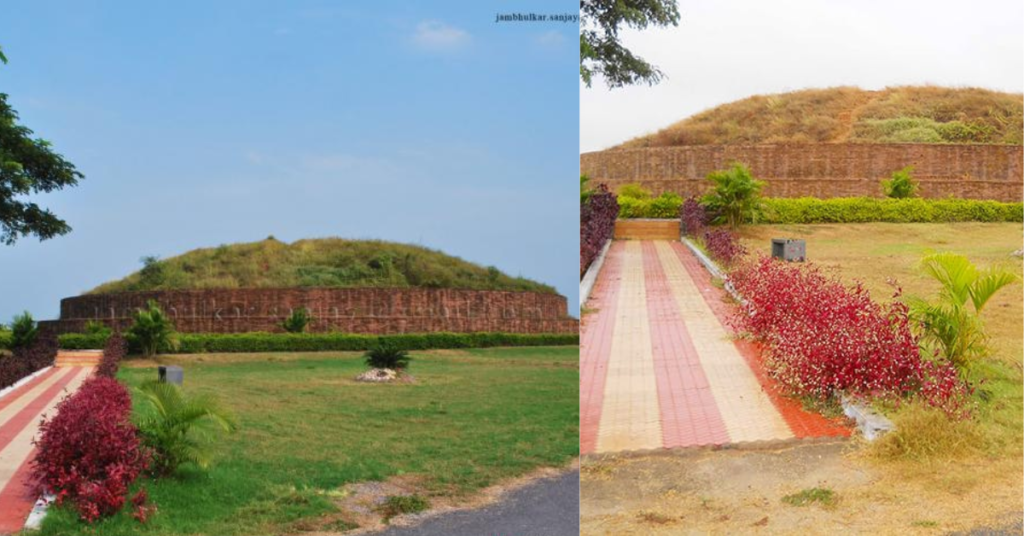
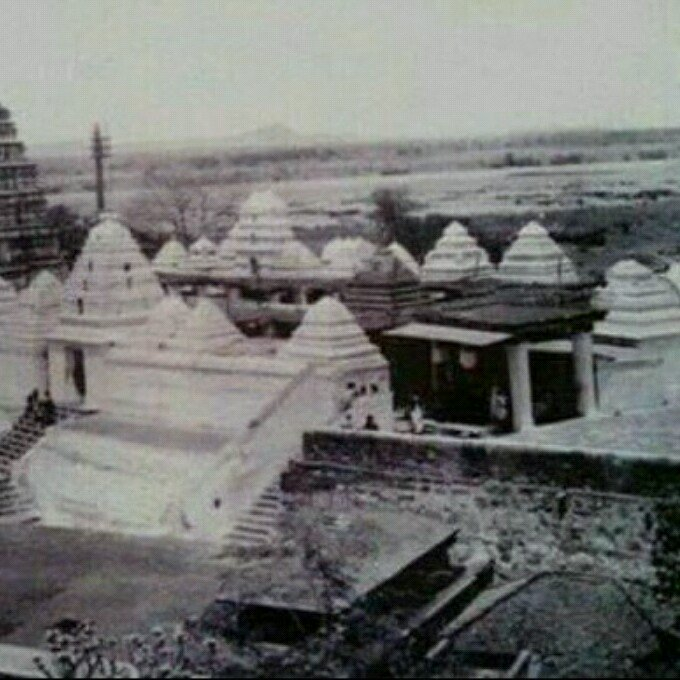
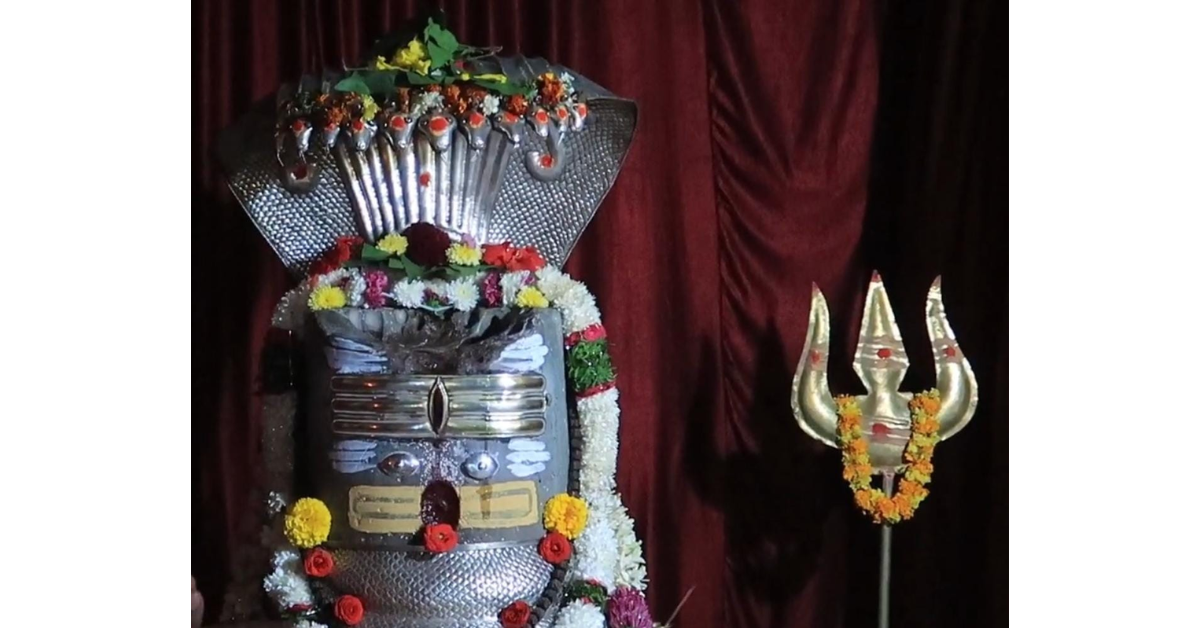
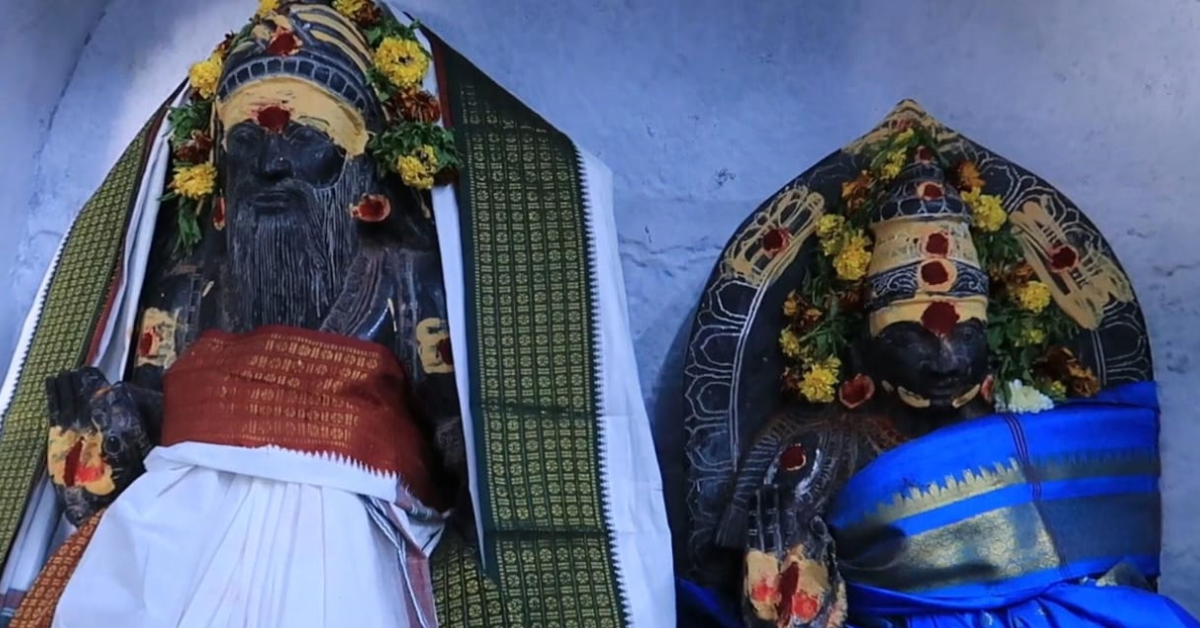
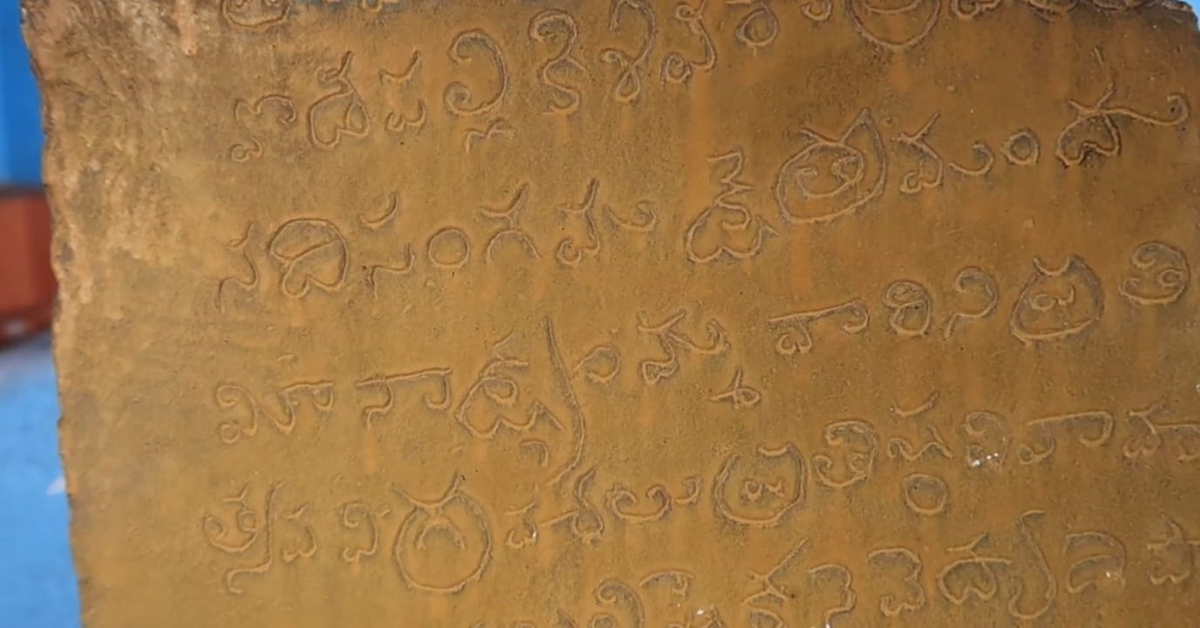
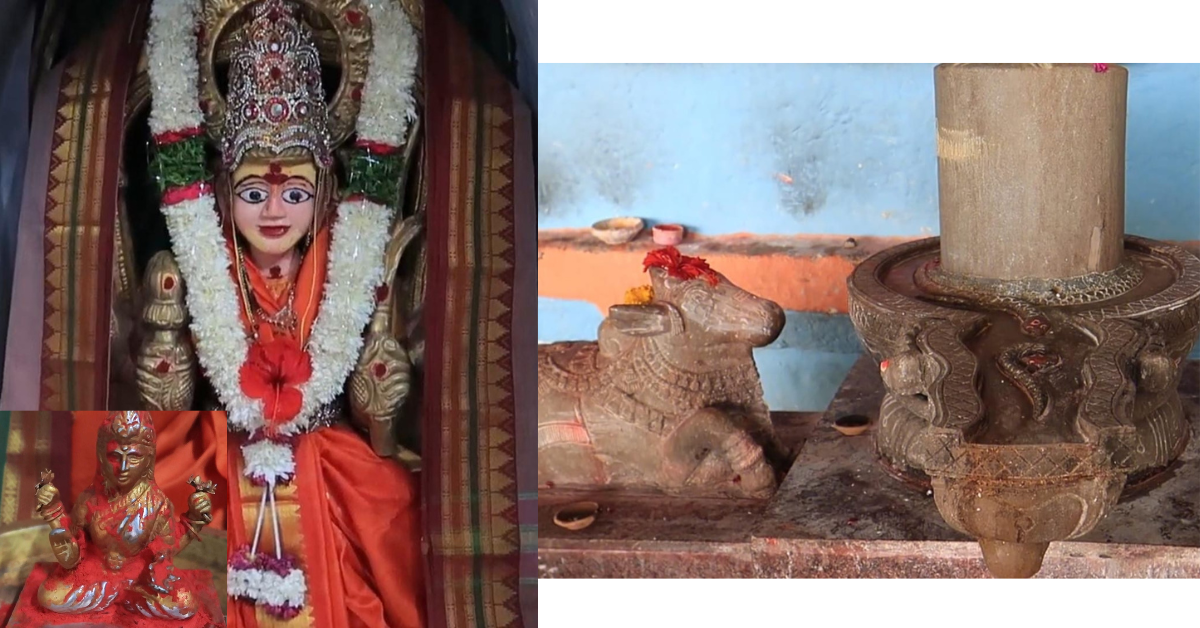
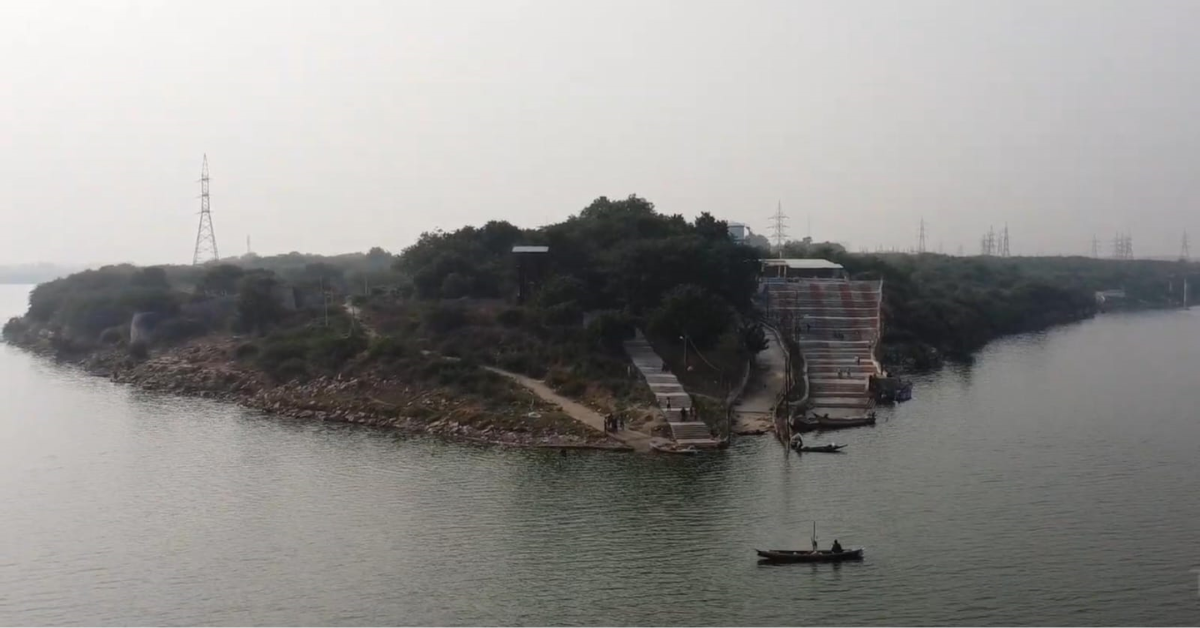
Nestled in the heart of Khammam district, Telangana, the village of Nelakondapally is a treasure trove of history and spirituality. This unassuming village, steeped in antiquity, has earned its place on the tourism map due to its profound archeological and historical significance. Once a bustling center of Buddhist activity, Nelakondapalli’s heritage dates back to the 3rd and 4th centuries AD, making it a fascinating destination for history enthusiasts and spiritual seekers alike.
Nelakondapalli’s journey into the annals of history began with the discovery of its ancient Buddhist relics. The Archaeological Survey of India (ASI) conducted extensive excavations that unveiled a wealth of Buddhist structures, including stupas, viharas (monasteries), chaityas (prayer halls), and cisterns. These findings underscore the village’s historical importance as a thriving hub of Buddhist education and worship.
The unearthed remnants provide a glimpse into a time when Nelakondapalli was a prominent center for Buddhist scholars and monks. The intricate architecture and well-preserved artifacts speak volumes about the village’s illustrious past, attracting archeologists, historians, and curious travelers eager to delve into India’s rich cultural tapestry.
Buddhist Heritage and Influence
The significance of Buddhism in Nelakondapalli can be attributed to its strategic location along ancient trade routes that crisscrossed the Indian subcontinent. These routes enabled travelers, merchants, and scholars to spread Buddhist teachings and establish monastic centers along their paths. Nelakondapalli emerged as one such center, where the echoes of ancient chants and the teachings of Buddha once resonated through the village.
Spirituality: Hindu Temples
While Nelakondapalli is renowned for its Buddhist heritage, it also boasts a rich tapestry of Hindu spirituality. The village is home to several ancient Hindu temples, each with its own story to tell. Temples dedicated to Lord Shiva and Lord Vishnu enrich Nelakondapally, providing visitors with a profound experience of its religious heritage.
The coexistence of Buddhist and Hindu elements in Nelakondapalli provides a unique perspective on the region’s spiritual evolution, making it a compelling destination for those interested in India’s diverse religious traditions.
Link to Bhakta Ramadasu: A Cultural Legacy
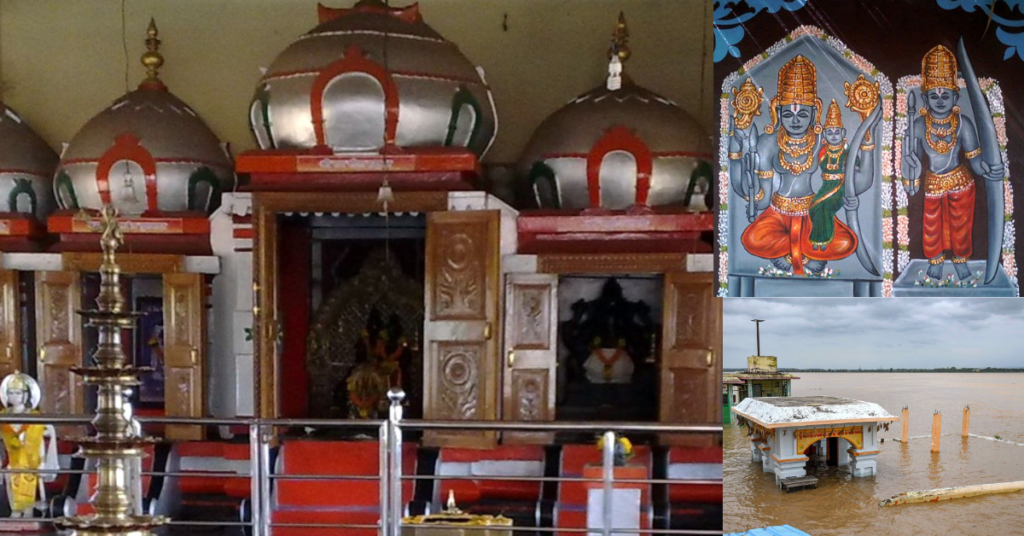
Adding to Nelakondapalli’s cultural significance is its association with Bhakta Ramadasu, the revered saint and composer. Believed to be his birthplace, the village honors his legacy with the Bhakta Ramadasu Dhyana Mandiram, a temple that draws devotees and cultural tourists alike. This connection to a beloved spiritual figure enhances Nelakondapally’s appeal as a destination that resonates with the soul of India.
Tourism Development and Preservation Efforts
The Telangana government is developing Nelakondapally into a major tourist destination to highlight its historical and cultural significance. These efforts aim to enhance the visitor experience while preserving the archeological integrity of the site. Improved infrastructure and amenities are being introduced to ensure that tourists can explore Nelakondapalli’s heritage with ease and comfort.
A Journey Through Time and Spirituality
Today, Nelakondapalli stands as a beacon of historical and cultural significance, inviting visitors to embark on a journey through time. Nelakondapally offers a serene, enriching experience for archaeology enthusiasts, spiritual seekers, and anyone appreciating India’s rich historical heritage. The village’s serene ambiance, ancient chants, and historic remnants evoke a peaceful, profound atmosphere, rich with cultural significance.
Exploring Nelakondapalli transports you to a bygone era of flourishing spirituality and scholarship, leaving an inspiring legacy.
BEST VISITING TIME TO Nelakondapally
Best time visit to Nelakondapally in Telangana, plan your trip between November and February. The winter months offer pleasant weather, perfect for exploring historic sites and participating in local cultural events. Avoid summer’s intense heat and the monsoon’s heavy rains for the best experience. and entry fee is free for everyone
FAQS
Q1) What is Nelakondapally known for?
ANS) Nelakondapalli is renowned for its rich historical and cultural heritage, particularly its ancient Buddhist ruins and Hindu temples. It was once a significant center of Buddhist education and worship.
Q2) How do I get to Nelakondapally?
ANS) Nelakondapalli can be reached by road from Khammam, which is well-connected by rail and road to major cities in Telangana. The nearest airport is in Hyderabad.
Q3) What are some must-see attractions in Nelakondapally?
ANS) Key attractions include the ancient Buddhist stupas, viharas, and chaityas. Additionally, the local Hindu temples and the Bhakta Ramadasu Dhyana Mandiram are worth visiting
Q4) When is the best time to visit Nelakondapally?
ANS) The best time to visit is between November and February, during the winter months, when the weather is pleasant and ideal for outdoor exploration.
Q5) Is Nelakondapally suitable for family visits?
ANS) Yes, Nelakondapalli is suitable for families interested in history and culture. The peaceful environment and historical sites offer an educational and enjoyable experience for all ages
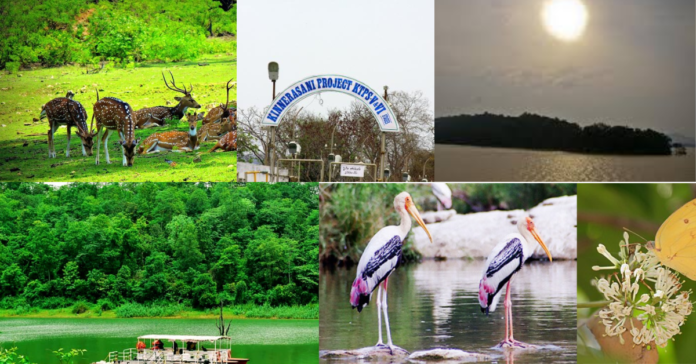
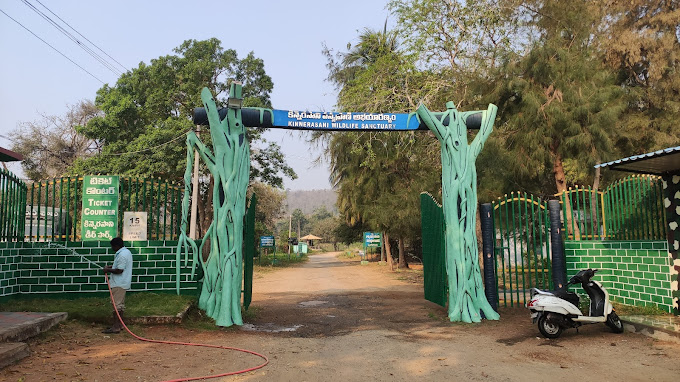
The Kinnerasani Wildlife Sanctuary is one of the prominent wildlife sanctuaries in Telangana, India. Located in the Bhadradri Kothagudem district, this sanctuary is part of the Dandakaranya forests, which stretch across the eastern part of India. The sanctuary is named after the Kinnerasani River, a tributary of the Godavari River, which meanders through the sanctuary, adding to its scenic beauty and ecological significance.
The region where Kinnerasani Wildlife Sanctuary is located has a deep historical connection with the ancient Indian epics, particularly the Ramayana. The Dandakaranya forests are believed to be the area whereLord Rama, along with Sita and Lakshmana, spent a significant part of their exile. This mythological significance adds a layer of cultural heritage to the sanctuary.
The Kinnerasani Wildlife Sanctuary was established to primarily preserve the diverse flora and fauna of the Eastern Ghats region. It was declared a wildlife sanctuary in 1979 under the Wildlife Protection Act, of 1972. The river not only adds to the beauty of the sanctuary but also plays a crucial role in sustaining the ecosystem within.
Geography and Ecology Kinnerasani Wildlife Sanctuary
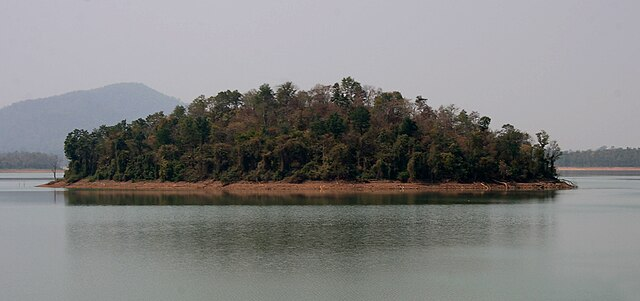
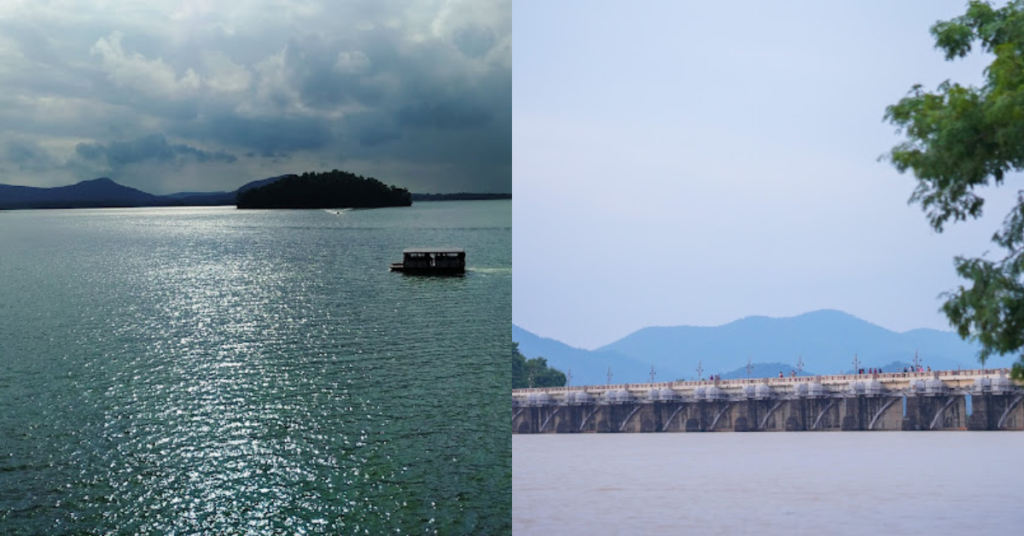
The Kinnerasani Wildlife Sanctuarycovers an area of approximately 635 square kilometers. It is characterized by a mix of dry deciduous and moist deciduous forests. The sanctuary’s topography is varied, with undulating hills, dense forests, and the Kinnerasani River flowing through it, forming a reservoir known as the Kinnerasani Dam.
The sanctuary is part of the Eastern Ghats known for its rich biodiversity. The flora of the sanctuary includes a variety of tree species such as teak, bamboo, and a variety of medicinal plants. The dense forest cover provides an ideal habitat for many species of animals and birds.
Wildlife
A wide variety of fauna can be seen in the Kinnerasani Fauna Sanctuary. Some of the prominent species include:
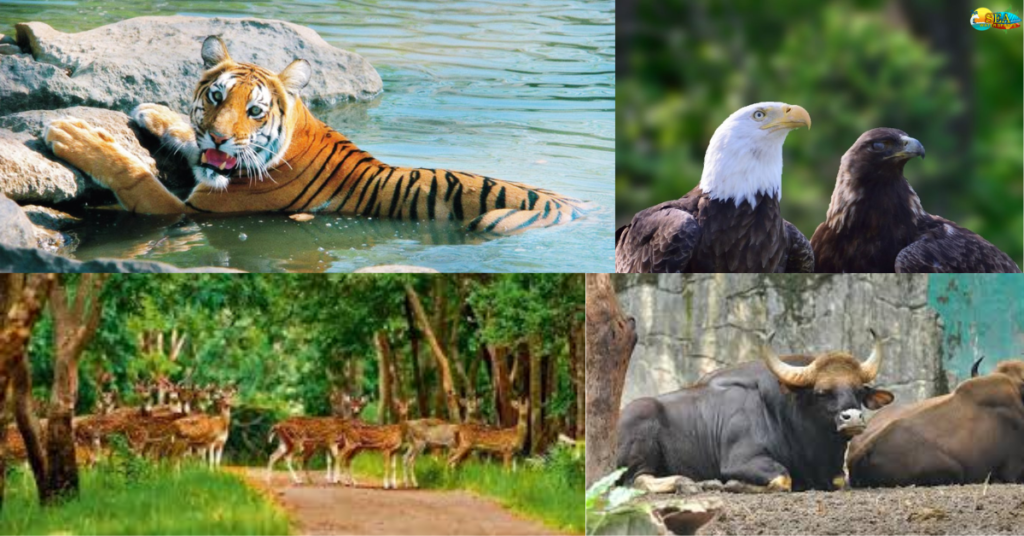
Mammals: The sanctuary is home to a variety of mammals such as the Indian leopard, sloth bear, wild boar, chital (spotted deer), sambar deer, and the Indian bison (gaur). The elusive Bengal tiger has also been reported in the sanctuary, although sightings are rare.
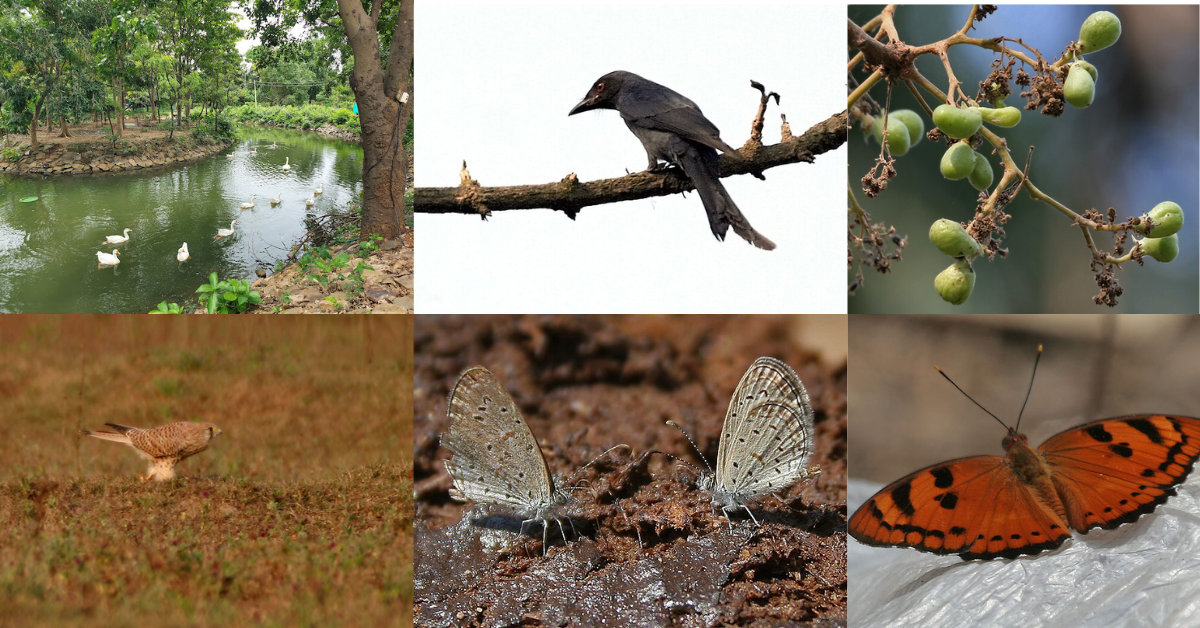
Birds: The sanctuary is a haven for bird watchers, with a variety of avian species including peafowls, partridges, quails, and a range of migratory birds. The sanctuary’s varied habitats support a rich bird population, making it a popular spot for birding.
Reptiles: The sanctuary is also home to several species of reptiles, including snakes and lizards. The Kinnerasani River and its surrounding wetlands are particularly important for reptilian life.
Attractions and Activities
Kinnerasani Wildlife Sanctuary offers a range of attractions and activities for visitors. The Kinnerasani Dam, built across the Kinnerasani River, is one of the major attractions in the sanctuary. The dam not only serves as a water source for the region but also enhances the scenic beauty of the sanctuary. The reservoir formed by the dam is a habitat for various aquatic species and attracts a variety of birds, making it an excellent spot for birdwatching.
For those interested in trekking, the sanctuary offers several trails that take you through dense forests. Open grasslands, and along the riverbank, provide ample opportunities to explore the wilderness. Guided safaris are also available, offering visitors a chance to spot wildlife in their natural habitat. Additionally, the sanctuary has designated picnic spots where visitors can relax and enjoy the tranquility of nature.
Conservation Efforts
Since its establishment, the Kinnerasani Wildlife Sanctuary has been the focus of several conservation initiatives. The Telangana Forest Department, along with various non-governmental organizations, has been working to protect the wildlife and habitats within the sanctuary. Efforts have included anti-poaching measures, habitat restoration, and community involvement in conservation.
The sanctuary also faces challenges such as human-wildlife conflict, illegal logging, and the encroachment of land for agriculture. To address these issues, the government has implemented strict regulations and works with local communities to promote sustainable practices.
Location and Accessibility
Location: The sanctuary is situated in the Bhadradri Kothagudem district, one of the tribal-dominated regions of Telangana. The nearest town is Palvancha, which is just 12 kilometers away.
Accessibility:
By Road: Palvancha is well-connected by road. From Hyderabad, it’s about a 5-6 hour drive (approximately 280 kilometers). There are private cars and state transportation buses available.
By Rail: The nearest railway station is Bhadrachalam Road (Kothagudem), about 25 kilometers from the sanctuary.
By Air: The nearest airport is Rajiv Gandhi International Airport in Hyderabad, from where you can hire a taxi or take a bus to Palvancha.
Timings and Best Time to Visit
Sanctuary Timings: The sanctuary is open to visitors from 6:00 AM to 6:00 PM every day. However, it is advisable to visit early in the morning or late in the afternoon to spot wildlife.
Best Time to Visit: The best time to visit Kinnerasani Wildlife Sanctuary is between October and March. when the wildlife is more active and the weather is good.
Conclusion
The Kinnerasani Wildlife Sanctuary is not just a haven for wildlife but also a place of historical and cultural significance. Its rich biodiversity and the conservation efforts in place make it an essential part of Telangana’s natural heritage. As awareness and conservation efforts continue to grow, the sanctuary remains a vital refuge for the wildlife of the Eastern Ghats.
Frequently Asked Questions(FAQs)
1Q: Where is Kinnerasani Wildlife Sanctuary located?
A: Kinnerasani Wildlife Sanctuary is located in the Bhadradri Kothagudem district of Telangana, India.
2Q: What is the area of Kinnerasani Wildlife Sanctuary?
A: The sanctuary covers an area of 635.4 square kilometers.
3Q: What is the best time to visit Kinnerasani Wildlife Sanctuary?
A: The best time to visit is from November to April.
4Q: What are the main attractions of Kinnerasani Wildlife Sanctuary?
A: The sanctuary’s main attractions include the Kinnerasani River, diverse wildlife, and scenic landscapes.
5Q: What type of vegetation is found in Kinnerasani Wildlife Sanctuary?
A: The sanctuary has tropical dry deciduous and mixed forests.
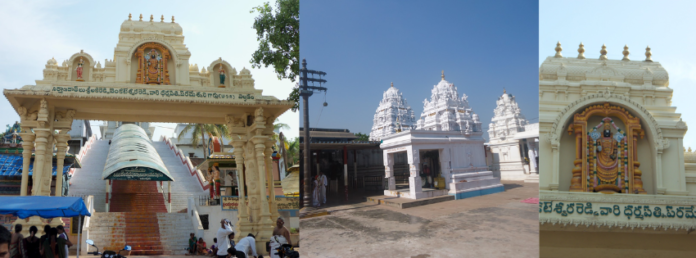
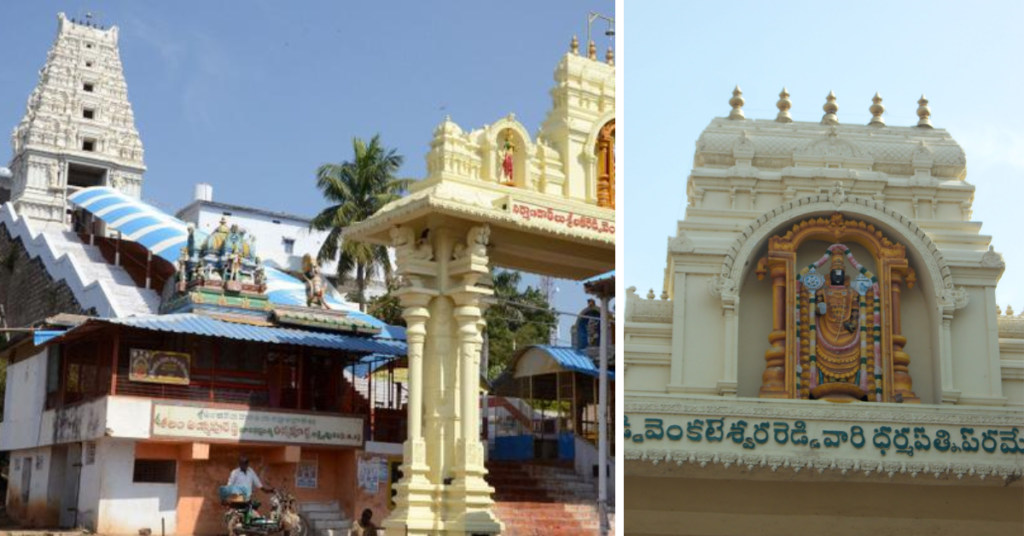
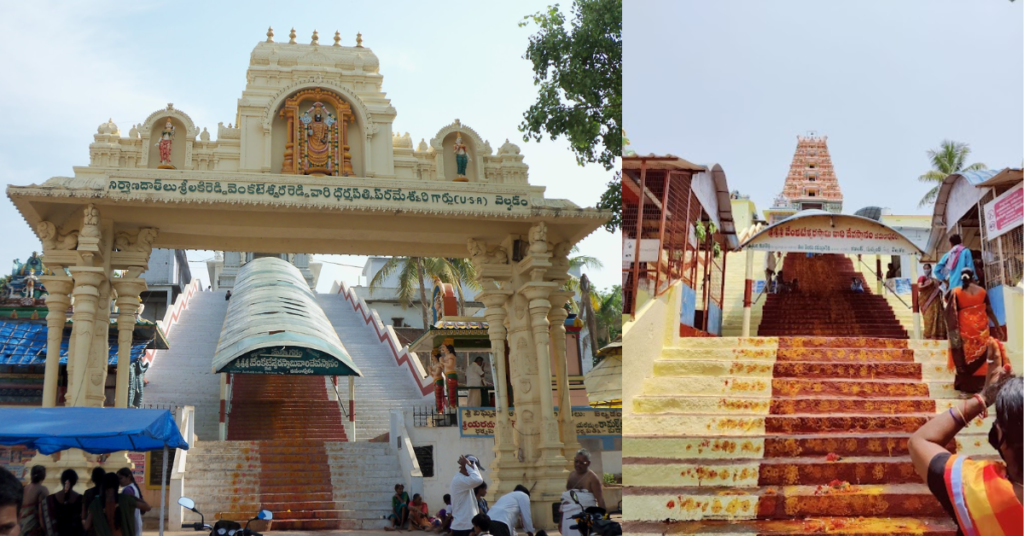
Near Yerrupalem town in the Khammam district of Telangana, Jamalapuram is a quaint village that holds profound spiritual significance. Despite its small size, this village is home to an ancient temple dedicated to Lord Venkateswara(Jamalapuram Venkateswara Swamy temple), making it a must-visit destination for devotees and travelers alike.
A Temple Steeped in History of Jamalapuram temple
The revered Venkateswara Swamy Temple stands at the heart of Jamalapuram, with Lord Venkateswara manifesting as Swayam Bhoo, a self-manifested deity. This temple, often referred to as “Khammam Chinna Tirupathi” or “Telangana Chinna Tirupathi,” draws comparisons to the famous Tirupati Temple due to its spiritual ambiance and the fervor of devotion it inspires.
The temple complex showcases the architectural brilliance of the Vijayanagara Empire. It was renovated by the illustrious Vijayanagara Emperor Sri Krishna Devaraya, who was known for his deep devotion and patronage of Hindu temples. This historical connection adds a layer of cultural richness to the already spiritual experience.
The Venkateswara Swamy Temple is not the only place of worship in Jamalapuram. The temple complex also includes other significant shrines such as the Padmavathi Ammavari Temple, dedicated to the consort of Lord Venkateswara, and the Sivalayam, which is devoted to Lord Shiva. Additionally, the complex houses the Ganesh Temple, Anjaneya Swamy Temple, Sri Alivelu Amma Vari Temple, and Ayyappa Swamy Temple, making it a confluence of diverse spiritual traditions.
Each of these temples has its own unique significance and adds to the serene atmosphere of the complex. Pilgrims can spend hours exploring these sacred spaces, offering prayers, and soaking in the tranquil vibes that permeate the area.
The Enchanting Surroundings
One of the most captivating aspects of Jamalapuram is its location. Surrounded by lush green hills and blessed with a pleasant climate, the temple is a serene retreat from the hustle and bustle of everyday life. The natural beauty of the area enhances the spiritual experience, making it a perfect spot for meditation and reflection.
The temple is also close to the historical Suchi Gutta, a site of great significance. It is believed that Jabali Maharshi, a revered sage, performed intense penance here and earned the blessings of Lord Venkateswara. Suchi Gutta adds an element of mysticism and historical depth to Jamalapuram, making it a place of pilgrimage for those seeking divine blessings and spiritual enlightenment.
Entry Fee and Timings
To ensure a smooth and organized visit, the temple administration has set specific timings and an entry fee:
Entry Fee: There is no entry fee to visit the Venkateswara Swamy Temple in Jamalapuram.
Timings: The temple is open every day from 6:00 AM to 12:00 PM and from 4:00 PM to 8:00 PM. Visiting early in the morning or during the evening offers a serene atmosphere and helps you avoid the midday heat.
Getting There
Jamalapuram, 80 kilometers from Khammam, is easily accessible, attracting visitors from nearby towns and cities for exploration. For travelers from Vijayawada, the 141-kilometer journey offers a scenic drive through the picturesque landscapes of Telangana.
A Pilgrim’s Haven
The Venkateswara Swamy Temple in Jamalapuram witnesses a significant influx of pilgrims, especially during auspicious occasions and festivals. The temple comes alive with vibrant celebrations, devotional music, and the fervent prayers of thousands of devotees. The spiritual energy during these times is palpable, making it an unforgettable experience for anyone who visits.
Conclusion
Jamalapuram may be a small village, but its spiritual significance, historical richness, and natural beauty make it a destination worth exploring. Jamalapuram offers a serene experience, perfect for devotees seeking Lord Venkateswara’s blessings or travelers in search of tranquility. Plan a visit to this hidden gem of Telangana, and discover the divine serenity that has drawn pilgrims here for centuries.
FAQS
Q1) What is the significance of Jamalapuram Venkateswara Swamy Temple?
ANS) The temple is dedicated to Lord Venkateswara, revered as a powerful deity. It’s a popular pilgrimage site known for its spiritual ambiance.
Q2) What are the temple timings?
ANS) The temple is generally open from 5:00 AM to 12:00 PM and 4:00 PM to 8:00 PM. Timings may vary during festivals.
Q3) How can I reach Jamalapuram Venkateswara Swamy Temple?
ANS) The temple is located 80 kilometers from Khammam. Visitors can reach it by road via private vehicles, buses, or taxis.
Q4) Are there any nearby attractions to visit?
ANS) Yes, visitors can explore nearby attractions like Khammam Fort and Palair Lake, making it a well-rounded trip.
Q5) When is the best time to visit the temple?
ANS) The best time to visit is during the winter months (November to February) or during festivals like Vaikunta Ekadasi.
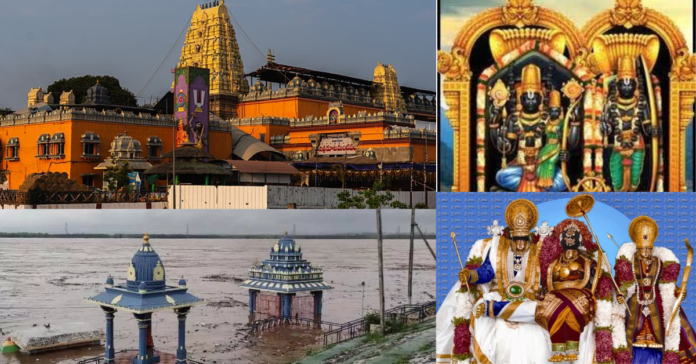
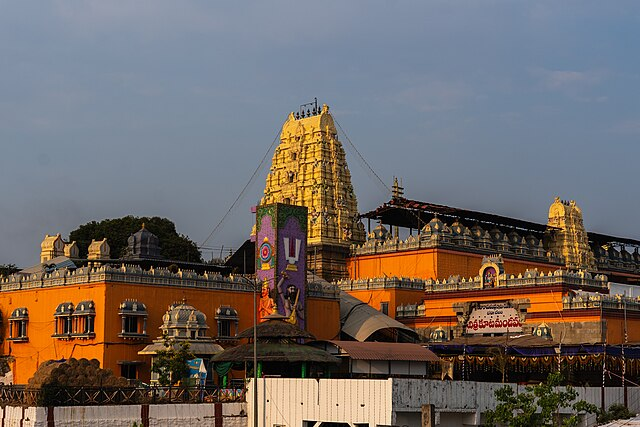
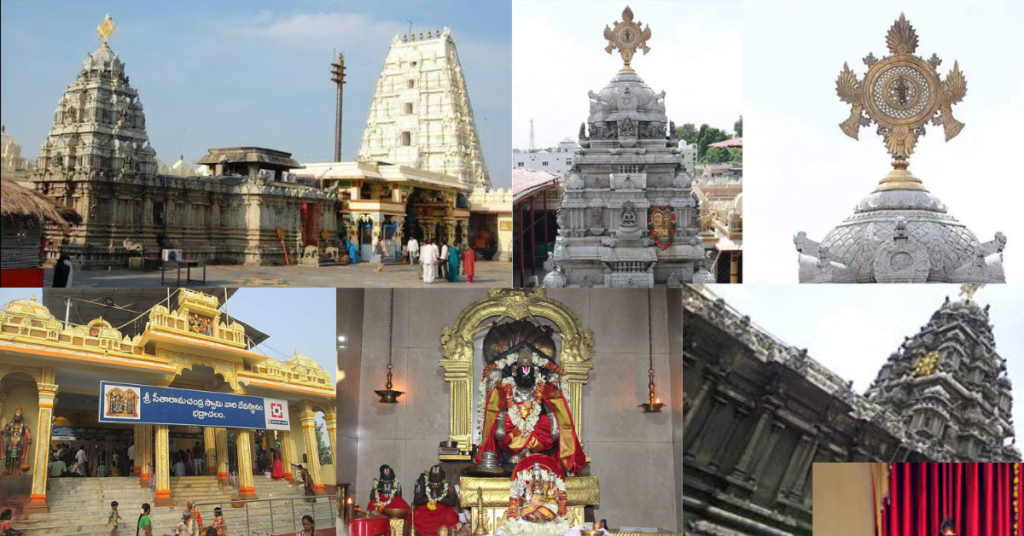
Sri Sita Ramachandra Swamy Temple in Bhadrachalam, Telangana.Is more than just a place of worship. It’s a vibrant testament to the enduring devotion of a community towards Lord Rama. The temple, situated on the serene banks of the Godavari River, draws thousands of devotees each year. Who come to seek the blessings of Lord Rama and partake in the temple’s rich spiritual traditions. This blog delves deep into the temple’s storied past, architectural marvels, and religious fervor. That continues to make it one of the most important pilgrimage sites in South India.
History of Bhadrachalam Temple
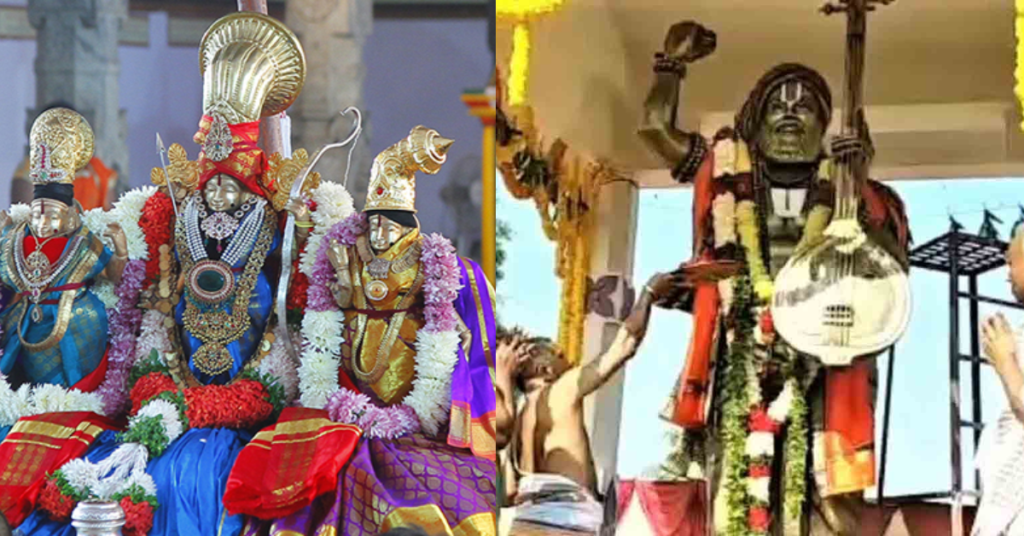
In the 17th century, Bhakta Ramadasa, born Gopanna, served as a Tahsildar in the Kingdom of Golconda under the rule of Abdul Hassan Tanah Shah. Gopanna, an ardent devotee of Lord Sri Rama, was deeply committed to the worship and upkeep of theBhadrachalam Temple.Driven by his devotion, he used government tax funds to renovate the Bhadrachalam Temple. Adorn the idols with gold and precious jewels, all without seeking permission from his superiors. This act, though done out of reverence, was considered a serious offense against the kin. Leading to his arrest and imprisonment in the Golconda Fort by the Nizam.
During his time in prison, Ramadasa composed numerous devotional poems, expressing his unwavering love for Lord Rama. His anguish over the Lord’s perceived silence in the face of his suffering. Miraculously, Lord Rama appeared in a dream to Tanah Shah. Returned the exact amount that Ramadasa had spent on the temple. This miraculous event led to Gopanna’s release from prison. He continued his service to the temple with even greater zeal.
The Nizam of Hyderabad, impressed by the devotion and miraculous events surrounding the temple, granted it a special status. The temple was henceforth regarded with great reverence, not only by the local people but also by rulers and devotees from various parts of India.
Mythological Connection to the Ramayana
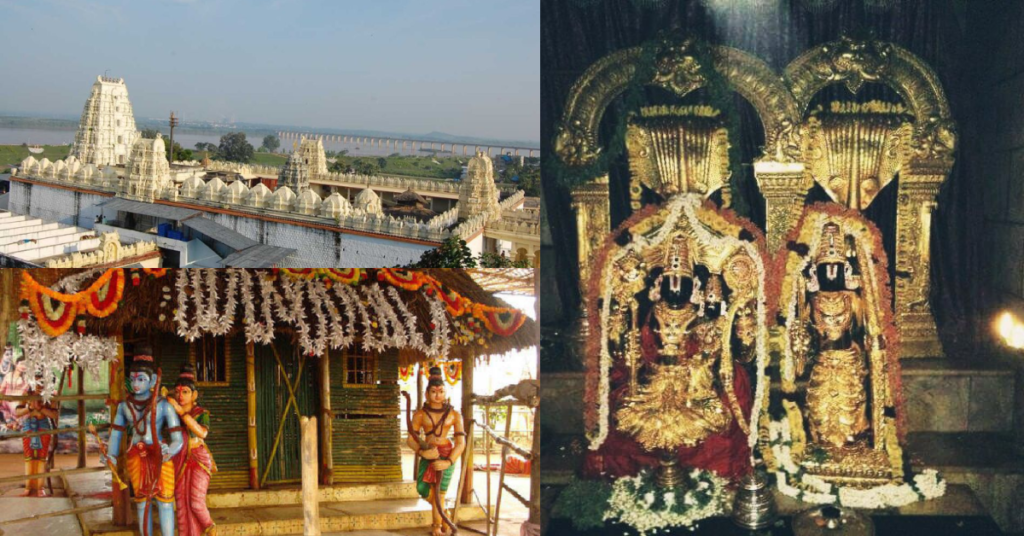
The Bhadrachalam Temple is deeply connected to the Ramayana, an ancient Indian epic. According to legend, during the Treta Yuga, Lord Vishnu’s avatar, Rama, spent part of his 14-year exile in the Dandaka Forest with his wife Sita and brother Lakshmana. One day, Rama’s touch turned a stone into a human named Bhadra. Who was believed to be the son of Mount Meru. Bhadra was a devoted follower of Rama and met the sage Narada, who taught him the Rama Taraka Mantra. Bhadra chanted this mantra on the banks of the Godavari River. Meditated for many years, hoping to meet Rama again.
Pleased with Bhadra’s devotion, Rama promised to meet him after rescuing Sita from the demon king Ravana. Although Rama couldn’t fulfill this promise during his lifetime, Lord Vishnu appeared before Bhadra in the form of Rama. However, Vishnu appeared in his divine form with four arms instead of Rama’s two-armed mortal form. In this vision, Sita sat on his left thigh, and Lakshmana stood to his left.
Another local legend tells the story of a tribal woman named Pokala Dhammakka, who lived in Bhadrareddypalem. She is said to be a descendant of Sabari, a devoted follower of Rama. One night, Dhammakka had a dream that led her to discover an idol of Rama hidden inside an anthill. She dissolved the anthill using water from the Godavari River. With the help of the villagers, built a small temple (mandapam) to worship the deity.
Architecture and Design of Bhadrachalam Temple
The Sri Seetha Ramachandra Swamy Vari Temple is intricately designed to symbolize different parts of the mythological figure Bhadra, With the temple’s layout reflecting Bhadra’s head, heart, and feet. The temple’s main sanctum, located at Bhadra’s heart, houses the central icon, believed to be Swayambhu (self-manifested). The temple also features a majestic Rajagopuram tower. Representing Bhadra’s feet, and is adorned with a gold-plated flag post, or Dwajasthambam, made from Panchaloha (a five-metal alloy). Various shrines within the temple complex are dedicated to other deities, including Hanuman, Yogananda Narasimha, and Govindaraja Swamy.
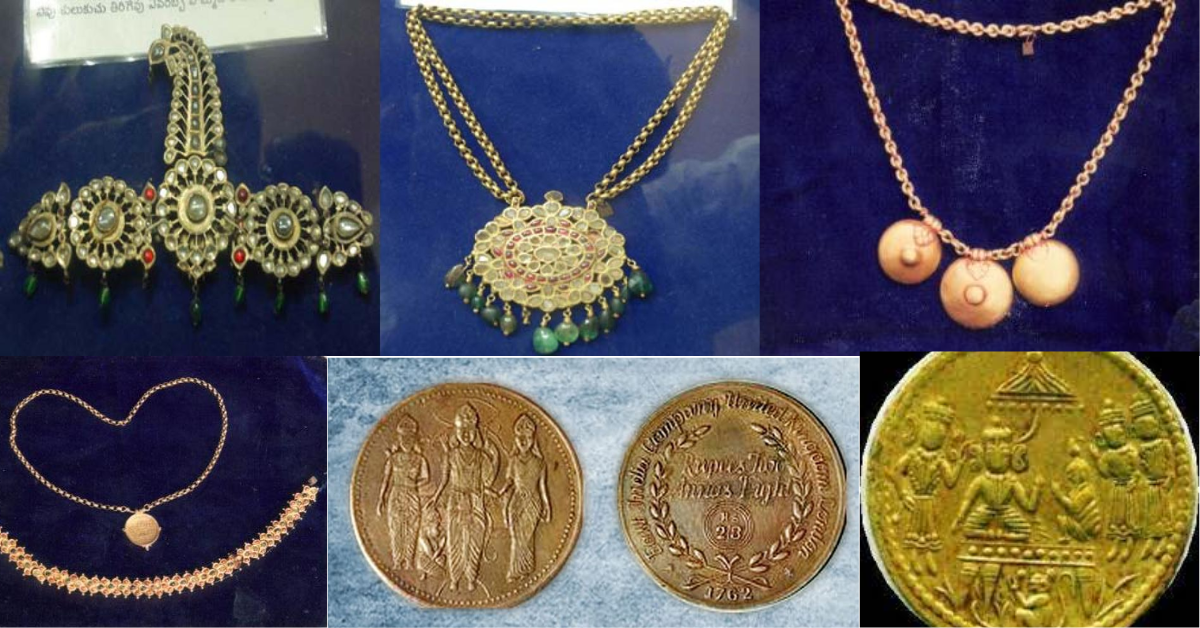
A significant part of the temple’s tradition includes the Nithyakalyana Mandapam. Where the marriage ceremony of Rama and Sita is performed. The temple also houses an exhibition center called the Rushya Mookham. Showcasing historical artifacts like coins bearing Lord Rama’s image and jewelry made by Gopanna for the deities. This temple, with its rich mythology and deep connection to the Ramayana, remains a significant spiritual and cultural landmark.
Festivals at Bhadrachalam Temple
Bhadrachalam Temple hosts several significant festivals throughout the year.
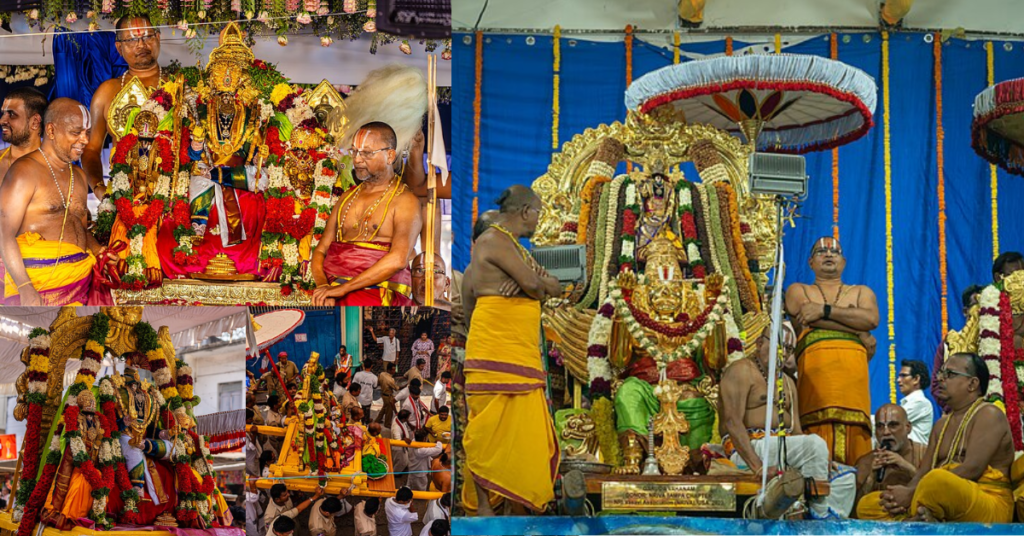
Vaikuntha Ekadashi is a grand 21-day celebration, culminating in the main event where devotees seek blessings for salvation. This festival features a float festival, Teppotsavam, and a chariot procession, Rathotsavam, which coincides with Makar Sankranti.
Vasanthotsavam, the spring festival coinciding with Holi, marks the start of preparations for Brahmotsavam. It includes the creation of Mutyala Talambralu, which is used in marriage rituals, and the Maha Kumbhaprokshana, a sanctification ceremony followed by Holi celebrations.
Brahmotsavam is the temple’s most important annual festival, celebrated over 12 days, including Rama Navami, the birthday of Rama, and the Thirukalyana Mahotsavam, the marriage ceremony of Rama and Sita. The festival involves elaborate rituals such as Visesha Snapanam, Garudadhivasam, Dwajarohanam, and the coronation ceremony Mahapattabishekam.
Vijayadashami festival, marking the end of the ten-day Dussehra, features the recitation of the Ramayana and a grand procession of Rama. Other notable festivals include Sabri Smruti Yatra, Hanuman Jayanti, Dhamakka Seva Yatra, and Jayanthi Utsavam, celebrating the birthdays of Gopanna and Narasimha Dasu.
Sri Sitaramachandra Swamy Temple holds immense significance in Vaishnavism, a major Hindu tradition that worships Lord Vishnu and his avatars, including Lord Rama. The temple is believed to be a powerful spiritual center, where devotees can connect with the divine and seek liberation (moksha). The temple’s association with the epic Ramayana, particularly Lord Rama’s journey, makes it a key pilgrimage site, especially for those devoted to the Ramayana’s teachings.
BhadrachalamTemple Timings and Rituals
The temple is open to devotees from 4:30 AM to 1:00 PM and from 3:00 PM to 9:00 PM daily.
S.No
Seva description
Time
1
Antaralaya Abhishekam (Mulavarulu on Sundays)
6.00 AM to 7.00 A.M
2
Abhishekam (at Bhadra Temple) Daily
7.00 AM to 8.00 A.M
3
Kesavanaamaarchana
8.30 A.M to 8.00 P.M
4
Sahasranamarchana
8.30 A.M to 9.30 A.M
5
Suvarna Tulasi Astotharanamarchana (on every Saturday)
Nitya Kalyana Ubhayam (Daily, except during Pavitrotsavams, Brahmotsavams, and Vykunta Ekadasi)
9.30 A.M to 11.00 A.M
9
Rajata Ratha Seva
From 6.30 PM
10
Alaya Chuttu Seva
8.00 PM to 8.30 P.M
11
Vahana Seva (Garuda, Hamsa, Hanumantha, Rajadhiraja)
8.00 PM to 8.30 P.M
Visiting Places near Bhadrachalam Temple
Parnashala
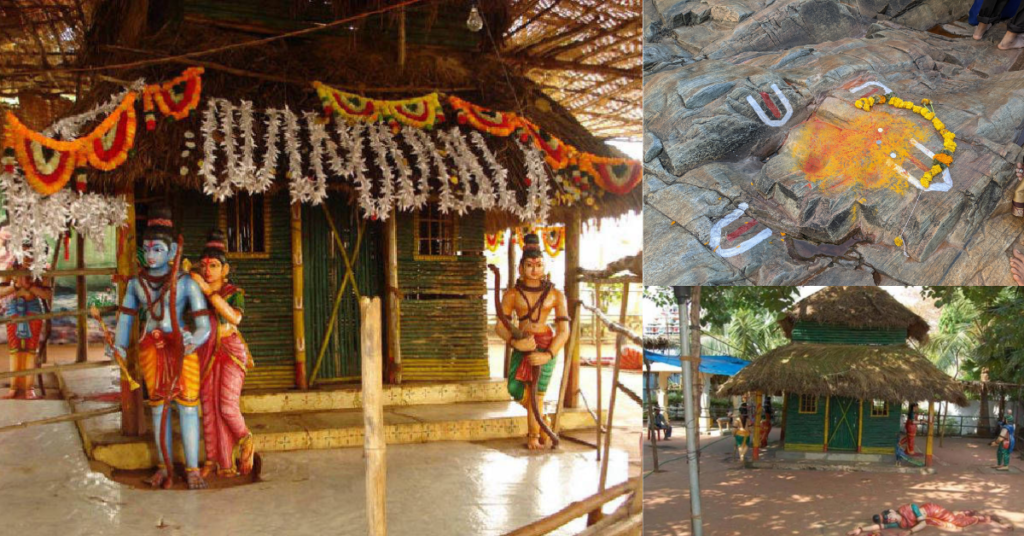
Parnashala is a site of immense religious and historical significance, located about 35 kilometers from Bhadrachalam. It is believed to be the exact spot where Lord Rama, during his exile (Vanavasa) in the Dandakaranya forest, constructed a hermitage and lived with his wife, Sita, and brother, Lakshmana. The sage Agastya is said to have selected this serene location for Rama’s stay.
The site offers a picturesque display of scenes from the Ramayana, particularly those depicting the Vanavasa period. Visitors can see the footprints of Sita Devi, the mosaic representation of Maarecha in the guise of the golden deer, and Ravana in the guise of a Sanyasi seeking alms (Bhikshatana). Nearby, there is Sita Vaagu, where Sita is said to have bathed and collected turmeric and kumkum from the surrounding stones. The rocks in this area still bear the marks of her saree. The deity worshipped here is known as Sokarama, named after the sorrowful events surrounding Sita’s abduction by Ravana. The tracks of Ravana’s chariot used to kidnap Sita, can also be seen on the mountain across the river bank near the Parnashala temple.
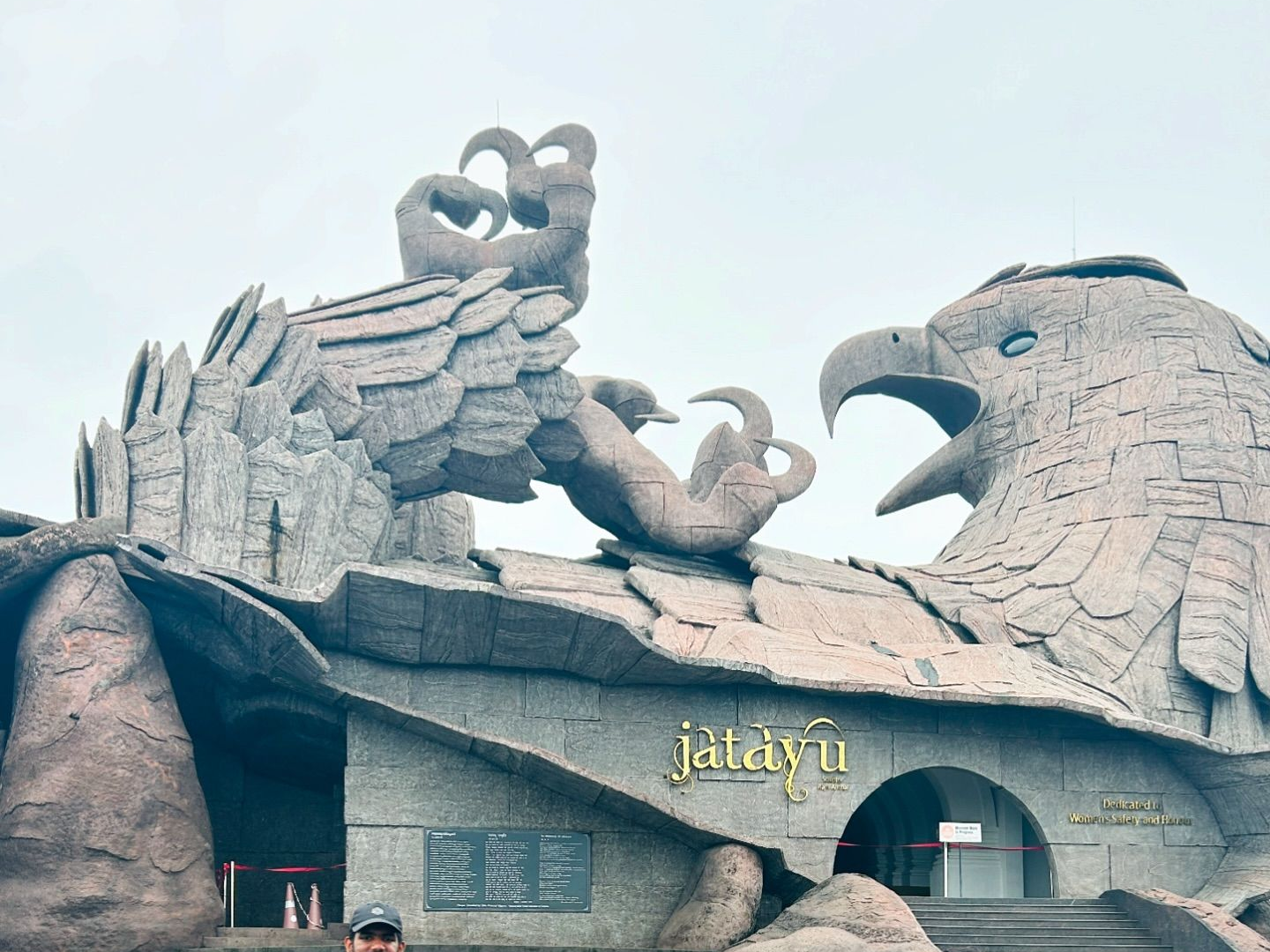
Located just 2 kilometers from Bhadrachalam, Jattayu Paaka, or Yetapaka, is another site deeply intertwined with the Ramayana. According to the epic, this is where the valiant bird Jatayu, a devotee of Lord Rama, attempted to stop Ravana as he was abducting Sita in his chariot. Despite his bravery, Jatayu was mortally wounded in the battle with Ravana. The bird awaited the arrival of Lord Rama at this spot before succumbing to his injuries. It is believed that one of Jatayu’s wings fell at Rekkapalli, about 55 kilometers away, in V.R. Puram Mandal.
Dummugudem
Dummugudem is a village named after an event in the Ramayana where Lord Rama defeated 14,000 demons led by Khara and Dushana. The name “Dummugudem” derives from the belief that the village was built upon the ashes (dummu) of these demons. The deity worshipped here is called Atmarama, reflecting Rama’s inner strength and resolve during the battle.
Gundala
Situated 5 kilometers from Bhadrachalam, Gundala is renowned for its natural hot springs located on the riverbank. Pilgrims believe that these springs have divine origins, as per the Brahma Purana, which states that the divine trinity of Brahma, Vishnu, and Maheswara took their dips here during the winter season. The presence of these hot springs adds a mystical charm to the area, attracting visitors who wish to experience this sacred phenomenon.
Sree Rama Giri
Sree Rama Giri: Sree Rama Giri is located about 55 kilometers downstream from Bhadrachalam on the bank of the Godavari River. The site is home to the Yoga Rama Temple, where the deity is worshipped in a meditative posture, symbolizing the spiritual aspects of Lord Rama. The temple is situated on a hill, offering a serene and peaceful atmosphere for devotees and visitors alike. The location, surrounded by natural beauty, is a tranquil spot for those seeking spiritual solace and connection with Lord Rama.
Accommodation and Facilities
Excellent lodging options include Government Guest Houses,Telangana Tourism Hotels, Cottages, and Sadanams in Bhadrachalam. Additionally, some private hotels and lodges offer lodging.
Visit the below Links for Temple Accommodation enquiry and booking
The Sri Sitaramachandra Swamy Temple in Bhadrachalam is not just a place of worship; it is a beacon of faith, history, and cultural heritage. The temple’s rich history, associated with Bhakta Ramadasu, its architectural grandeur, and the spiritual ambiance make it one of the most important pilgrimage sites in South India. Whether you are a devotee or a tourist, a visit to this temple is a journey into the heart of devotion and a glimpse into the rich spiritual traditions of India.
Frequently Asked Questions(FAQs)
1Q: What is the temple dedicated to?
A: The temple is dedicated to Lord Rama.
2Q: Who built the Sri Sitaramachandra Swamy Temple?
A: The temple was built by Kancharla Gopanna, also known as Bhakta Ramadasu.
3Q: Why is Kancharla Gopanna significant to the temple?
A: He renovated the temple using tax funds and was later released from imprisonment due to divine intervention.
4Q: What are the temple’s visiting hours?
A: The temple is open from 4:30 AM to 1:00 PM and 3:00 PM to 9:00 PM every day.
5Q: What is the temple’s annual major event?
A: The temple is known for its annual chariot festival, a major event in the region.
Papi Kondalu, also known as the “Papi Hills,” is a beautiful mountain range found in the West Godavari District of Andhra Pradesh. The name “Papi Kondalu” is derived from the Telugu words “Papidi,” meaning partition, and “Kondalu,” meaning hills. The original name was “Papidi Kondalu,” a reference to the way these hills seem to split the mighty Godavari River, creating a natural partition. Some also say that the name was inspired by the way the hills resemble the parting in a traditional Indian woman’s hair. Over time, the name evolved into “Papi Kondalu.”
The Majestic Terrain of Papi Hills(Papi Kondalu)
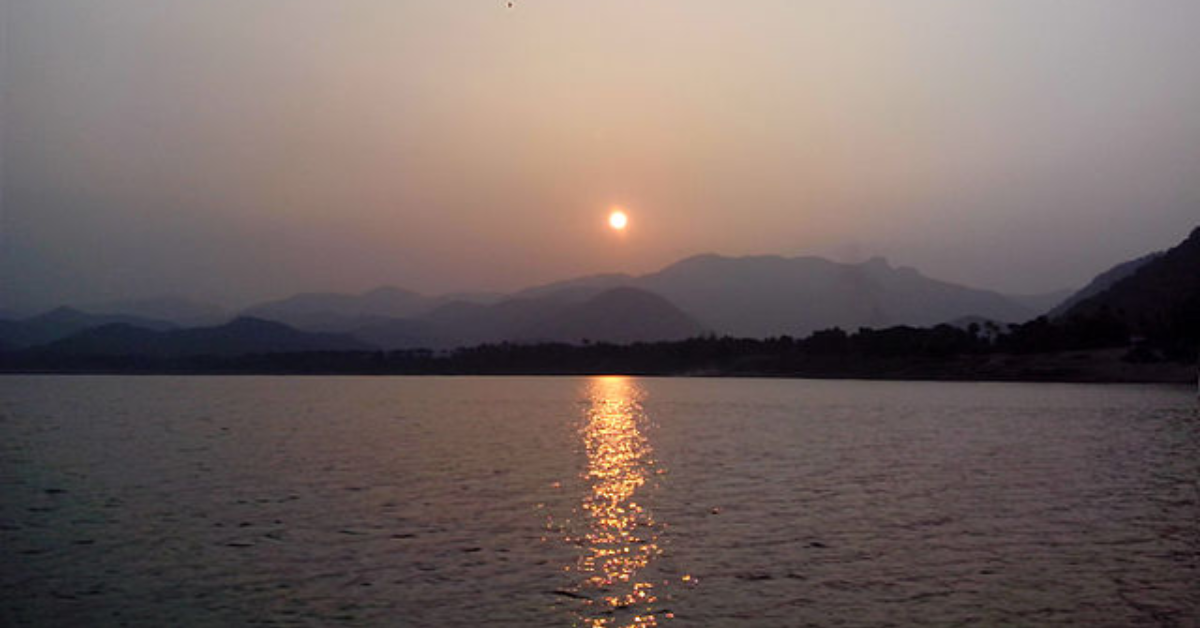
The Papi Kondalumountain range stretches across three districtsEast Godavari, West Godavari, and Khammam offering a scenic and adventurous landscape. The range runs parallel to the Godavari River, one of India’s largest and most dynamic rivers. The river’s journey through Papi Hills is a spectacular sight, marked by its narrow passages, sharp bends, and the lush greenery that blankets the hills. This terrain, with its undulating landscape, is a paradise for nature lovers and adventurers alike.
Boat Journey: The Essence of Papi Kondalu
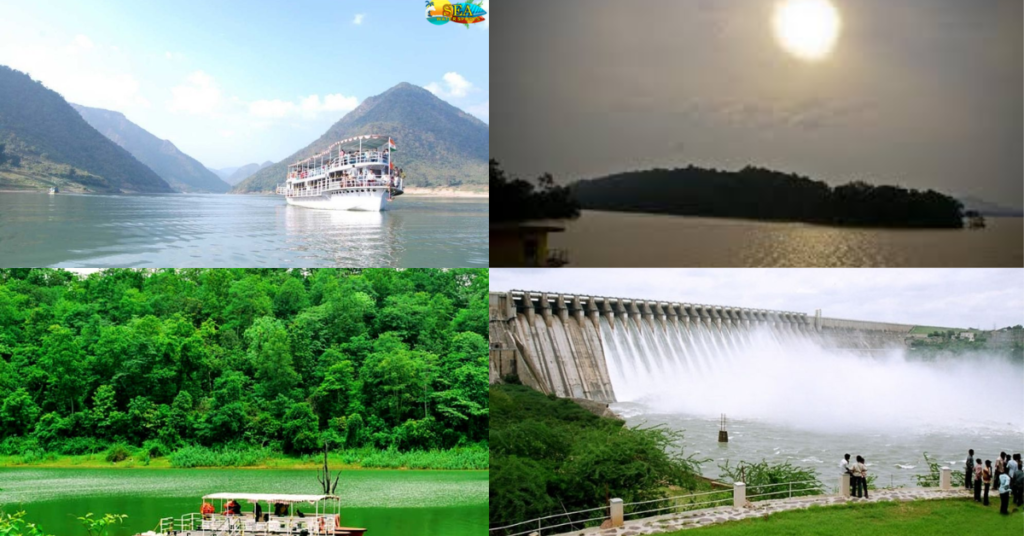
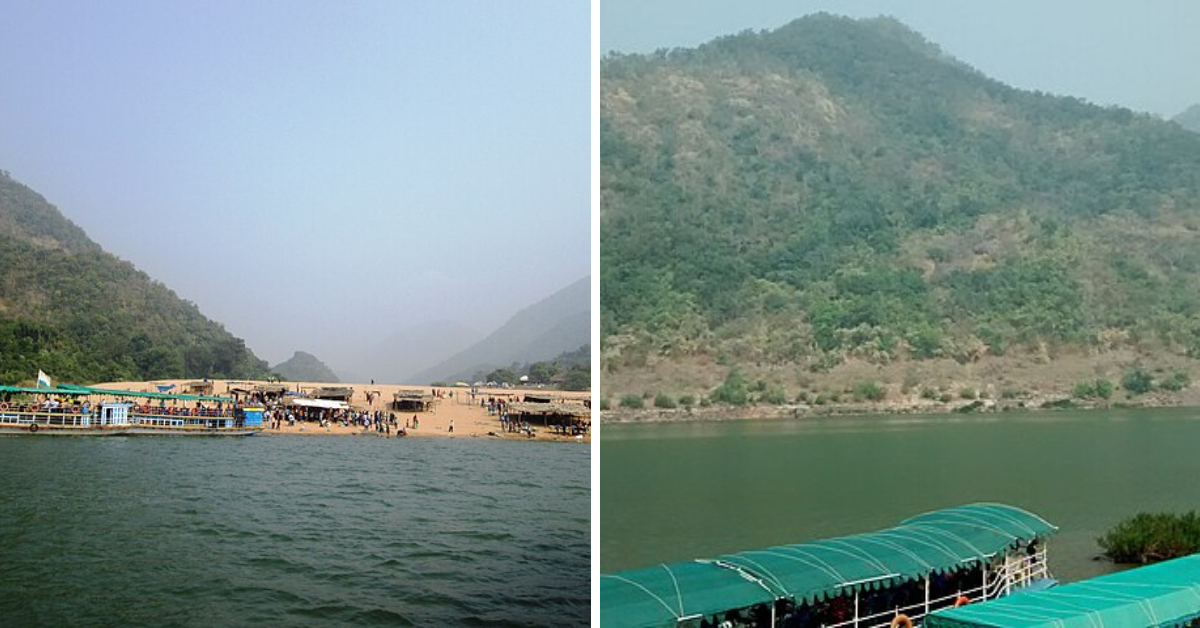
To truly experience the grandeur of Papi Kondalu, a boat journey along the Godavari River is a must. Starting from places like Rajahmundry or Bhadrachalam, visitors can embark on an 8-hour journey through the heart of these hills. Boats of varying sizes, from small motorboats carrying just a handful of passengers to larger river steamers accommodating up to sixty people, navigate the river’s twists and turns.
This boat ride is more than just a means of transportation; it’s an adventure in itself. The rhythmic rise and fall of the river’s surface, the sight of drifting sandbanks, the cool breeze carrying the scent of the hills, and the occasional glimpse of fish swimming in the clear waters create an unforgettable experience. The fresh, unpolluted air and the serene atmosphere make this journey a perfect escape from the hustle and bustle of city life.
When to Visit and What to Expect
Papi Kondalu can be visited almost any time of the year, except during the peak summer months. The monsoon season, from July to September, is particularly exciting. Here, the river swells with rainwater, and then the boat ride becomes thrilling yet slightly precarious. Moreover, this season adds a unique charm to the experience, making it an unforgettable adventure. Skilled local boatmen navigate these waters with expertise, ensuring they provide a safe and memorable journey.
The hills are home to a variety of wildlife, including numerous bird species that add to the area’s natural charm. The forests that blanket the hills are rich in biodiversity, offering a sanctuary for flora and fauna alike. This makes Papi Kondalu not just a destination for scenic beauty but also a haven for wildlife enthusiasts.
Cultural and Tribal Significance
On your journey through Papi Kondalu, you’ll come across several tribal communities that have made these hills their home for generations. Their primary occupations include agriculture, fishing, and handicrafts. These tribes have a rich cultural heritage, and interacting with them offers a unique insight into their way of life. Their traditional practices and simple, sustainable lifestyle stand in stark contrast to the fast-paced modern world, offering visitors a chance to reflect on different ways of living.
Must-Visit Spots in Papi Kondalu
During the boat journey, several significant sites warrant a stop. First, you’ll encounter Perantalapalli, known for its serene ambiance and a temple dedicated to the tribal goddess Seethamma. Next, Pattiseema stands out for its picturesque landscapes and a temple dedicated to Lord Shiva. Furthermore, the opportunity to camp by the riverside adds a unique dimension to the adventure. Equally important, each of these stops offers a distinct experience that enriches your journey through Papi Kondalu. Perantalapalli, a small village, is known for its serene ambiance and a temple dedicated to the tribal goddess Seethamma. This village is often a highlight for visitors, offering a glimpse into the spiritual life of the region’s inhabitants. Pattiseema, another noteworthy spot, is famous for its picturesque landscapes and a temple dedicated to Lord Shiva.
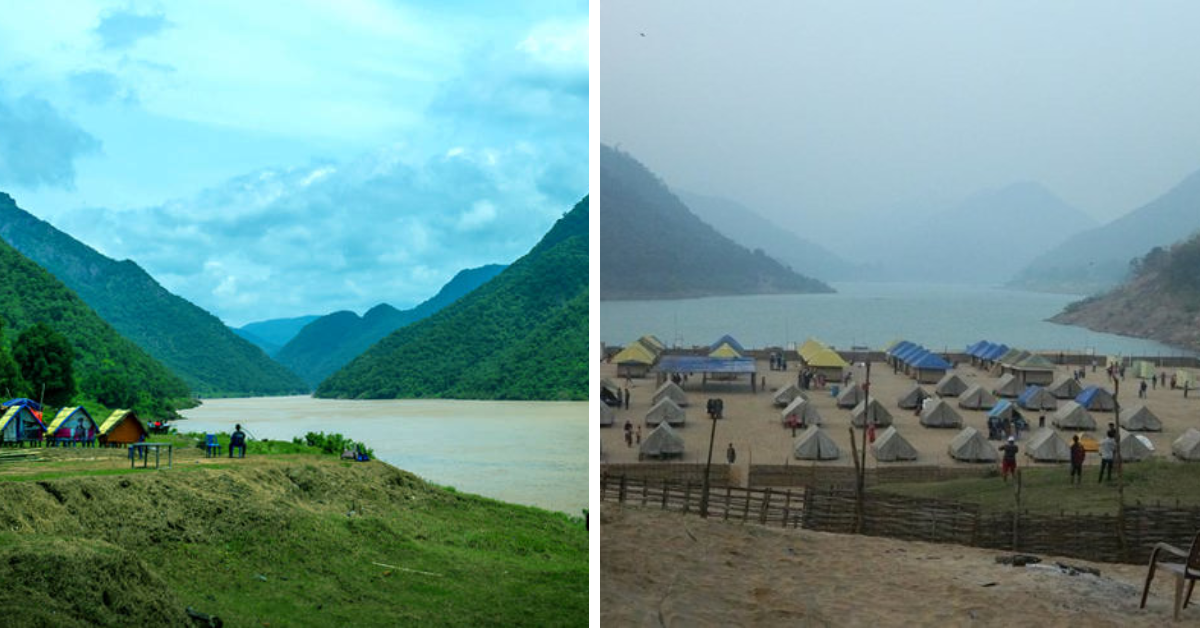
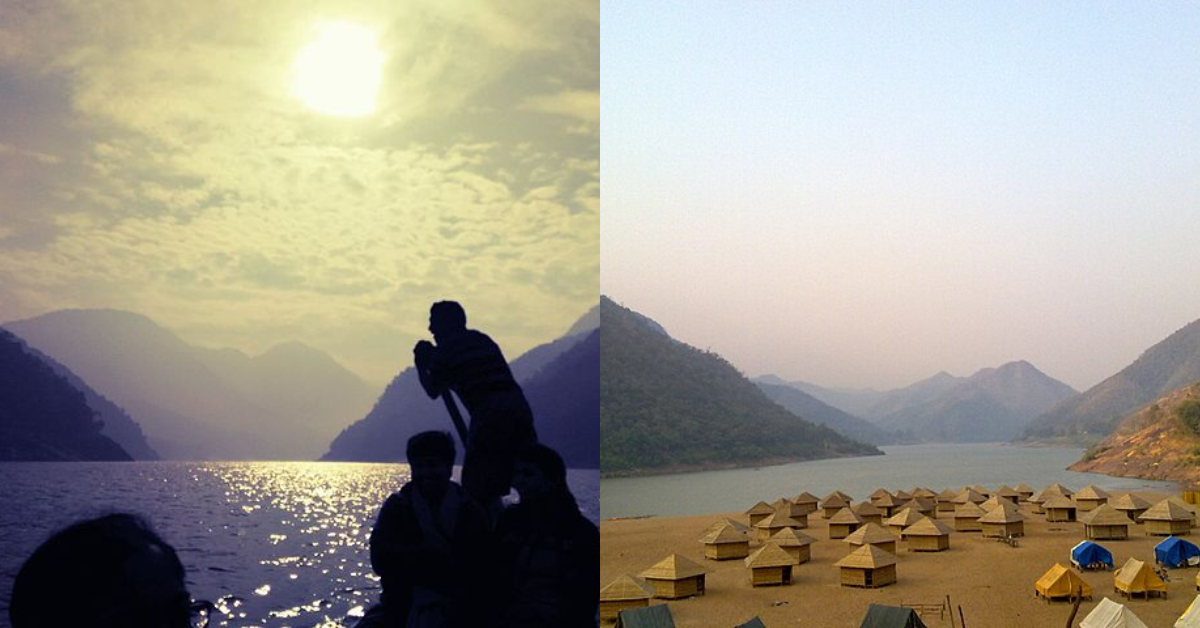
For those who love adventure, camping by the riverside is an experience not to be missed. The tranquil setting under the starlit sky, accompanied by the sounds of nature, is perfect for those seeking a deeper connection with the environment. However, this activity is recommended for groups of young, energetic travelers rather than elderly visitors due to the rugged conditions.
By Air: Rajahmundry Airport, the nearest airport, connects directly to major cities like Chennai, Bangalore, Hyderabad, and Vijayawada with regular flights from Jet Airways and SpiceJet.
By Train: The closest railway station is in Rajahmundry, a major hub in Andhra Pradesh. Rajahmundry is about 150 km from Vijayawada and 220 km from Visakhapatnam, making it accessible from different parts of the country.
By Road: Travelers coming from Khammam district can take a bus to reach Papi Kondalu. From the East Godavari district, you can hire a taxi to Rajahmundry. There is also a 35 km road that leads to the Papi Hills from the East Godavari district, offering a scenic drive through the region.
Conclusion:
Nestled in the heart of Andhra Pradesh, Papi Kondalu dazzles with its natural beauty, cultural richness, and adventurous experiences. Whether you’re a nature enthusiast, an adventure seeker, or someone looking to explore the cultural heritage of India’s tribal communities, Papi Kondalu has something for everyone. The mesmerizing landscape, coupled with the thrill of navigating the Godavari River, makes visiting Papi Kondalu an experience that will first captivate your senses, and then stay with you long after you’ve returned home. Furthermore, what’s more, it offers a sense of adventure that’s equally important to the overall journey. Lastly, in addition to its natural beauty, the cultural richness of the region will further deepen your connection to this enchanting place.
Frequently Asked Questions(FAQs):
Q1. What is the best time to visit Papi Kondalu?
Answer: The best time to visit is during the monsoon season, from July to September when the river is at its most scenic.
Q2. How long does the boat journey through Papi Kondalu take?
Answer: The boat journey typically takes about 8 hours, offering a full-day adventure through the scenic hills.
Q3. What are some must-visit spots in Papi Kondalu?
Answer: Key spots include Perantalapalli village, known for its serene temple, and Pattiseema, famous for its picturesque landscapes.
Q4. How can I reach Papi Kondalu by air?
Answer: The nearest airport is Rajahmundry Airport, well-connected to major cities like Chennai, Bangalore, Hyderabad, and Vijayawada.
Q5. Is Papi Kondalu suitable for elderly visitors?
Answer: Although the boat journey is generally safe, younger, energetic travelers may handle overnight camping and rugged conditions better.
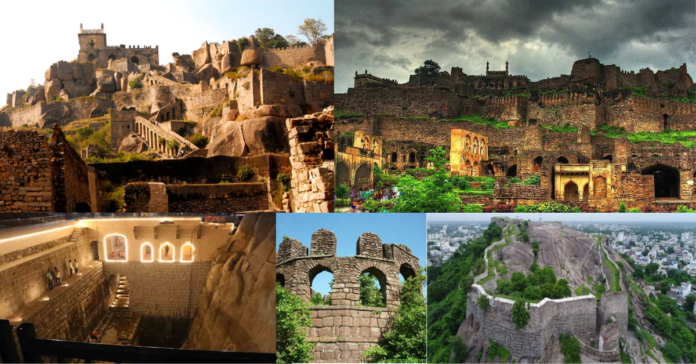
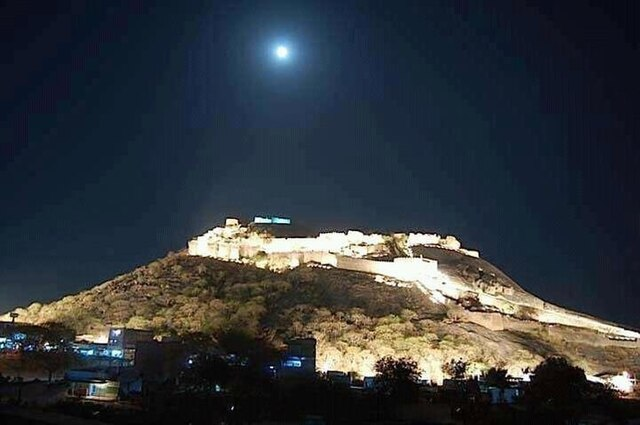
Khammam Fort, located in Khammam district, Telangana, India, is a historical monument that reflects the region’s rich past. Though specific details about its construction and early history are limited. It’s believed to have been built during the reign of the Kakatiya dynasty.
The Fort has witnessed the rise and fall of various dynasties, including the Kakatiyas, the Bahmanis, the Qutb Shahis, and the Asaf Jahi rulers. Each era left its mark on the fort’s structure and character.
Historical Backgroundof Khammam Fort
The history of Fort is deeply intertwined with the history of the region. Its construction began around 950 AD under the rule of the Kakatiya dynasty. The period was marked by prosperity and cultural advancements in the Deccan Plateau. The Kakatiyas, are known for their architectural prowess.
The fort was later expanded by the Musunuri Nayaks. who came into charge following the Kakatiya’s decline.They added new fortifications and structures, enhancing its defensive capabilities. However, the most significant contributions came from the Qutb Shahi rulers of Golconda. Under their reign, Khammam Fort saw the addition of several new buildings, including the beautiful Taramati Mosque. Which still stands as a symbol of Islamic architectural elegance.
The Asaf Jahi dynasty, also known as the Nizams of Hyderabad, further contributed to the fort’s grandeur in the 18th century. They reinforced its defenses and maintained its structures. Ensuring that Khammam Fort remained a bastion of power and culture in the region
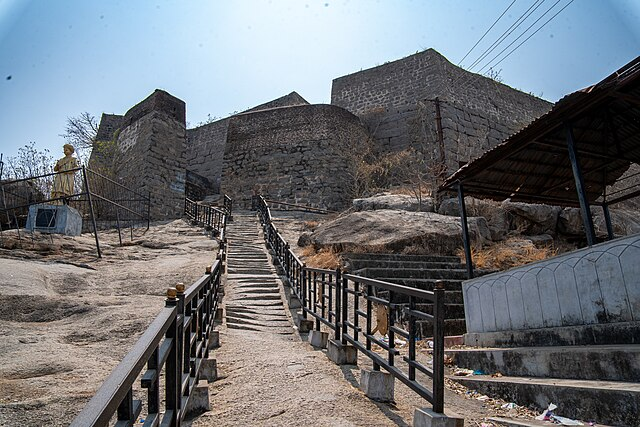
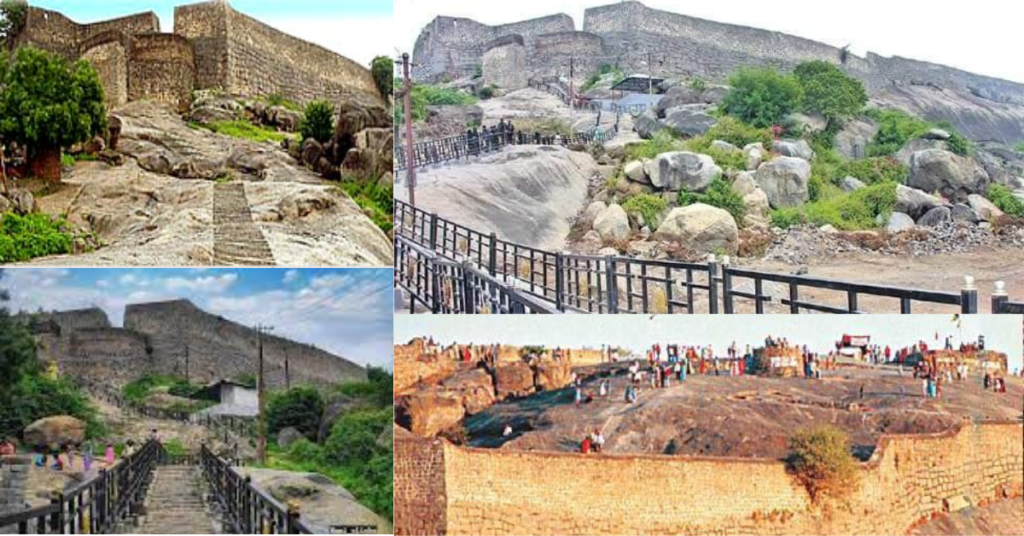
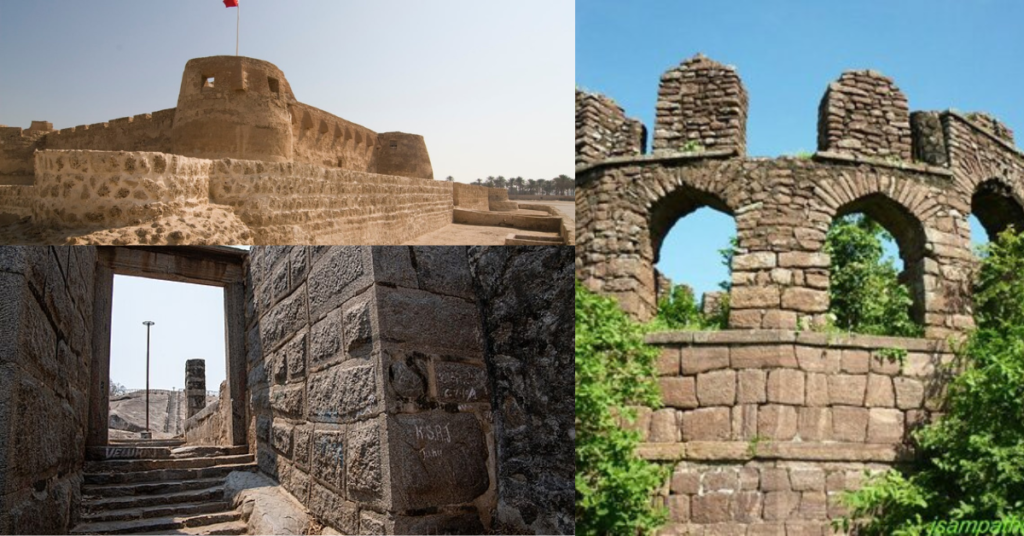
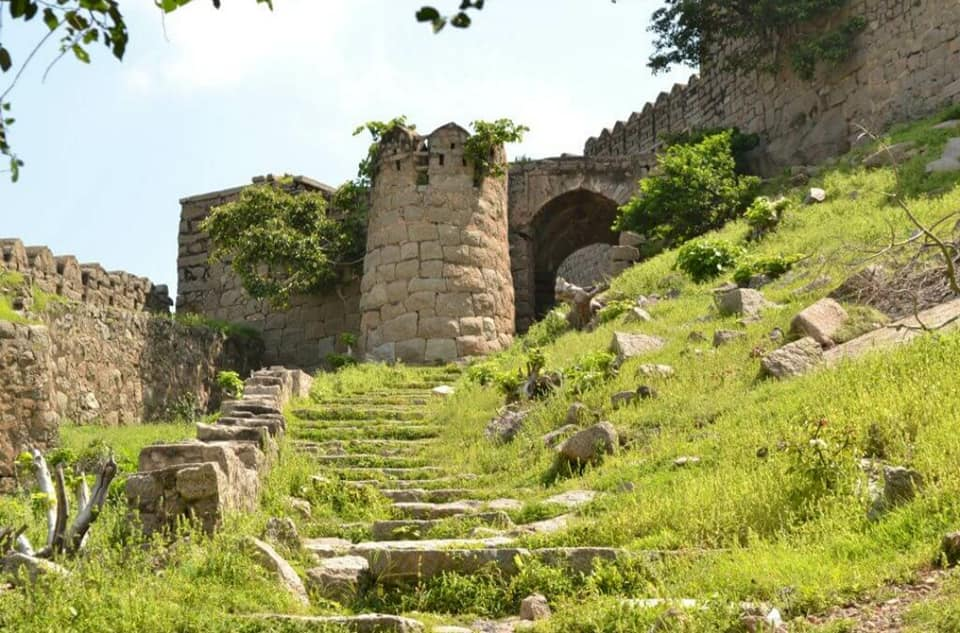
It is a splendid example of a fort that has evolved over centuries, incorporating various architectural styles and techniques. The fort covers an area of about 4 square kilometers and is built primarily from granite and stone, materials chosen for their durability and strength.
The main entrance, known as the “Khilla Darwaza,” is an imposing gateway adorned with intricate carvings that showcase the artistic skills of the craftsmen of that era.
Inside the fort, one can find a mix of religious and secular buildings, including temples, mosques, and palaces. The Narasimha Swamy Temple, dedicated to Lord Narasimha, is a significant Hindu shrine within the fort, known for its beautiful carvings and serene ambiance.
Significant StructuresKhammam Fort
Temples and Mosques: Khammam Fort houses several temples and mosques, reflecting the religious diversity of its builders. The Narasimha Swamy Temple is a highlight, attracting devotees and tourists alike. The Taramati Mosque, built during the Qutb Shahi period, is another notable structure, showcasing Islamic architectural beauty with its elegant minarets and prayer halls.
Taramati Mosque: This mosque, built by the Qutb Shahi rulers, stands as a testament to the Islamic architectural influence within the fort. It features a central dome flanked by minarets, with intricate carvings adorning its walls. The mosque’s prayer hall, with its arched entrances and serene interior, is a place of spiritual reflection and historical significance.
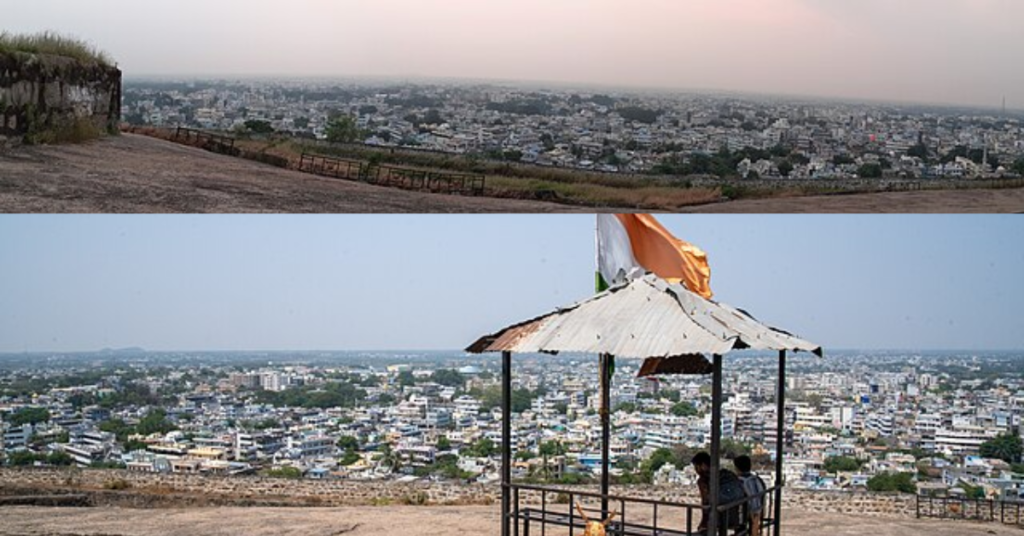
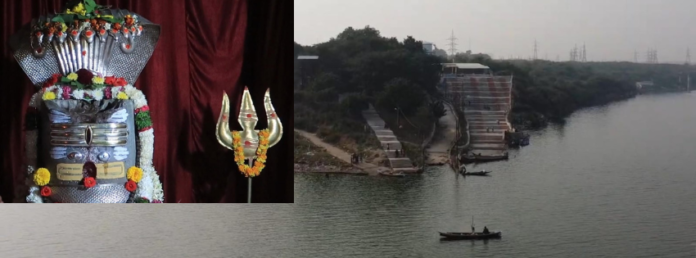
Stunning Views: One of the most captivating features of Khammam Fort is the panoramic view it offers of the surrounding landscape. The fort’s elevated position allows visitors to gaze upon the Munneru River flowing nearby and the lush greenery of the region. These vistas not only provide a visual treat but also underscore the strategic importance of the fort in monitoring and controlling the surrounding area.
The Fort is steeped in legends and folklore. One popular tale speaks of a secret underground tunnel that connected the fort to the banks of the Krishna River, providing a clandestine escape route for the royals during times of siege. Although the tunnel remains elusive, it adds an air of mystery to the fort’s already intriguing history.
Cultural Significance
Today, Khammam Fort is not only a historical monument but also a cultural hub. It hosts various festivals and events, attracting tourists and history enthusiasts from across the country. The fort’s walls reverberate with the stories of its past, offering a tangible connection to the bygone eras.
Preservation Efforts
Recognizing its historical and cultural value, the Telangana government has undertaken several initiatives to preserve and restore Khammam Fort. Conservation efforts focus on maintaining the structural integrity of the fort while ensuring that its historical essence remains intact for future generations.
Visitor Information
Khammam Fort is open to visitors throughout the year. Guided tours are available, providing detailed insights into the fort’s history and architecture. The fort is easily accessible by road, with Khammam town well-connected to major cities in Telangana.
Conclusion
Khammam Fort stands as a symbol of Telangana’s rich heritage, encapsulating centuries of history within its formidable walls. A visit to this historical gem offers a journey through time, unraveling the tales of valor, architectural brilliance, and cultural confluence that define the essence of Khammam Fort. Whether you are a history buff, an architecture enthusiast, or a curious traveler, Khammam Fort promises an enriching and unforgettable experience.
Frequently Asked Questions(FAQs)
1Q: When was Khammam Fort built?
A: Khammam Fort was initially built around 950 AD by the Kakatiya rulers.
2Q: What architectural styles are seen in Khammam Fort?
A: The fort features a blend of Hindu and Islamic architectural styles.
3Q: What is the main entrance of Khammam Fort called?
A: The main entrance is called Khilla Darwaza.
4Q: Are there any temples within the fort?
A: Yes, including the Narasimha Swamy Temple.
5Q: Are guided tours available at the fort?
Yes, guided tours are available for visitors.
6Q: What is the significance of the Khilla Darwaza?
A: It is the main entrance, adorned with intricate carvings and motifs.
Sri Meenakshi Agasteswara Swamy Temple, located at the confluence of the River Krishna and Musi in Wadapally village, Telangana, is a remarkable historical and spiritual landmark. Wadapally, previously known as Wazeerabad, is home to this ancient temple built in the 12th century by the Kakatiya rulers. The temple venerates Lord Shiva, worshipped as Agasteswara, along with Goddess Parvathi, worshipped as Meenakshi. The Shiva Lingam installed by Saint Agasthya is said to be 6000 years old, adding to the temple’s rich historical significance.
Unique Features of Sri Meenakshi Agasteswara Swamy Temple
One of the temple’s most fascinating features is the crevice at the top of the Shiva Lingam, which is perpetually filled with water. The serene surroundings of the temple enhance its spiritual ambiance, creating a tranquil and picturesque setting. The confluence of the Krishna and Musi rivers adds to the peaceful atmosphere, making the environment even more beautiful.
Historical Legend of Sri Meenakshi Agasteswara Swamy Temple:
The temple has a captivating legend associated with its origins. It is said that for thousands of years, the temple remained hidden within a dense forest. According to the legend, a hunter once chased a bird that sought refuge behind the Shiva Lingam to escape. Lord Shiva appeared before the hunter, asking him to spare the bird’s life and offering his head instead. As the hunter inserted his fingers into the Lingam, a crevice formed, from which Goddess Ganga emerged. This legend highlights the temple’s deep spiritual significance and the sanctity of its deity.
Temple Architecture and Surroundings
The temple’s architecture reflects the intricate craftsmanship of the Kakatiya period, featuring beautifully carved pillars and sculptures that depict various deities and mythological scenes. The serene surroundings, where the Krishna and Musi rivers meet, create a tranquil, picturesque setting that enhances the temple’s spiritual ambiance.
Visiting Hours for Sri Meenakshi Agasteswara Swamy Temple:
Morning: 6:00 AM to 1:00 PM
Between 1:00 PM – 4:00 PM closed
Evening: 4:30: PM to 7:30 PM
Best Time to Visit:
Maha Shivaratri: The most auspicious time to visit the temple is during Maha Shivaratri, a festival celebrated with great fervor and devotion, and the best place to celebrate Maha Shivaratri in Telangana and near Hyderabad. During this time, the temple attracts numerous devotees who come to offer prayers and seek blessings.
How to Reach Sri Meenakshi Agasteswara Swamy Temple
By Air: The nearest airport is Rajiv Gandhi International Airport, located 174 kilometers away.
By Train: Regular trains are available to Nalgonda from major cities across the country. The nearest railway station is in Nalgonda.
By Road: Nalgonda is well-connected by an extensive network of roads. Regular buses operate from various major cities to Nalgonda. The nearest bus station is in Nalgonda.
Although the Wadapally temple holds significant historical and spiritual importance, another temple dedicated to Sri Meenakshi Agasteswara Swamy stands in Maripeda. Devotees who seek the blessings of Lord Shiva and Goddess Parvathi revere this temple for its shared spiritual essence.
Maripeda Temple Features:
Architecture: Similar to the Wadapally temple, the Maripeda temple showcases intricate carvings and architectural elegance that reflect the grandeur of the Kakatiya dynasty.
Festivals: The Maripeda temple also celebrates Maha Shivaratri with great devotion, attracting numerous devotees during this auspicious period.
Accessibility: Roads connect Maripeda well, making it easily accessible from nearby towns and cities.
Both temples, with their historical legends, offer a profound experience for devotees and visitors alike. They feature unique aspects that make them significant landmarks in Telangana’s rich cultural and religious landscape.
Conclusion:
Sri Meenakshi Agasteswara Swamy Temple, both in Wadapally and Maripeda, stands as a monumental testament to Telangana’s rich cultural and spiritual heritage. These temples offer not just a place of worship, but a journey through history, legend, and the serene beauty of nature. Whether you are an ardent devotee, a history enthusiast, or a seeker of tranquility, there are many reasons to visit these temples, and each promises a deeply enriching and unforgettable experience. First, the spiritual ambiance captivates the soul; and then, the historical significance draws you into the past. Besides, the serene surroundings offer peace and solace. Furthermore, the intricate architecture is a feast for the eyes, and equally important, the legends associated with the temples add depth to the experience. Lastly, what’s more, the cultural richness of the festivals celebrated here enhances the overall visit. The timeless legends, unique features, and vibrant festivals of these temples continue to attract and inspire visitors from all walks of life, making them cherished gems in the heart of India.
Frequently Asked Questions(FAQs)
Q1. What are the visiting hours for Sri Meenakshi Agasteswara Swamy Temple?
Answer: The temple is open from 6:00 AM to 1:00 PM and 4:30 PM to 7:30 PM, with a closure between 1:00 PM and 4:00 PM.
Q2. When is the best time to visit the temple?
Answer: The best time to visit is during Maha Shivaratri, a major festival celebrated with great devotion.
Q3. How can I reach Sri Meenakshi Agasteswara Swamy Temple?
Answer: The temple is accessible by air via Rajiv Gandhi International Airport, by train to Nalgonda, or by road from major cities.
Q4. What are the unique features of the temple?
Answer: Notable features include the crevice at the top of the Shiva Lingam, which is always filled with water, and the scenic confluence of the Krishna and Musi rivers.
Q5. Is there another temple dedicated to Sri Meenakshi Agasteswara Swamy?
Answer: Yes, another temple dedicated to the deity is located in Maripeda, known for its similar architectural elegance and celebration of Maha Shivaratri.
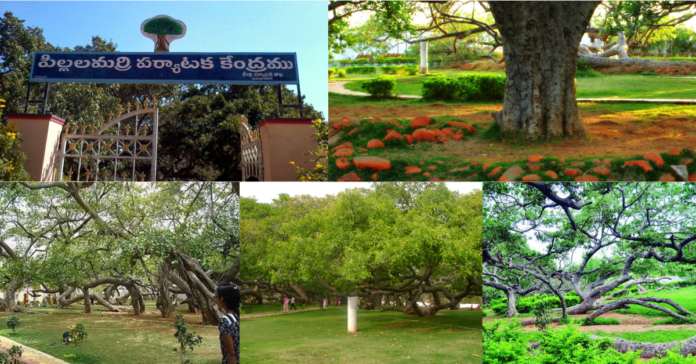
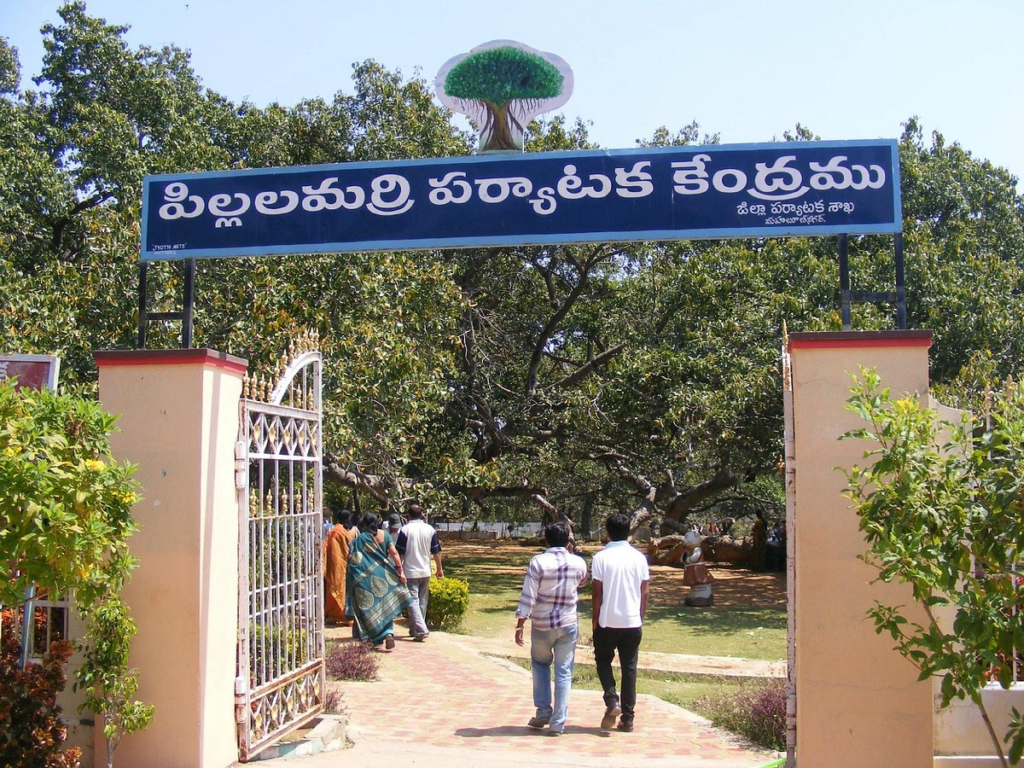
Pillalamarri, also known as Peerlamarri, is a colossal banyan tree located in Mahabubnagar district of Telangana, India.Estimated to be around 800 years old, it covers an area of approximately three acres.The tree’s massive canopy provides shelter to thousands of people and has become a significant tourist attraction.
The Historical Significance of Pillalamarri
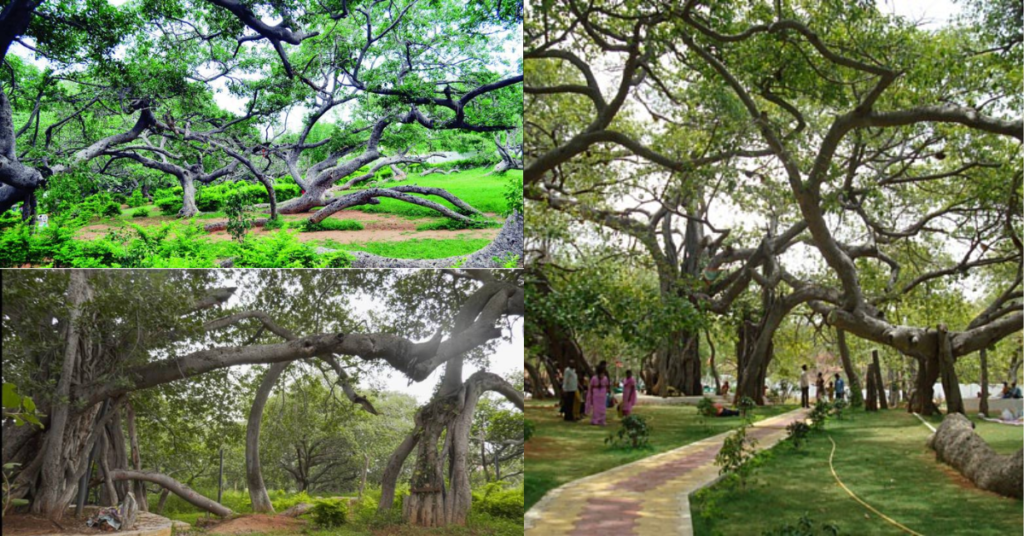
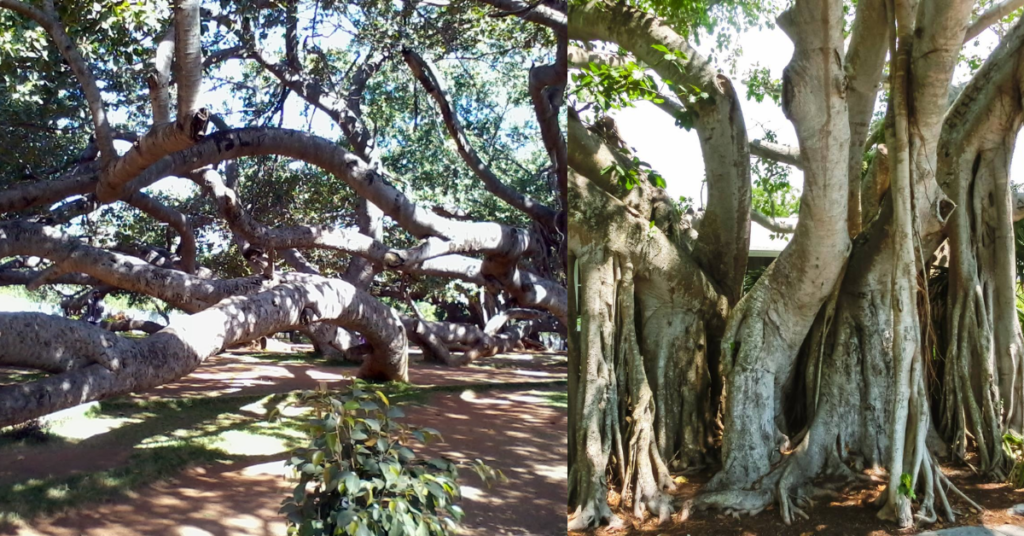
Pillalamarri is not only a natural marvel but also holds significant historical and cultural importance. The tree has existed since around 1200 CE, making it one of the oldest banyan trees in India. Initially, it had a main trunk surrounded by many prop roots, which over time grew down into the ground and formed new trunks, creating a vast network of interconnected trunks. The name “Pillalamarri” translates to “Children’s Banyan” in Telugu, derived from the tree’s numerous prop roots that resemble the main trunk’s children. Over centuries, the original main trunk has either perished or become indistinguishable among the many prop roots, but the tree continues to thrive and expand.
Cultural and Religious Significance
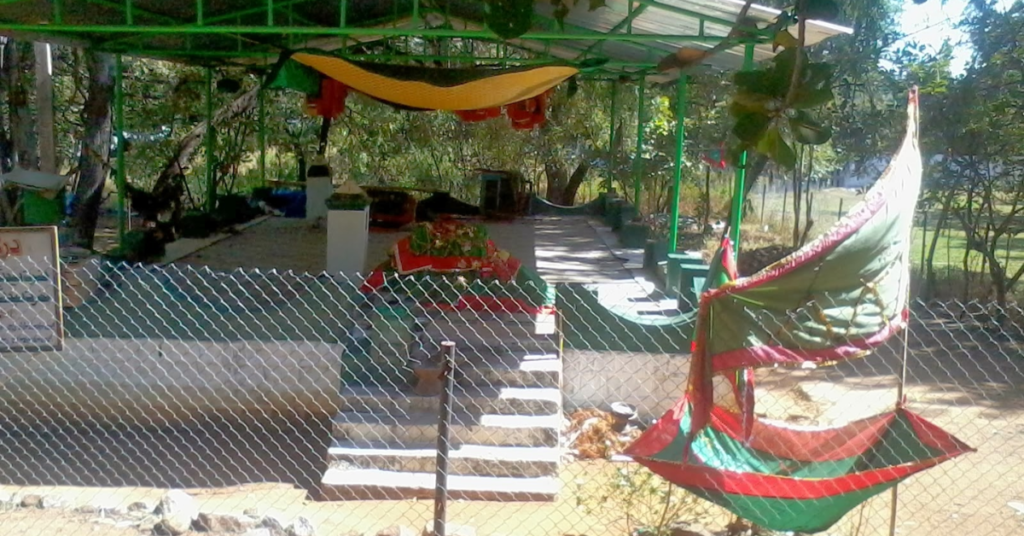
Sufi Saints’ Tombs: Near the tree, there are the tombs of two Muslim Sufi saints, Jamal Hussain and Kamal Hussain. Although some believe these tombs are directly under the tree, they are situated a short distance away, with a separate entrance leading to the shrine. This adds a layer of spiritual significance to the site.
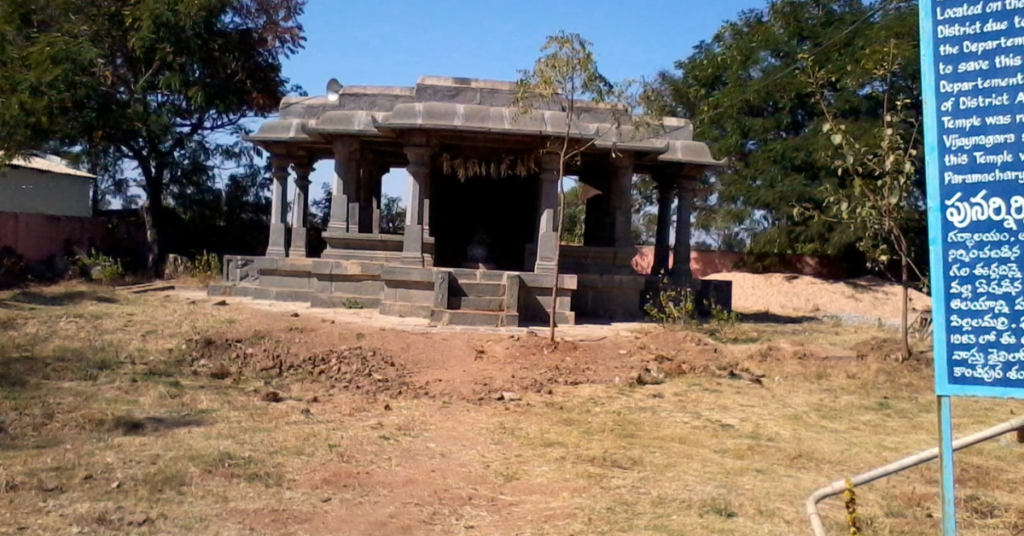
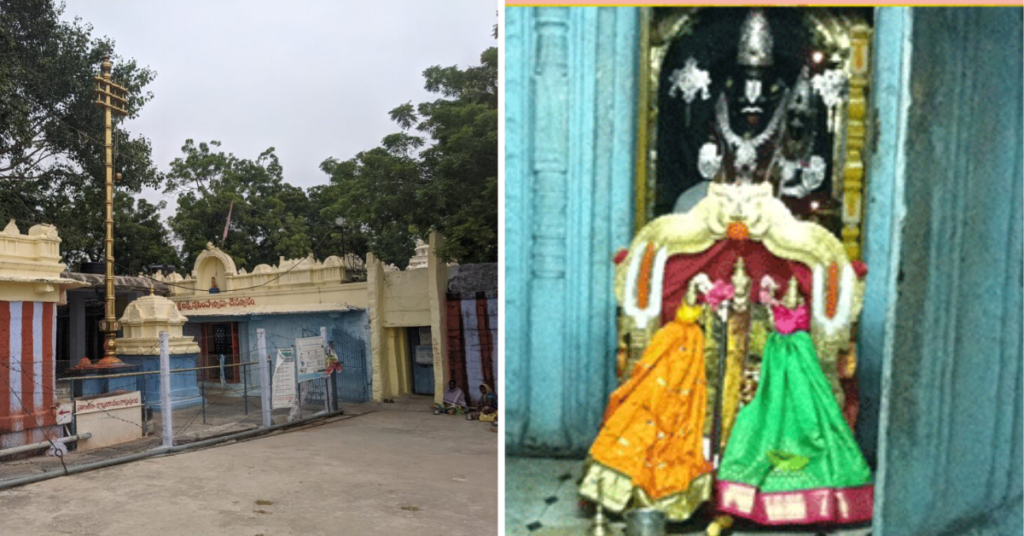
The Sri Rajarajeswara Temple, located on the premises of Pillalamarri, has an interesting history. Originally, this temple was situated in Erladinne (Erula Dinne) on the left bank of the Krishna River. During the construction of the Srisailam reservoir, the village where the temple was located was at risk of being submerged. To save the temple, the state archaeology department dismantled it in 1981 and moved it to the Pillalamarri complex. By 1983, the temple was carefully reconstructed on a new foundation. This temple, originally built in the 16th century, showcases the distinct architectural style of the Vijayanagara dynasty, highlighting the rich cultural heritage of the region.
Mythology and Legends
Local folklore is rich with tales about the tree’s origins, its association with deities, and the miracles it has performed. These stories have been passed down through generations, adding to the tree’s mythical aura. Legends tell of sages and saints meditating under its sprawling branches and of the tree’s mystical powers that protect and bless the area.
Cultural Melting Pot
The coexistence of the ancient temple and the Sufi saints’ tombs reflects the region’s diverse cultural heritage. Pillalamarri stands as a symbol of harmony and the coexistence of different faiths. It represents the peaceful blending of Hindu and Islamic traditions, showcasing the inclusive nature of the local culture.
Pillalamarri’s survival through the centuries is a testament to its resilience. It has weathered storms, droughts, and human interference, emerging stronger each time. The tree’s ability to adapt and thrive symbolizes the enduring spirit of the region and its people. Despite the challenges, Pillalamarri continues to grow and flourish, representing hope and perseverance.
As you stand beneath the sprawling canopy of Pillalamarri, you can’t help but feel a connection to the past. The tree’s historical significance adds an extra dimension to its allure, making it not just a natural wonder but also a living repository of the region’s heritage. Its massive branches spread out like a protective embrace, inviting visitors to explore and reflect on the rich tapestry of history woven around it.
Pillalamarri Mini Park and Museam
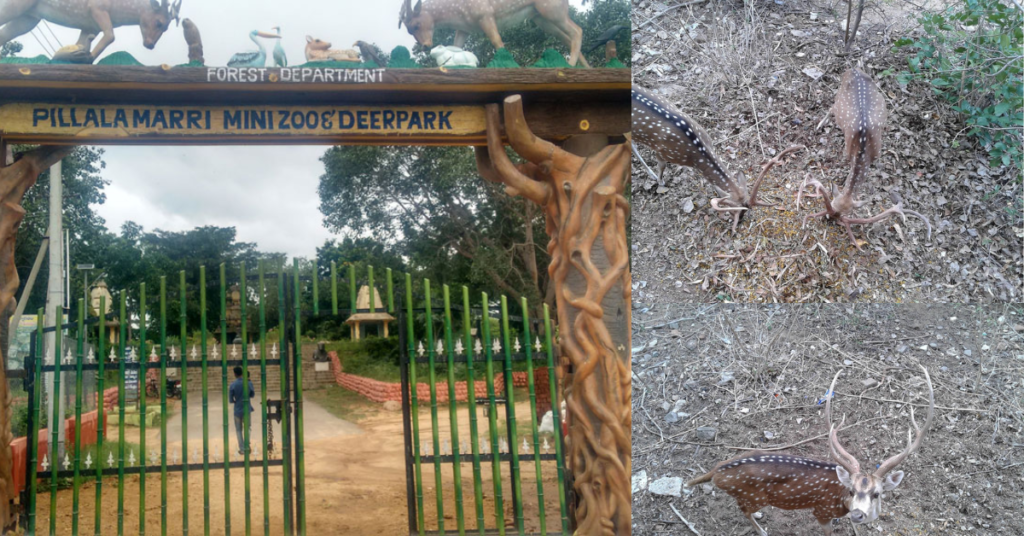
The Pillalamarri Tourism Centre offers more than just the famous banyan tree. On the site, there is a science museum that showcases artifacts found in the Palamuru region. These artifacts provide insights into the local history and culture. Surrounding the impressive tree, there is a small nursery where various plants are grown, adding to the area’s charm. Additionally, the tourism center features a deer park, where visitors can observe these graceful animals in a natural setting. The picturesque environment of Pillalamarri has also made it a popular location for filming, with scenes from various movies being shot here. This combination of attractions makes Pillalamarri a multifaceted destination, offering both educational and recreational experiences.
Pillalamarri Tree in ill health
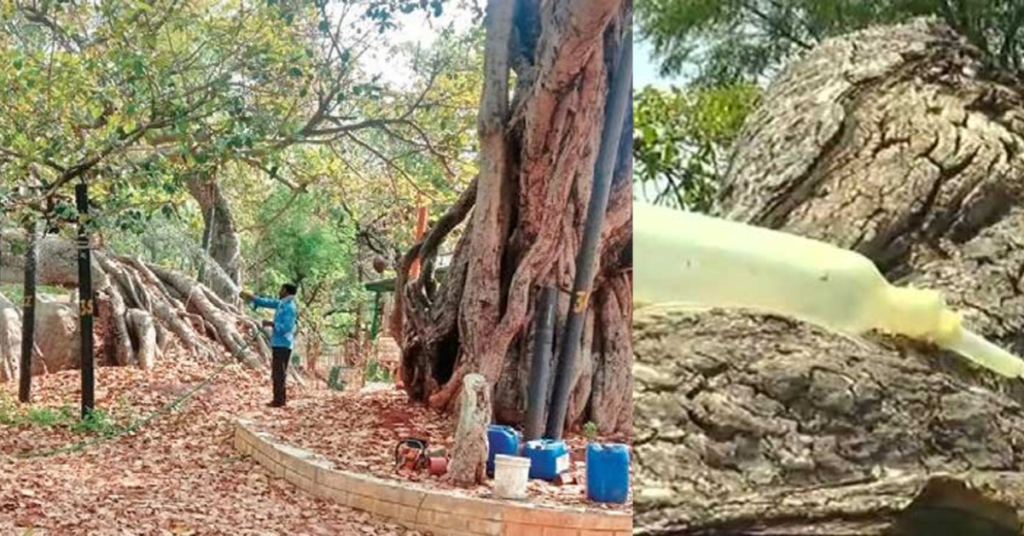
Despite its grandeur and historical significance, Pillalamarri is facing health challenges. The tree, which has stood for centuries, is showing signs of distress. Issues like deterioratingbranches, weakened roots, and damage from environmental factors are affecting its well-being. Efforts are being made to address these problems and ensure the tree’s survival, but the age and size of Pillalamarri make it vulnerable. Conservationists and local authorities are working together to provide care and protection to help the tree continue to thrive and remain a symbol of the region’s rich heritage.
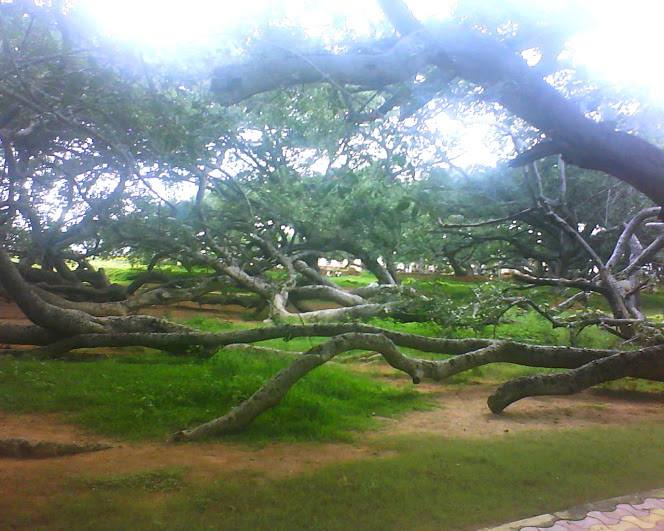
Pillalamarri is renowned for its unique appearance, which sets it apart from other trees. The banyan tree’s massive canopy covers about three acres of land, creating an expansive and impressive sight. Initially, it had a single main trunk, but over time, numerous aerial roots grew down into the ground, forming new trunks and creating a vast network of interconnected branches and trunks. This sprawling network makes the tree look like a miniature forest. The tree’s broad, dense foliage provides a lush, green canopy that offers a cool and inviting shelter beneath it. Its appearance is both majestic and intricate, symbolizing the tree’s resilience and the rich history it has witnessed over the centuries.
How to Travel There
By road: Pillalamarri is roughly 4-5 kilometers from Mahabubnagar town
Railway Station: The closest station is Mahabubnagar.
Entry Ticket
Adult
INR 10
Child
INR 5
Conclusion
Pillalamarri, with its colossal banyan tree, historical temple, and cultural significance, stands as a remarkable testament to the region’s rich heritage and resilience. Its blend of natural wonder, historical artifacts, and spiritual landmarks makes it a unique destination that invites visitors to explore and reflect on its profound legacy. Despite facing health challenges, efforts are underway to preserve this living symbol of the past, ensuring it continues to inspire and captivate future generations.
Frequently Aske Questions(FAQs)
1Q: How old is Pillalamarri?
A: Pillalamarri is estimated to be around 800 years old.
2Q: What is Pillalamarri?
A: Pillalamarri is a historic banyan tree and tourism center in Telangana, India, known for its massive canopy and cultural significance.
3Q: What attractions are at Pillalamarri?
A: Attractions include the banyan tree, Sri Rajarajeswara Temple, Sufi saints’ tombs, a science museum, a nursery, and a deer park.
4Q: Where is Pillalamarri located?
A: Pillalamarri is located about 4-5 kilometers from Mahabubnagar town in Telangana.
5Q: Is Pillalamarri facing any challenges?
A: Yes, the tree is currently facing health issues such as deteriorating branches and weakened roots.
Rajiv Park, named in honor of India’s former Prime Minister, Late Sri Rajiv Gandhi, stands as one of Nalgonda’s most renowned parks. Centrally located and meticulously maintained, it serves as a significant attraction for both tourists and locals alike.
The park features beautifully manicured lawns and a variety of flower beds. During blooming seasons, these flowers display vibrant colors, creating a stunning visual experience with their exotic and rare varieties. The park is also lined with numerous trees, adding to its natural charm.
One of the highlights of Rajiv Park is its musical fountain, which comes alive every evening, providing a delightful show for visitors. Occasionally, the park hosts amusement shows specifically designed for children.
Entry to Rajiv Park is free, but visitors are reminded to respect the park’s cleanliness, as littering is strictly prohibited.
Park stands out with its beautiful landscaping and variety of amenities:
Expansive Green Lawns: Ideal for picnics, yoga sessions, or leisurely relaxation.
Walking Trails: Well-paved paths suitable for jogging and evening strolls.
Children’s Play Area: Equipped with swings, slides, and other fun features for kids.
Elegant Water Fountain: Adds a touch of serenity and visual appeal to the park.
Comfortable Seating Areas: Numerous benches and shaded spots for a restful break.
Entry Fee and Timings
Entry Fee: Rajiv Park charges a modest entry fee of ₹10 per person, making it an affordable choice for a day out in Nalgonda.
Timings: The park is open daily from 9:00 AM to 6:00 PM, allowing plenty of time to explore and enjoy its features.
How to Reach Rajiv Park in Nalgonda
By Car: Rajiv Park is conveniently accessible by road, with ample parking available for visitors.
By Public Transport: Nalgonda’s local buses and auto-rickshaws provide easy access to the park from various parts of the city.
Tips for a Great Visit
To enhance your visit to Rajiv Park, consider bringing:
Picnic Supplies: Enjoy a relaxing meal in the park’s scenic environment.
Comfortable Footwear: Perfect for exploring the walking trails.
Sun Protection: Use hats, sunglasses, and sunscreen to stay comfortable during your visit.
Conclusion
Rajiv Park in Nalgonda offers a serene and picturesque retreat for locals and visitors alike. Named after Late Sri Rajiv Gandhi, the park’s well-maintained lawns, vibrant flower beds, and lively musical fountain create a captivating environment. Whether you’re seeking a peaceful stroll, a family outing, or a visual feast of blooming flowers, Park provides an inviting and clean space to enjoy. With its free entry and family-friendly atmosphere, it remains a cherished destination in Nalgonda.
FAQS
Q1) What is Rajiv Park known for?
ANS) Rajiv Park is renowned for its well-manicured lawns, vibrant flower beds, and a musical fountain. It is a popular spot for relaxation and family outings.
Q2) What are the park’s hours of operation?
ANS) Park is open daily, with no specific closing time mentioned. It’s best to visit during daylight hours.
Q3) Are there any special attractions in the park?
ANS) The park features a musical fountain that is illuminated every evening and occasionally hosts amusement shows for children.
Q4) How can I reach Rajiv Park?
ANS) Park is centrally located in Nalgonda and is accessible by car, local buses, and auto-rickshaws.
Q5) Are there facilities available for children?
ANS) Yes, the park includes a children’s play area and occasionally hosts amusement shows for kids.
Vadapalli Lakshmi Narasimha is a revered Hindu deity enshrined in a historic temple located in Nalgonda district, Telangana, India. Renowned for its unique spiritual aura and a miraculous phenomenon, the temple has been a pilgrimage site for devotees seeking divine blessings and solace.
The deity, a manifestation of Lord Vishnu in his Narasimha avatar, is believed to be exceptionally powerful and compassionate. The temple’s significance is amplified by the belief that the idol visibly ‘breathes’, a phenomenon that has intrigued and captivated devotees for centuries.
The Panchanarasimha Kshetram comprises the following temples:
Vedadri:
Location: Krishna district
Significance: Known for its majestic hilltop temple dedicated to Lord Narasimha with panoramic views of the Krishna River.
Timings: 6:00 AM to 1:00 PM and 3:00 PM to 8:00 PM
How to Reach: Nearest airport is Vijayawada Airport (70 km). It is accessible by road from Vijayawada and Guntur.
Vadapalli:
Location: Nalgonda district
Significance: Revered for its association with Vyasa Bhagavan and its unique architectural style.
Timings: 6:00 AM to 12:30 PM and 4:00 PM to 7:30 PM
How to Reach: Nearest railway station is Miryalaguda (30 km). It is well-connected by road to Nalgonda and Hyderabad.
Mattapalli:
Location: Nalgonda district
Significance: Situated on the banks of the Krishna River, known for its serene environment and spiritual vibrations.
Timings: 6:00 AM to 1:00 PM and 4:00 PM to 8:00 PM
How to Reach: Nearest railway station is Miryalaguda (25 km). It is accessible by road from Nalgonda and Vijayawada.
Mangalagiri:
Location: Guntur district
Significance: Prominent pilgrimage center famous for the unique tradition of offering ‘Panakam’ (jaggery water) to the deity.
Timings: 5:00 AM to 12:30 PM and 3:00 PM to 8:30 PM
How to Reach: Nearest airport is Vijayawada Airport (20 km). It is well-connected by road and rail from Vijayawada and Guntur.
Ketavaram:
Location: Guntur district
Significance: Known for its ancient inscriptions and rock carvings.
Timings: 6:00 AM to 1:00 PM and 4:00 PM to 7:00 PM
How to Reach: Nearest railway station is Guntur (40 km). It is accessible by road from Guntur and Vijayawada.
VadapalliLakshmi Narasimha
Vadapalli boasts one of the most captivating stories within the Panchanarasimha Kshetram.According to Puranic legends, the sage Vyasa, recognizing the spiritual potency of the place, engaged in intense meditation to invoke Lord Narasimha. The Lord, pleased with the sage’s devotion, manifested in his Ugra (fierce) form.
A unique feature of the VadapalliLakshmi Narasimha temple is the belief that the deity continues to breathe. This phenomenon is evident through the placement of two lamps near the idol. One lamp, which illuminates the Lord’s face, quivers, while the other remains steady. This phenomenon adds a mystical dimension to the temple’s sanctity.
The Unifying Themes
While each temple has its distinct character, Dr. Anu Vedagiri’s research has identified three overarching themes that unite the Panchanarasimha Kshetram:
Lakshmi, the Divine Consort: In all five temples, Goddess Lakshmi, known as Sri Lakshmi Narasimha or Lakshmi Ammavaru, plays a prominent role. She transcends being a mere companion, often depicted as a powerful force that balances the fierce nature of Narasimha. This theme underscores the harmonious interplay between divine energy and grace.
The Sacred Krishna River: The Krishna River, a lifeline for the region, holds immense spiritual significance in this pilgrimage circuit. The river purifies and symbolizes divine flow, a fact emphasized by the numerous temples that line its banks or stand nearby.
Tantric Undercurrents: Despite the predominantly Vaishnava character of the temples, there is an underlying presence of Tantric elements in the rituals and iconography. This fusion of Tantric and Vaishnava traditions creates a rich tapestry of spiritual practicesTantric influences manifest in the intricate carvings and specific rituals performed during festivals at these temples.
A Journey of Spiritual Enrichment
Embarking on a pilgrimage to the Panchanarasimha Kshetram offers devotees a profound spiritual experience. By visiting these five sacred sites, pilgrims not only pay homage to Sri Lakshmi Narasimha Swamy but also immerse themselves in the rich cultural and historical heritage of Andhra Pradesh. The journey, imbued with the chant of “Lakshmi Narasimha Karavalambam,” becomes a pathway to spiritual enrichment and divine grace.
Each temple visit within the Panchanarasimha Kshetram is an opportunity to explore the rich tapestry of mythology, architecture, and devotional practices that define the spiritual landscape of Andhra Pradesh. The pilgrimage circuit not only fosters a deep connection with the divine but also promotes a sense of unity and reverence for the region’s cultural heritage.
Conclusion
The Panchanarasimha Kshetram offers a unique spiritual journey through the diverse and culturally rich landscape of Andhra Pradesh. Each of the five temples, dedicated to the fearsome yet benevolent Lord Narasimha, provides a distinct experience that combines devotion, history, and architectural grandeur. The presence of Goddess Lakshmi in each temple highlights the harmonious balance between power and grace, while the sacred Krishna River weaves a thread of purity and divine flow throughout the pilgrimage.
Dr. Anu Vedagiri’s research into the unifying themes of the Panchanarasimha Kshetram, including the presence of tantric elements, adds depth to the understanding of these sacred sites. The pilgrimage not only allows devotees to pay homage to Sri Lakshmi Narasimha Swamy but also to immerse themselves in the spiritual and cultural heritage of Andhra Pradesh.
FAQS
Q1) What is the legend associated with Vadapalli temple?
ANS) According to Puranic legends, the sage Vyasa meditated intensely at Vadapalli, invoking Lord Narasimha who manifested in his Ugra (fierce) form. The deity at Vadapalli is believed to continue breathing, as indicated by the quivering lamp near the idol.
Q2) What is Vadapalli Lakshmi Narasimha Temple known for?
ANS) Wadapalli Lakshmi Narasimha Temple boasts a strong connection to sage Vyasa. Devotees flock to this sacred site, drawn by the belief that the deity continues to breathe. A quivering lamp near the idol serves as a compelling testament to this extraordinary phenomenon.
Q3) Where is Vadapalli Lakshmi Narasimha Temple located?
ANS) Vadapalli Temple is situated in the Nalgonda district of Andhra Pradesh, India.
Q4) What are the temple timings?
ANS) The temple is open from 6:00 AM to 12:30 PM and 4:00 PM to 7:30 PM.
Q5) How can I reach Vadapalli Lakshmi Narasimha Temple?
ANS) The nearest railway station is Miryalaguda (30 km). The temple is accessible by road from Nalgonda and Hyderabad.