

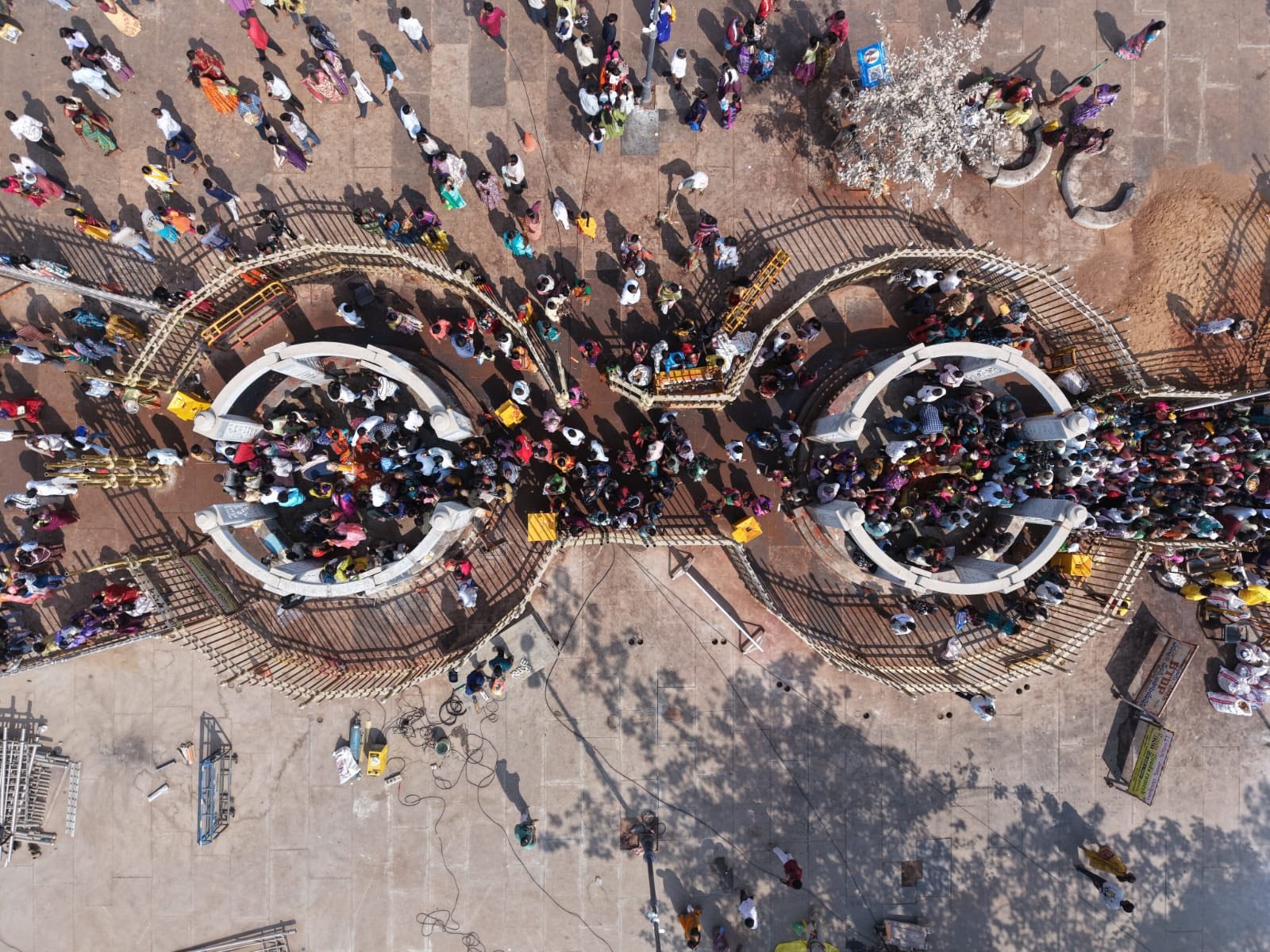
Long before Medaram appeared on maps,
long before governments built roads or arranged facilities,
this place existed only in the memory of the forest and the faith of tribal people.
Medaram Jathara did not begin as a festival.
It began as a promise.
A promise made by a community that refused to forget its mother and daughter—Sammakka and Sarakka—and the values they stood for.
This is the history of Medaram Jathara, told not as dates and facts, but as it is remembered by the land and the people who still walk barefoot into the forest every two years.
Medaram Before the Jathara
Medaram is a small forest village in present-day Telangana.
For centuries, it remained untouched by cities, temples, or royal patronage.
The Koya tribal community lived here, deeply connected to nature.
Their lives followed the rhythm of forests, seasons, and survival.
There were no grand festivals.
There were no stone idols.
Faith lived in trees, soil, and memory.
It was in this setting that the story of Sammakka and Saralamma became the foundation of what would later grow into Medaram Jathara.
The Roots of Medaram Jathara
The origins of Medaram Jathara lie in tribal resistance and dignity.
According to belief, Sammakka was a powerful tribal leader who stood against unjust taxation imposed on forest-dwelling communities. Her refusal was not rebellion—it was self-respect.
When conflict followed, Sammakka and her daughter Saralamma disappeared into the forest, believed to have transformed into divine protectors of the tribal people.
The tribes did not build temples to remember them.
They chose something stronger.
They chose remembrance through gathering.
Once every two years, they returned to the forest to honour the spirits who never abandoned them.
That gathering became Medaram Jathara.
A Festival Without Temples or Idols
One of the most striking aspects of Medaram Jathara history is this:
there are no permanent temples dedicated to Sammakka and Saralamma.
Instead, worship happens under trees, in open spaces, exactly where tribal belief says the spirits reside.
Offerings are simple:
- Jaggery
- Turmeric
- Kumkum
There is no gold, no stone sculptures, no elaborate rituals.
This simplicity is not absence—it is philosophy.
The history of Medaram Jathara reminds us that faith does not require walls.
From Tribal Gathering to Regional Faith
For generations, Medaram Jathara remained a tribal event.
Families walked for days through forests to attend.
The gathering was small, intimate, and deeply emotional.
Slowly, word spread.
People from nearby villages began to attend—not out of curiosity, but belief. They saw prayers answered, illnesses healed, and promises fulfilled.
Medaram grew organically.
No ruler announced it.
No authority promoted it.
Faith did the work.
When Medaram Became a Mass Movement
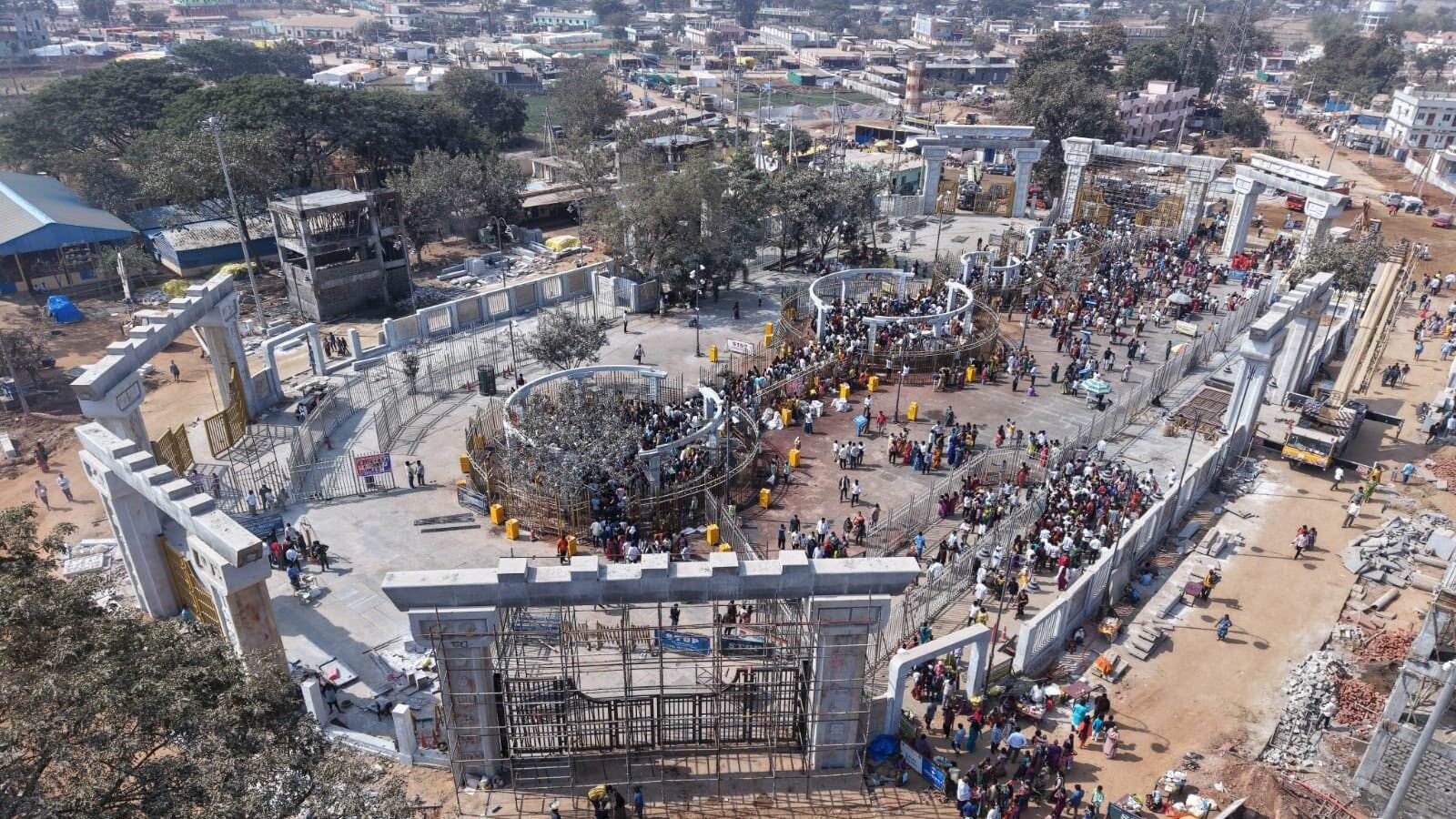
The turning point in Medaram Jathara history came in the 20th century.
As roads developed and awareness spread, people from across Telangana and Andhra Pradesh began visiting Medaram.
What surprised outsiders was not the crowd—but the discipline.
Despite lakhs of devotees:
- There was no chaos
- No pushing
- No commercialisation
People waited patiently.
They offered jaggery and left quietly.
This collective discipline is what transformed Medaram Jathara from a local tradition into a national event.
Today, it is recognised as the largest tribal festival in the world, attracting millions of devotees.
Why Medaram Jathara Is Unique in Indian History
India has countless festivals.
But Medaram Jathara stands apart.
It is:
- Not temple-centric
- Not caste-based
- Not controlled by priests
It belongs to everyone.
The history of Medaram Jathara proves that a festival rooted in tribal culture can grow without losing its soul.
That is rare.
The Tribal Significance of Medaram Jathara
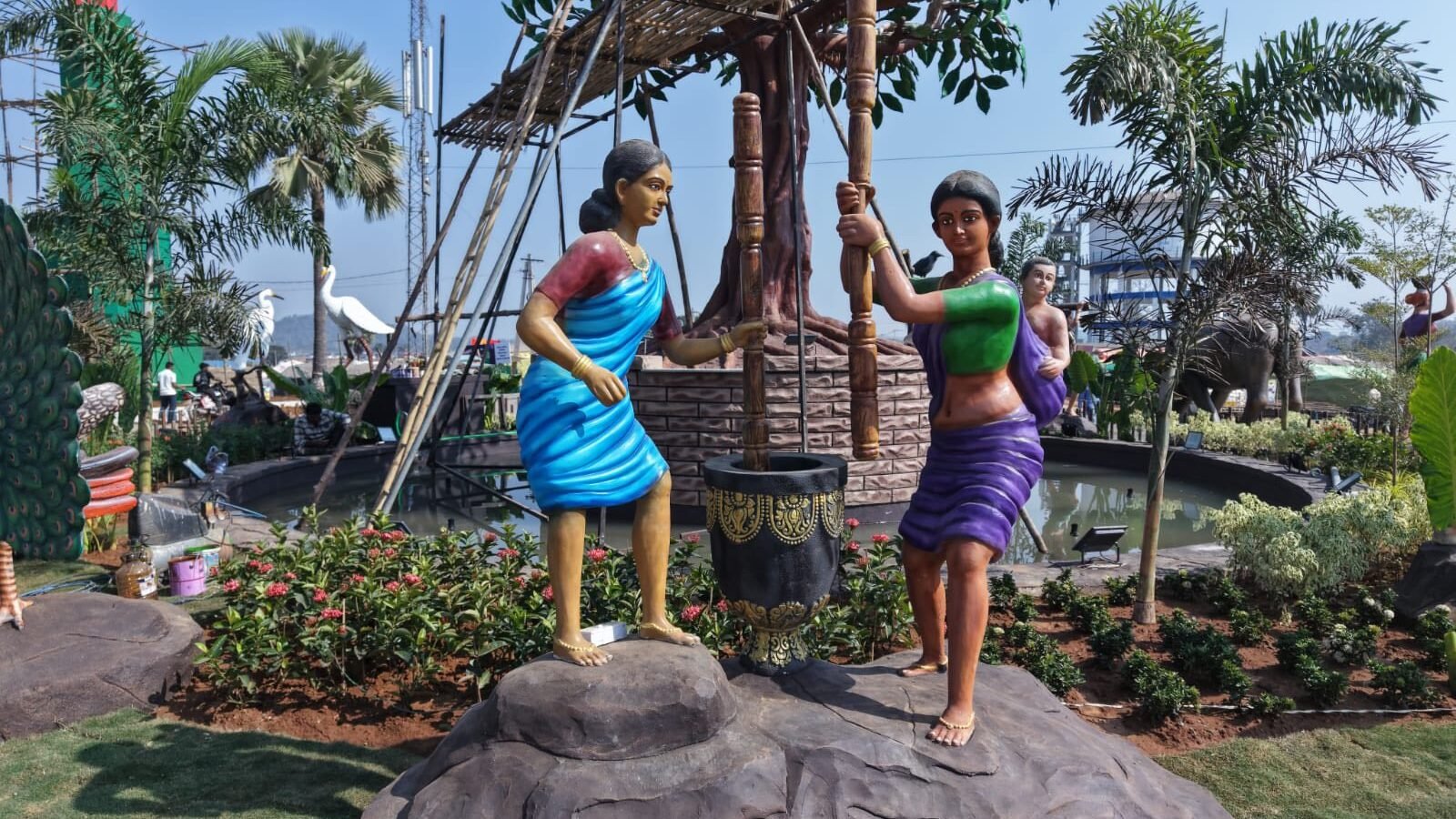
For tribal communities, Medaram Jathara is not a celebration.
It is identity.
It represents:
- Resistance against injustice
- Respect for women leadership
- Equality in worship
- Faith without hierarchy
Sammakka and Saralamma are not distant goddesses.
They are remembered as leaders, protectors, and mothers.
Understanding the Sammakka Saralamma story makes the historical importance of Medaram even clearer.
Role of Women in Medaram Jathara History
Another powerful aspect of Medaram Jathara is the central role of women.
A mother and daughter form the heart of this tradition.
Women lead rituals.
Women walk long distances carrying offerings.
In a society where many traditions are male-dominated, Medaram stands quietly different.
Its history celebrates feminine strength without slogans.
Government Recognition Without Interference
In recent decades, governments have recognised the scale of Medaram Jathara.
Facilities improved.
Transport increased.
Safety measures expanded.
But importantly, the rituals remained untouched.
The forest is still sacred.
The offerings are still simple.
The belief remains tribal at its core.
This balance between recognition and respect is crucial to Medaram’s historical survival.
Why Medaram Jathara Still Matters Today

In a modern world driven by speed and spectacle, Medaram Jathara teaches patience.
People walk barefoot for hours.
They wait without complaint.
They offer without expectation.
The history of Medaram Jathara shows that festivals survive not because they are promoted—but because they are believed.
Medaram Jathara: From Forest Faith to National Consciousness
What began as a tribal remembrance has now entered national awareness.
Yet, at its heart, Medaram Jathara remains unchanged.
The forest still listens.
The people still walk.
The faith still feels personal.
That is the true history of Medaram Jathara.
Final Thoughts: History That Still Breathes
Medaram Jathara is not a chapter from the past.
It is a living tradition.
Every two years, history walks back into the forest—barefoot, patient, and humble.
And Medaram welcomes it, just as it always has.
👉 Explore More on travellerkaka.com
Read the complete Medaram Jathara guide, understand the powerful Sammakka Saralamma story, explore travel routes and tips, and experience tribal festivals through real, local narratives.


